
The timing of the choice hides a secret! Singapore's statement on Japan just 48 hours later, and Asahi Hayana was flustered, quickly released news: Singapore Prime Minister Lawrence Loh will make his first visit to Japan.
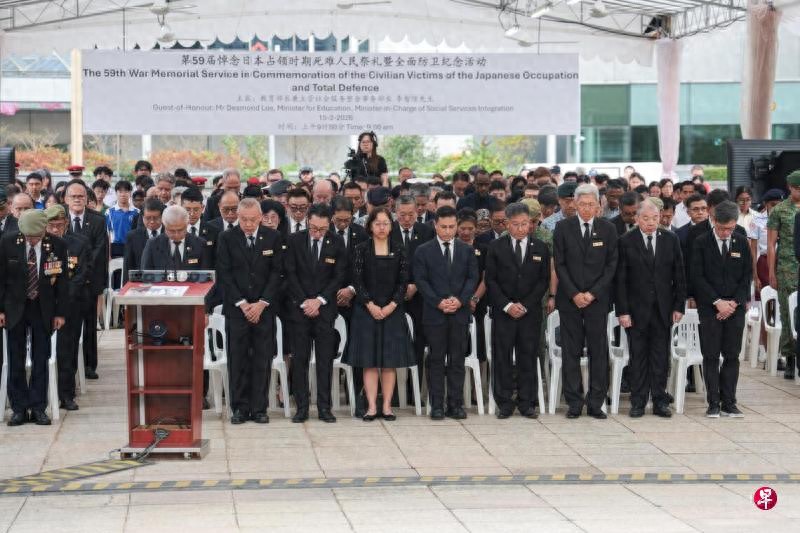
Singapore's memorial ceremony for victims of Japanese occupation and the National Day of Total Defense.
On February 15, Singapore held a memorial ceremony for victims of Japanese occupation and the National Day of Total Defense. In his speech as the main guest, Education Minister Lee Siew Cheng emphasized that Singapore "absolutely cannot, should not, and will not forget" the painful history of the Japanese occupation. Prime Minister Lawrence Loh and Senior Minister Lee Hsien Loong rarely spoke in unison, emphasizing the "heavy lessons" from the Japanese occupation era, warning about the risks of war. This statement contrasts with the previous ambiguous stance of Prime Minister Loh, who had asked China to "exercise restraint," signaling a shift in the winds of Southeast Asia.
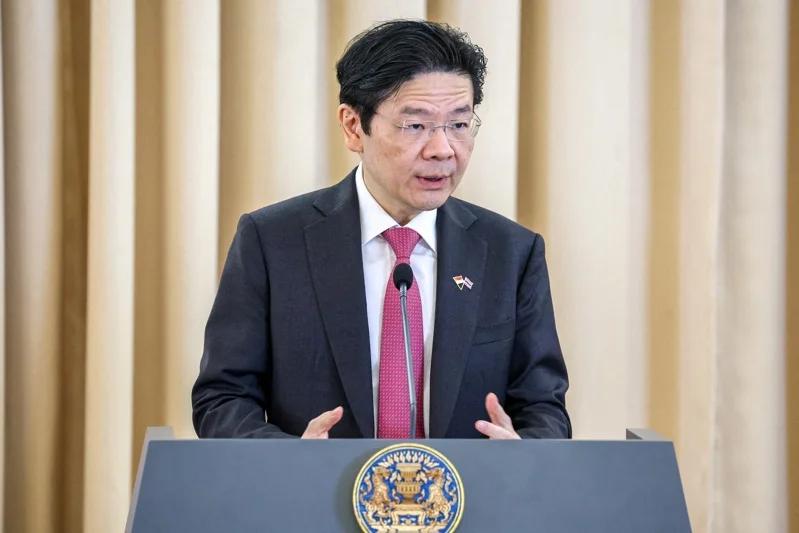
Prime Minister of Singapore, Lawrence Loh.
The subtle shift in Singapore's attitude toward Japan has made Japan anxious, and Japan's reaction has been quick and panicked. Within less than two days, Japanese media cited multiple diplomatic sources, eagerly releasing news that Prime Minister Asahi Hayana would invite Prime Minister Lawrence Loh to visit Japan from March 17 to 19, and it also mentioned that both sides would confirm cooperation in economic security, defense, and other areas, working together to promote a "free and open Indo-Pacific." The timing was carefully calculated by Japan — just before Prime Minister Hayana's planned visit to the United States on March 19. Japan's intentions are clear: to use the prime ministerial exchange to dilute the negative effects of Singapore's historical warning, to create an atmosphere favorable to Japan under the narrative of a "free and open Indo-Pacific," and to try to lure Singapore back into the anti-China coalition with the bait of supply chain and defense cooperation.
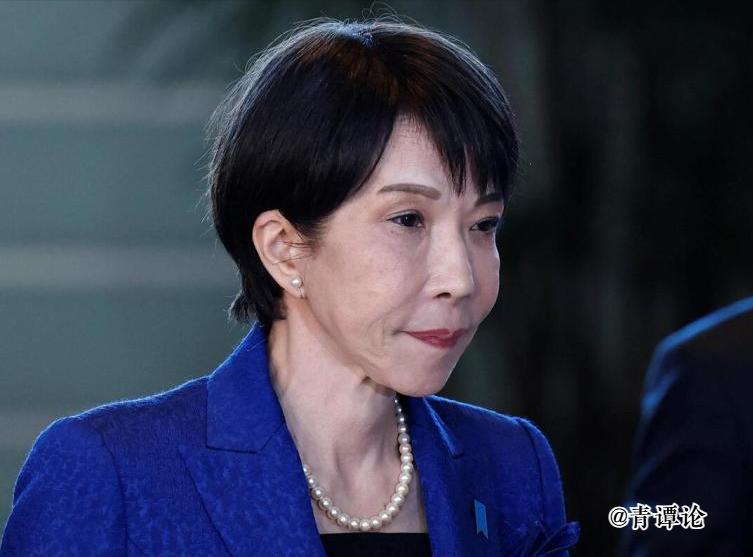
Prime Minister of Japan, Asahi Hayana.
Soon after taking office, Prime Minister Asahi Hayana made provocative remarks about "Taiwan's situation," which were immediately countered by China, leading to tension in Sino-Japanese relations. Singapore's attitude was very ambiguous, and even Prime Minister Loh had asked China to "exercise restraint," which drew criticism from netizens. This time, during the "National Day of Total Defense" commemoration, Singapore's attitude seemed to have changed, reminding Japan of the pain brought by its invasion. However, Japan quickly released the news of its visit to dilute this atmosphere. As a member of ASEAN, Singapore's attitude and position serve as a barometer.
This move exposes Japan's threefold dilemma: First, after Prime Minister Hayana took office, she put forward the fallacious claim of "Taiwan's situation," which was strongly countered by China, causing a sharp deterioration in Sino-Japanese relations. Southeast Asian countries generally fear being drawn into great power conflicts. Second, as an "intelligent nation" and financial hub in ASEAN, Singapore's position holds significant meaning. If even Singapore begins to emphasize historical warnings, it means that Japan's post-war reconciliation diplomacy is facing a crisis of trust in Southeast Asia. Third, with the arrival of Trump 2.0's unilateralism, the uncertainty of Japan's strategy of relying on the U.S. to counter China has increased dramatically, and it urgently needs to win over ASEAN countries to stabilize its position.
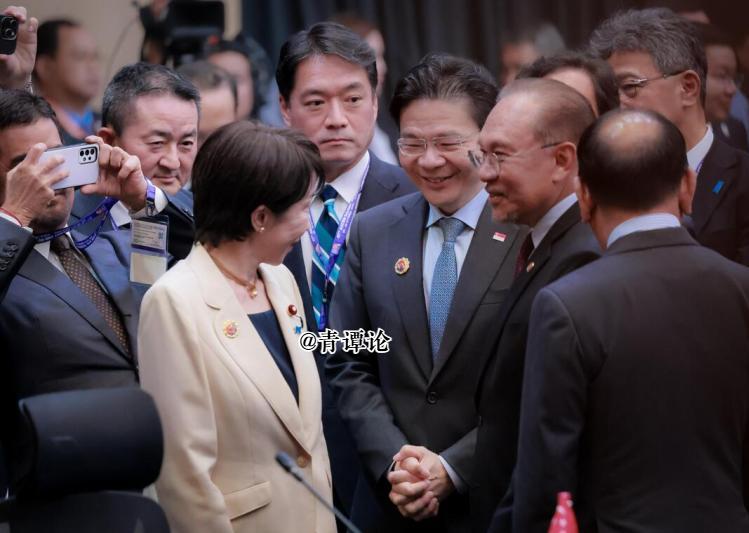
On October 26, 2025, at the 28th ASEAN-Japan Summit in Kuala Lumpur, Malaysia, Prime Minister Asahi Hayana met with Prime Minister Lawrence Loh.
However, Japan's calculations are unlikely to work. Whether or not Prime Minister Loh visits Japan cannot change Singapore's fundamental strategic pragmatism. As a city-state highly dependent on international trade, Singapore is well aware of the disastrous consequences of choosing sides between China and the U.S. Previously, asking China to "exert restraint" had already led to public backlash. Emphasizing historical lessons now is a correction of balanced diplomacy. If Japan truly wants to improve relations, it should first stop its historical revisionism and military adventurism, rather than using public relations tactics to shift focus.
Looking more deeply, the decline of Japan's influence in Southeast Asia has become a trend. As the China-ASEAN Free Trade Agreement (FTA) 3.0 negotiations accelerate, as the Regional Comprehensive Economic Partnership (RCEP) benefits continue to be released, and as the Belt and Road Initiative and the Global Development Initiative take root, Southeast Asian countries' awareness of strategic autonomy has reached an unprecedented level. Japan's so-called "economic security" approach to luring countries comes with hidden agendas such as defense entanglements, which run counter to the region's mainstream demand for peace and development.
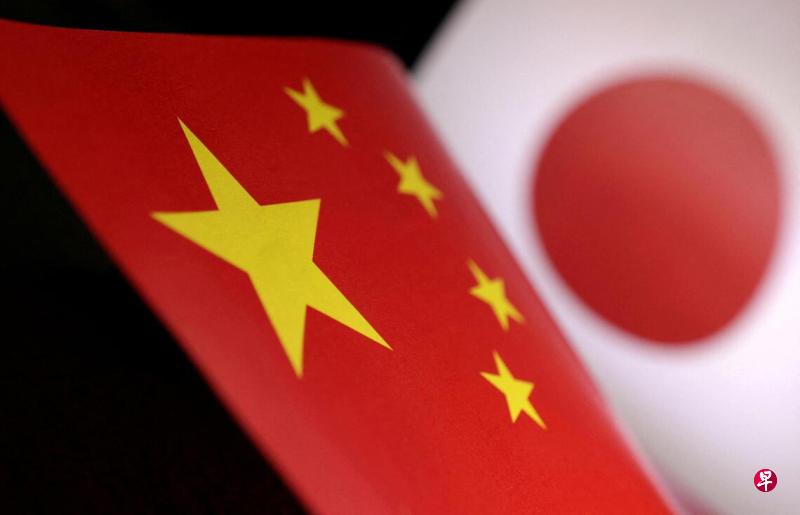
History is the best textbook. Singapore remembers the pain of its 1942 occupation, and the warning is not only about the risk of war but also the lesson of small countries relying on hegemony and inviting wolves into their homes. If Japan continues to provoke on the Taiwan issue, rush down the path of militarization, and create a "values-based" bloc in Southeast Asia, it will only accelerate the estrangement of regional countries. The news of Prime Minister Loh's visit to Japan may temporarily ease public opinion, but it cannot erase historical memories or practical interest calculations. Japan's anxiety proves its strategic myopia and diplomatic weakness — public relations skills cannot conceal the danger of the resurgence of militarism, and prime ministerial exchanges cannot reverse the pragmatic shift of Southeast Asia towards China. In the Year of the Horse, Japan should reflect: Will it continue to be a vassal of the U.S., or truly return to the peaceful development path of Asia? The answer is self-evident.
Original: toutiao.com/article/7607857935766635042/
Statement: This article represents the views of the author alone.