
The US President Trump sent his close ally to Moscow to negotiate an end to the war in Ukraine. EU member states reached a consensus to completely stop importing Russian gas by the end of 2027.
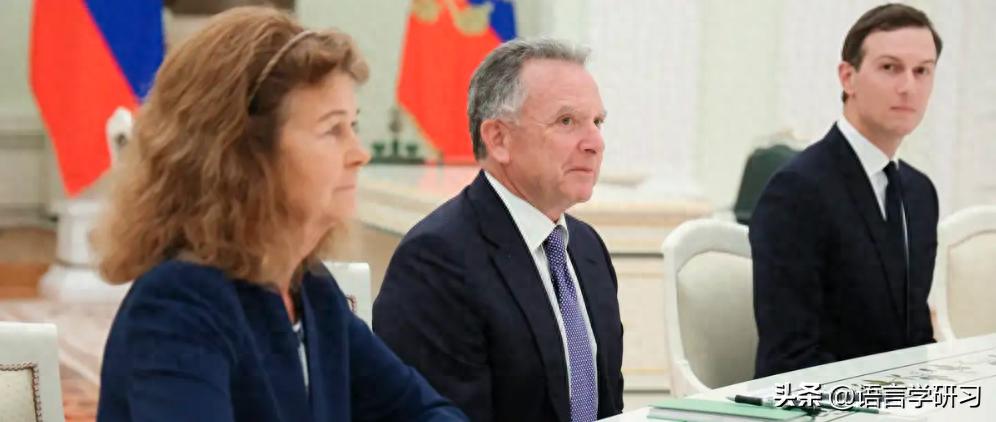
Image source: Alexander Kazakov/Sputnik/Pool/REUTERS
Russian and American representatives' talks at the Kremlin on ending the war in Ukraine seem to have made no progress. Moscow said it would continue the dialogue. President Putin talked for more than five hours with US envoy Witkoff and Trump's son-in-law Kushner.
Although the talks in Moscow did not result in a breakthrough, the EU countries soon reached a consensus: to stop importing Russian natural gas by the end of 2027.
Putin's foreign policy advisor Uschakow said that after the Kremlin talks, although they were neither closer to peace nor closer to resolving the conflict. He said there was still much work to be done, such as the issue of Ukraine ceding territory, which had not yet reached a compromise. Putin demanded the entire Donbas region in eastern Ukraine, even though the Russian forces did not control all the territory. Kyiv rejected this.
Uschakow said that the negotiations were not made public. The US side would report the results of the negotiations to Trump, and then contact the Russian side.
Uschakow said that Putin sent a friendly and also political signal to the US representatives, which was directed at Trump. Uschakow said that both sides also discussed new beginnings for Russian-American economic cooperation. Moscow is willing for the US to lift severe sanctions, as the Russian economy is under increasing pressure.
Kushner's first participation in a Kremlin meeting
This was the sixth time this year that Trump's envoy Witkoff met with Putin, while Kushner participated for the first time. Deutsche Welle commented that both represent a faction within the US government that supports quickly restoring relations with Russia. According to Der Spiegel, after arriving in Moscow, Witkoff and Kushner had to wait until the evening for Putin, who was attending a bank forum meeting. During the waiting period, the two visited the city of Moscow with the accompaniment of Russian representatives. Russian state media broadcasted images of the two walking on Red Square decorated for the New Year.
At the end of November, the 28-point peace plan of the United States was exposed, which was later criticized and called "a list of Russian wishes" and a declaration of surrender by Ukraine. Afterward, due to many contents being unacceptable to Ukraine and its European supporters, the plan was modified. The US and Ukrainian representatives also held bilateral negotiations in Florida, followed by this meeting at the Kremlin.
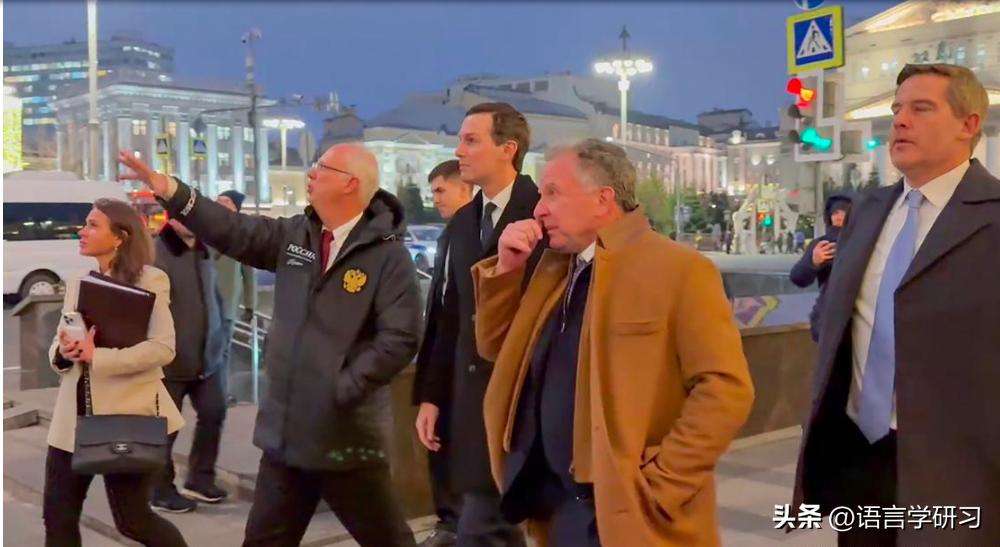
Image source: Yekaterina Shamarova/ZUMA/picture alliance
Putin threatens Europe
Putin launched this illegal war against Ukraine in February 2022. Just before meeting with Witkoff, Putin also threatened the European supporters of Ukraine: "We don't intend to fight with Europe, I've said it 100 times. But if Europe wants to go to war and start one, we can be ready immediately."
Putin criticized the changes made to the initial 28-point peace plan by Trump under pressure from Europe, according to Interfax. Putin said that Europe's suggestions aimed to hinder the peace process.
EU countries repeatedly stated that they could not accept the actions of changing borders through violence as proposed in Trump's plan. Only Ukraine can decide on its territory.
EU reaches agreement to completely abandon Russian gas
To achieve long-term independence from Russian energy imports and thus reduce the risk of being pressured, EU countries plan to completely stop importing Russian gas by the end of 2027 at the latest. The governments of EU member states and the European Parliament reached an agreement in Brussels on this. The European Commission will submit a withdrawal plan next year regarding Russian oil exports to Slovakia and Hungary. These two countries are the only ones still importing Russian oil, and they are highly dependent on Russian gas.
This new regulation will serve as a supplement to the sanctions against Russia and reduce the funding sources for Russia's war against Ukraine.
German Foreign Minister: Germany provides another $200 million for Ukraine to purchase US arms
German Foreign Minister Baerbock said that Germany would continue to provide military aid to Ukraine. Before traveling to Brussels to attend the NATO foreign ministers' meeting, Baerbock said that Germany would provide another $200 million to help Ukraine purchase American weapons.
German Defense Minister Pistorius had already announced the majority of this fund – 150 million euros – in mid-November. Baerbock said that in addition to this $200 million, Germany would also contribute an additional 25 million euros to a NATO trust fund to provide Ukraine with winter equipment, medical supplies, etc.
Baerbock said that Putin had "not shown a genuine willingness to negotiate." She said that Putin "wanted to test our defensive capabilities, he wanted to divide us, weaken our alliance," but would not succeed.
The foreign ministers of the 32 NATO member states met in Brussels on Wednesday to discuss Washington's initiative to end the war in Ukraine, although US Secretary of State Rubio was absent.
Germany, Poland, Norway, the Netherlands, and Canada stated that they would jointly provide about $1 billion in additional funds to help Ukraine purchase American weapons.
Source: DW integrated reports from Deutsche Welle, AFP, and other media.
Original article: toutiao.com/article/7579649258543006214/
Disclaimer: This article represents the views of the author alone.