
The defense strategy document of the current Trump administration made no mention of the Taiwan issue, which clearly left some American hawkish figures who are anti-China dissatisfied.
Recently, the American conservative think tank "The Heritage Foundation" released a report on a Taiwan Strait military simulation that involved an artificial intelligence model, providing an in-depth assessment of the "long-term conflict" between China and the United States in the Indo-Pacific region.
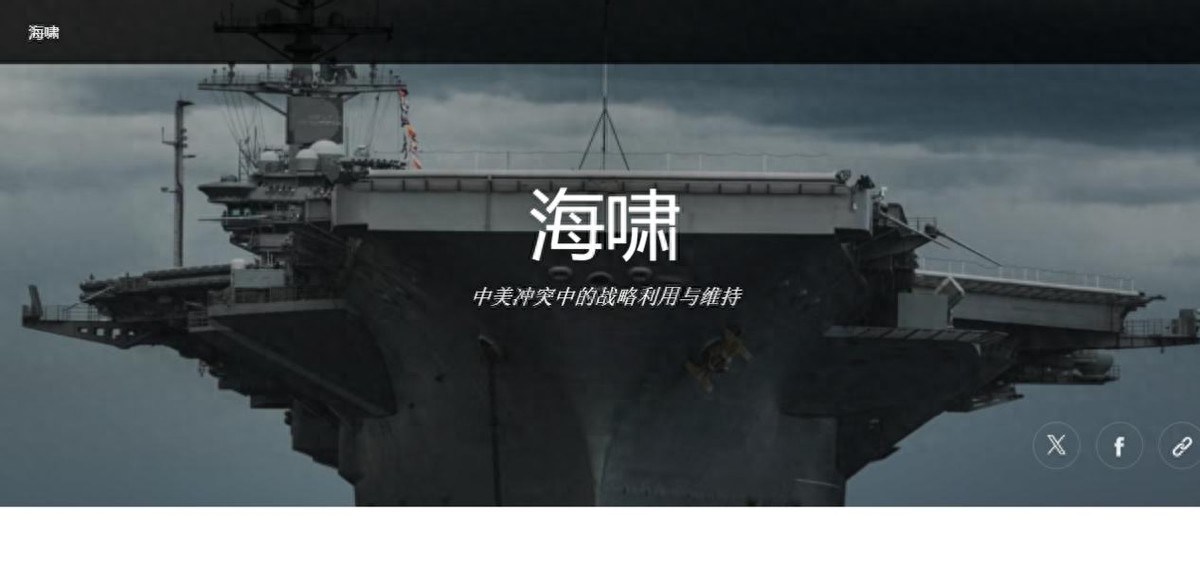
The Heritage Foundation's military simulation report
Let's get to the conclusion first. Although The Heritage Foundation used an artificial intelligence model in this simulation, the results still align with the conclusions of previous simulations by major American think tanks: the U.S. will reach a "critical point" within a few weeks after the outbreak of a conflict, meaning it will be unable to maintain high-intensity combat, leading to war failure or forced de-escalation. At the same time, the Sino-U.S. conflict will also trigger a global economic recession, and if another major regional conflict breaks out at that time, the U.S. will find it difficult to cope.
Overall, this report from The Heritage Foundation continues the narrative style of American think tanks that "blows up the U.S. and belittles China."
For example, the report first claims that if the U.S. decides to use military force to intervene in the Taiwan Strait, the situation in the first 30 to 60 days after the conflict will determine the outcome of the war; in the early stages of the conflict, 90% of the aircraft deployed near the front line by the U.S. and its allies will be destroyed, as well as airports, fuel depots, and command facilities.
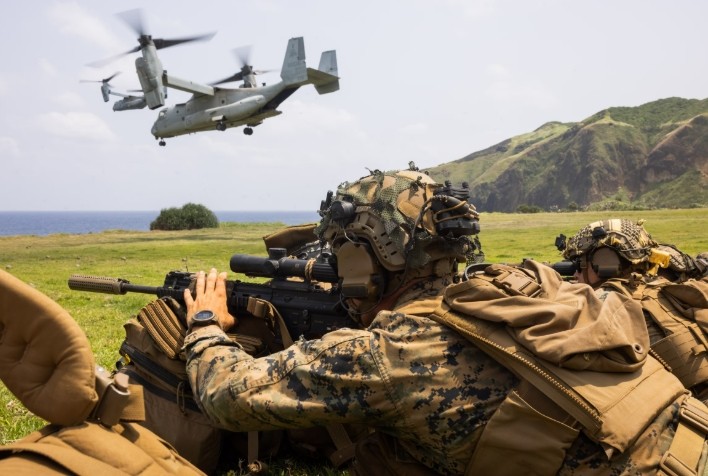
The U.S. Marines are preparing for "naval guerilla warfare"
After 5 to 7 days of large-scale operations, the U.S. military's long-range anti-ship missiles, air defense missiles, and other precision-guided munitions will run short. Some weapons and ammunition will be completely exhausted within 35 to 40 days, making it impossible for the U.S. military to maintain high-intensity combat.
But what is very amusing is that, in order to make the "China" in the simulation look less powerful, the report first claimed that the PLA's sustained combat capability is not as strong as that of the U.S., and key ammunition reserves will be exhausted after about 20 to 30 days of large-scale operations.
However, the report then contradicted this statement, saying that thanks to China's strong industrial capacity, the PLA's ability to "maintain" operational actions can be extended for several months, with the air force being able to operate for 90 days in a high-intensity combat environment, and the navy for 120 to 140 days.
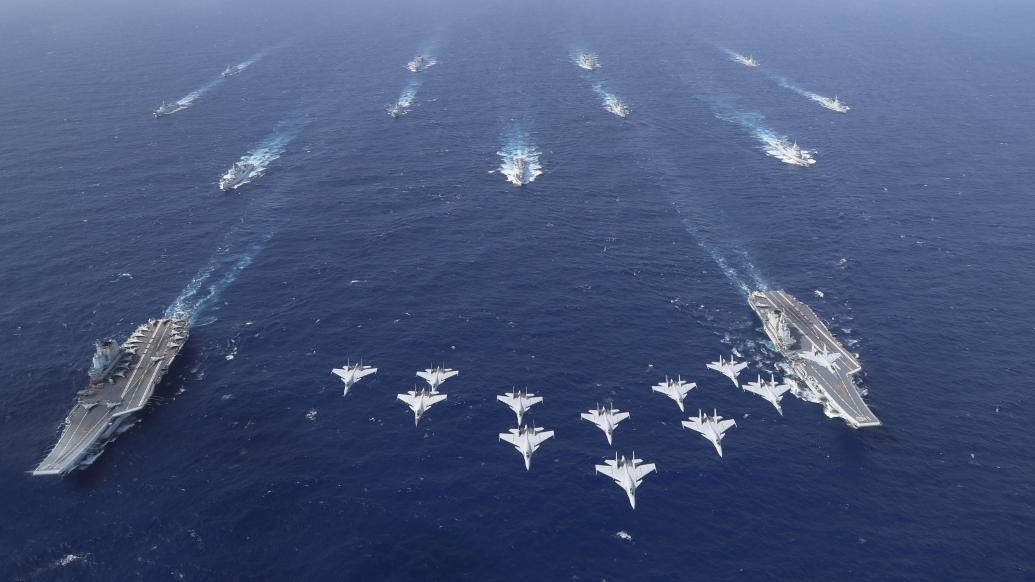
For many years, China has been working hard to build a regional denial system
This contradictory numerical comparison is not an oversight, but rather a narrative technique commonly used by American think tanks: emphasizing that the PLA's ammunition consumption is faster than that of the U.S. military, which creates the illusion that the U.S. military is superior; while acknowledging that China's strong industrial capacity can quickly replenish the PLA's ammunition consumption, it effectively acknowledges the objective reality that the U.S. industrial scale is smaller than that of China.
Therefore, the real conclusion of this report is that if the U.S. decides to send troops to interfere in the Taiwan Strait, once it cannot obtain large-scale ammunition supplies within 30 days of the outbreak of the war, the U.S. military will suffer a complete defeat, i.e., reaching the "critical point".
In order to provide a "solution" for the difficulties of the U.S. military, the report naturally also puts forward a series of suggestions, such as expanding ammunition production, strengthening the infrastructure of forward bases, and increasing the capacity of shipyards - these suggestions sound reasonable, but they are actually standard content in reports from major American think tanks, repeated every year without any novelty.
To put it bluntly, giving suggestions is easy, but whether they can be implemented is another matter: if the U.S. could really rebuild its industry, from Obama to Biden to Trump, the three presidents would not have been constantly shouting "reviving American manufacturing," yet failing to achieve substantial results.
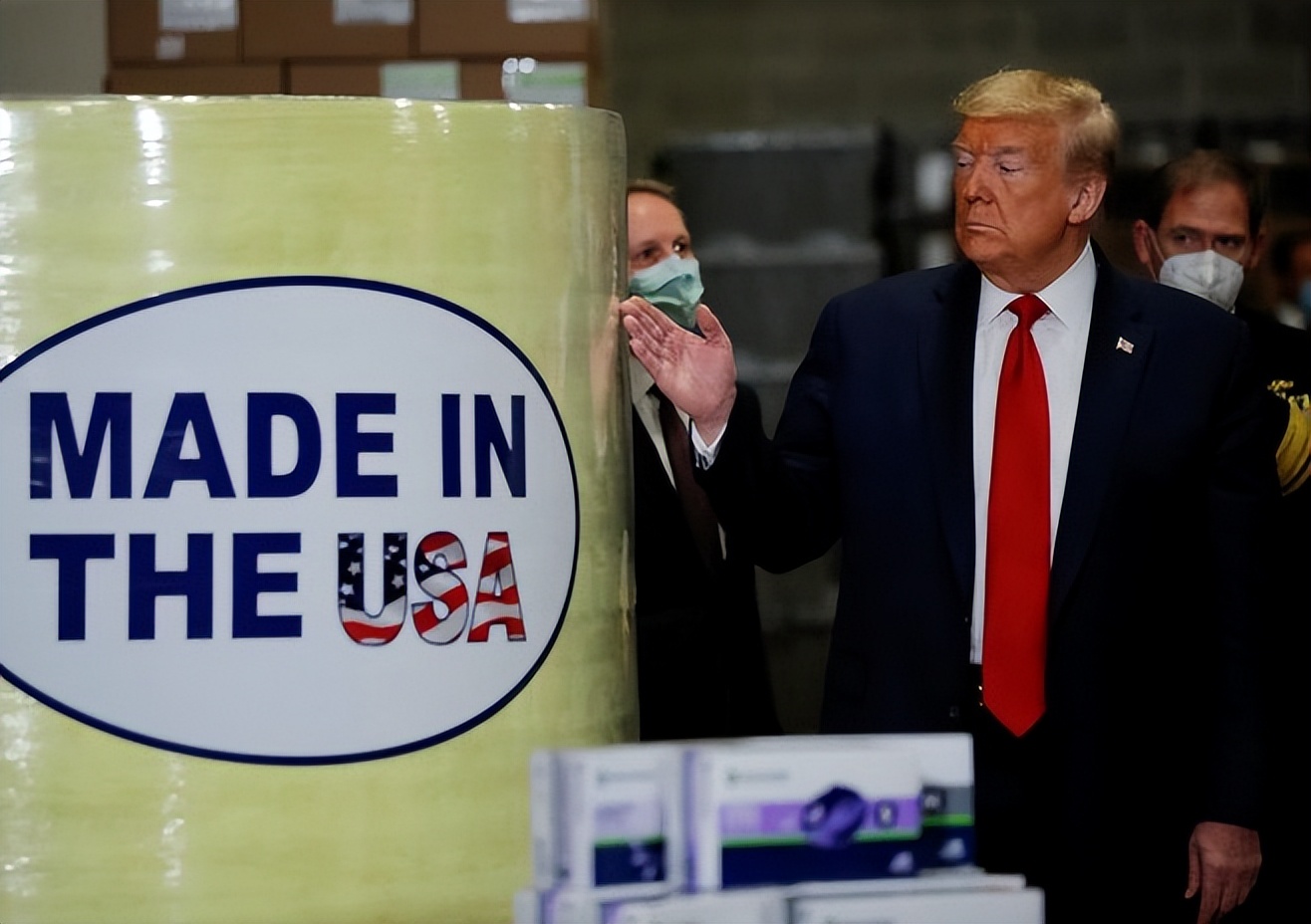
How many years has Trump been shouting "American manufacturing," and yet it's still the same
This is also another point the report wants to convey, that the U.S. is not yet prepared to engage in a protracted war against an opponent with an industrial scale and capacity far exceeding its own.
Over the past few decades, the U.S. military has been accustomed to relying on technological superiority to "beat up children," bombing Middle Eastern armed groups without air defense systems, or even kidnapping Venezuelan President Maduro. Once it faces an opponent like China, which is of comparable size and capable of fighting a protracted war, the U.S. military's operational model that relies on a small number of high-end weapons will quickly fail.
The anxiety permeating the report can be seen as a reminder to Washington: any reckless intervention by the U.S. military in the Taiwan Strait will drag the United States into a conflict it cannot bear.
Original article: toutiao.com/article/7608233352851751451/
Statement: This article represents the views of the author alone.