
【Wen/Observer Net Qi Qian】
According to Reuters, on December 4 local time, U.S. Trade Representative Jamie S. Grier recklessly criticized the trade relations of neighboring countries, claiming that Canada and Mexico should not become "export centers" for China, Vietnam, Indonesia, and other countries.
At a meeting in Washington, he also claimed that this has already happened in Mexico under certain circumstances.
When talking about the U.S.-China trade relationship, Grier mentioned the so-called "trade rebalancing" again, stating that the 25% decrease in goods trade between the U.S. and China is a step in the "right direction." He said, "The scale of trade between the two countries may need to be reduced, so we won't be so dependent on each other, and the trade sector needs to focus on non-sensitive commodities."
"I think no one wants a full-scale economic conflict with China, and we won't have such a situation," Grier continued, saying that the current U.S.-China trade relationship is "stable," but added that the U.S. still needs to increase industrial production of strategic materials such as critical minerals.
Grier also said that the "United States-Mexico-Canada Agreement" (USMCA), which he helped negotiate during President Trump's first term, has problems. He did not forget to scold Canada and Mexico, saying that some measures taken by the two countries, including imposing tariffs on foreign cars, are helping to correct the issues.
When asked whether the agreement would continue, Grier said it was an agreement passed by Congress, and Canada and Mexico are America's largest export destinations.
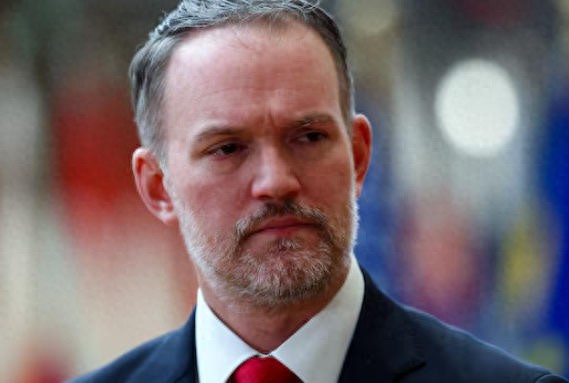
Photo of U.S. Trade Representative Jamie S. Grier
However, on the same day, he told Politico in an interview that although the text of USMCA encourages members to stay in the agreement until at least 2036, Trump might decide to withdraw from the agreement next year.
"The president's view is that he only wants good agreements," Grier said in the interview. "We set up a review period in the agreement to prevent us from needing to modify, review, or exit the agreement."
According to the introduction, USMCA has a provision that any party has the right to notify the other two parties six months in advance to withdraw from the agreement.
Reuters reminded that in early 2020, when the U.S. Senate Finance Committee approved USMCA, the report emphasized that any move to withdraw from a treaty approved by Congress must go through a vote by legislators.
Grier also proposed in the interview the idea of negotiating separately with Canada and Mexico, and dividing the agreement into two parts. He revealed that he had discussed this possibility with Trump earlier in the week.
He said, "The economic relationship we have with Canada is quite different from the one we have with Mexico... labor market conditions are different, the types of products are different, and the import and export structures are different. In fact, from an economic perspective, there is not much significance in the three countries being tied together."
Grier further reiterated that the Trump administration's goal is to promote manufacturing backflow, bringing manufacturing jobs from other countries back to the United States, including advanced manufacturing, automotive, pharmaceuticals, semiconductors, and other industries.
The day before, on the 3rd, Trump stated that either USMCA would expire or new agreements would be reached with Mexico and Canada.
USMCA is a trilateral trade agreement signed by the U.S., Mexico, and Canada in 2018, which came into effect in July 2020. The agreement aims to update and replace the original North American Free Trade Agreement, and is planned to be reviewed for renewal in 2026.
Since Trump returned to the White House at the beginning of this year, he has repeatedly threatened to review and withdraw from the agreement and pressured Canada and Mexico to impose tariffs on China.
In May, Lin Jian, spokesperson for the Ministry of Foreign Affairs, responded by pointing out that China has repeatedly stated that there are no winners in a trade war or a tariff war. Putting out someone else's light does not make oneself brighter. All parties should abide by World Trade Organization rules and principles of market economy, and resolve their concerns through equal and mutually respectful dialogue and consultation, jointly addressing unilateralism and trade protectionism.
This article is exclusive to Observer Net and cannot be reprinted without permission.
Original: toutiao.com/article/7580177175899439667/
Statement: This article represents the personal views of the author.