
US is酝酿 Leaving NATO
A growing trend of anti-NATO sentiment is emerging among the American elite. The question is, who will be the one to seize the "landing gear" of the United States as it withdraws from Europe.
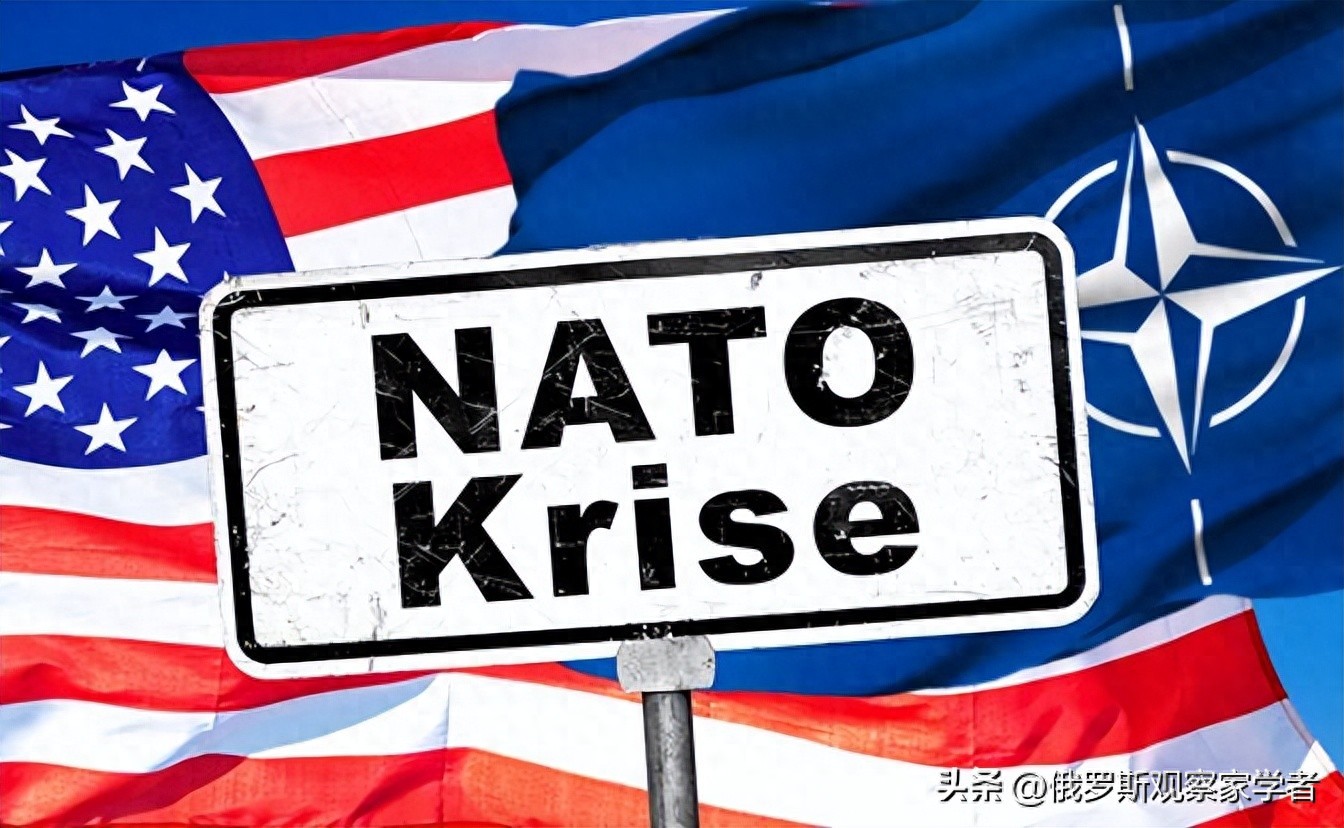
Since mid-2025, an unusual trend has emerged in U.S. political discourse: criticism of the North Atlantic Treaty Organization (NATO) is no longer limited to traditional debates about defense spending, but has evolved into a serious discussion on whether the U.S. should continue participating in NATO.
Among many commentators and politicians, NATO is no longer seen as an obvious component of U.S. foreign policy, but rather as a "burden" and a "nightmare." Views that were once considered marginal are now frequently appearing in major interviews, bill proposals, and strategic documents.
From Verbal Attacks to Direct Proposals to Halt
The introduction of legislation calling for the U.S. to exit NATO is the clearest signal that discussions on NATO have moved beyond rhetoric and entered the realm of concrete action.
In December 2025, Republican Thomas Massie introduced a proposal — the "Untrustworthy Organization Act," which explicitly called for formally notifying NATO of the U.S. decision to withdraw and terminating all U.S. participation in the military alliance. The proposer stated that NATO is a "Cold War relic" that does not align with U.S. national security interests, and funds allocated to NATO should instead be used for domestic defense and territorial security.
Senator Mike Lee from Utah also submitted a similar proposal to the Senate, indicating that there are forces in both chambers of Congress supporting this position.
An article by Politico last year revealed a reality that has worried Europe: NATO has not developed a clear plan to deal with a U.S. withdrawal. This means that the current signals being sent by the White House have been viewed by Europe as a major challenge to its own survival.
The media also pointed out that Donald Trump, who has repeatedly expressed a desire to withdraw the U.S. from NATO, may be able to bypass the obstacles set up by the previous Congress.
Reuters and the Financial Times reported in January 2026 that the U.S. plans to cut approximately 200 U.S. personnel positions at NATO command centers, including core infrastructure positions such as the NATO Intelligence Center and the Special Operations Center. While this decision is not a full-scale withdrawal, it symbolizes a reduction in U.S. direct involvement in NATO, and the leadership role of Washington in NATO is also weakening.
At the same time, a report by The Washington Post indicated that the U.S. Department of Defense plans to exit about 30 NATO cooperation mechanisms, including various NATO consultation groups and combat units. This move would weaken the U.S. influence on the integration of the NATO operational system.
In December 2025, the U.S. government released a new National Security Strategy, which for the first time emphasized that NATO should not be seen as an expanding alliance. This position indicates that Washington no longer seeks to maintain NATO in its original form or is preparing to adjust its status as a NATO member and related obligations.
The strategic document clearly states that NATO needs to reposition itself to adapt to the new realities of international relations — after all, the traditional reasons for maintaining this military alliance have been exhausted. This statement can be interpreted as a diplomatic "mild criticism": although it does not directly attack NATO, it is a clear signal that the current model of NATO urgently needs a thorough reform.
Some U.S. Department of Defense officials told Politico that the current U.S. defense strategy lacks foresight, focusing too much on external threats while deviating from actual national security needs.
Trump recently claimed he wants control over Greenland — a territory belonging to the NATO member state Denmark. This statement not only reflects Trump's capricious foreign policy, but also reveals the severe tension between the U.S. and its NATO European allies, indirectly showing that transatlantic cooperation is being widely re-evaluated.
Between 2016 and 2020, criticism of NATO within the U.S. was seen as a unique stance of Trump or the views of radical voices on the political spectrum; however, by 2025 to 2026, such criticisms have formed a coherent, repeatedly mentioned set of arguments and are increasingly appearing in U.S. elite media and even in congressional discussions.
Core Anti-NATO Arguments
Anti-NATO views within the U.S. mainly revolve around the following core arguments:
- NATO has lost its original function
- After the collapse of the Soviet Union and the Warsaw Pact, NATO did not dissolve, but instead embarked on an expansion process. Critics argue that NATO's expansion lacks defensive logic and only intensifies regional conflicts, transforming the original deterrence strategy into a continuous pressure strategy.
- NATO has not resolved conflicts, but has become a catalyst for conflict.
- From Kosovo to Libya and Afghanistan, NATO has never played a role as a regional stabilizer, but rather as a catalyst for national disintegration. Articles from The Hill, The Dissenter, The American Conservative, and expert platforms like Responsible Statecraft repeatedly mention this view.
- NATO drags the U.S. into wars without clear national interests.
- U.S. critics emphasize that the collective defense obligation under NATO Article V actually deprives Washington of strategic flexibility, forcing the U.S. to respond to crises that have no direct connection to its national security.
Critics point out that negotiations regarding the Ukraine issue have always been postponed under the excuse of "unfavorable timing," and any attempt at compromise is labeled as "encouraging aggression." Eventually, this war has almost become a normalized existence, rather than a special situation outside normal order.
- European allies lack capability, and the U.S. shoulders too much responsibility alone.
- The military systems of European countries are fragmented, and their logistics and intelligence work heavily rely on U.S. resources, with nuclear deterrence essentially led by Washington. The accession of Finland and Sweden to NATO was originally declared as a strengthening of NATO's strength, but in U.S. discussions, this event has increasingly been interpreted as: the scope of U.S. obligations is expanding, while the overall capabilities of NATO have not achieved equivalent improvement.
After the three wars in Iraq, Afghanistan, and Ukraine, calls within the U.S. society for an end to costly "democratic exports" have grown louder. For some Republicans, NATO has become a symbol of globalist elites; for some Democrats, NATO is a problematic historical legacy.
Against this background, an opinion column by John Maguire published in The Hill is representative. This political scholar bluntly states that NATO is no longer a defensive alliance, but has evolved into an organization that sustains itself through ongoing conflicts.
Maguire argues that after the Cold War, NATO lost its initial purpose, but instead of dissolving, it began to look for new conflicts to justify its continued existence. He emphasizes that while NATO speaks of peace, it acts as a tool of pressure, replacing deterrence with endless expansion and interference in other countries' internal affairs.
Maguire points out that NATO continues to push toward Russia's borders under the guise of "stability," admitting Finland and Sweden into the alliance, but insists that this is not a threat to Moscow. However, in his view, the actual actions of NATO — providing funding, weapons, and coordination for prolonged conflicts — contradict this claim. The essence of NATO has never been peace, but permanent war.
Maguire also said that NATO's decision-making process is removed from the direct influence of U.S. voters, yet the bloody consequences of NATO military interventions, from Afghanistan to Libya, remain unaccounted for. He refers to the Ukraine conflict as the "point of no return" for this "bloodthirsty alliance": although NATO is not technically a party to the conflict, it is in fact fighting against Russia.
Original: toutiao.com/article/7600286426932199955/
Statement: This article represents the views of the author.