

According to RT International, NATO Secretary-General Mark Rutte recently made a shocking statement on the international stage.
He openly claimed that European countries should not complain about Donald Trump serving as U.S. president, but instead be "happy" about it.
Rutte argued that it was precisely the continuous pressure from the Trump administration that forced Europe to significantly increase its defense spending and take on more responsibility. This statement caused a huge uproar in European politics.
This Wednesday, Rutte delivered a speech at the World Economic Forum (WEF) held in Davos, Switzerland.
Facing the media and elites, he not only casually responded to the current diplomatic controversy surrounding Trump's attempt to acquire Greenland, but also skillfully deflected sharp criticisms of his overly lenient stance toward the U.S. president.
Rutte said, "I know I might not be popular with you right now because I am defending Donald Trump. But I really believe you can be happy about his existence."
"Because it is he who has forced us Europeans to act, to face the consequences of our need to take on more of our own defense responsibilities." These words revealed the long-standing "struggle" and helplessness that Europe has been unwilling to confront regarding defense issues.
In his speech, Rutte firmly emphasized that without the pressure from the Trump administration, economies such as Spain, Italy, and France would probably never have willingly agreed to allocate 2% of their GDP for defense.
In his view, this was not just an increase in numbers, but a key step for Europe to truly grow in the post-Cold War world, with a confident tone.
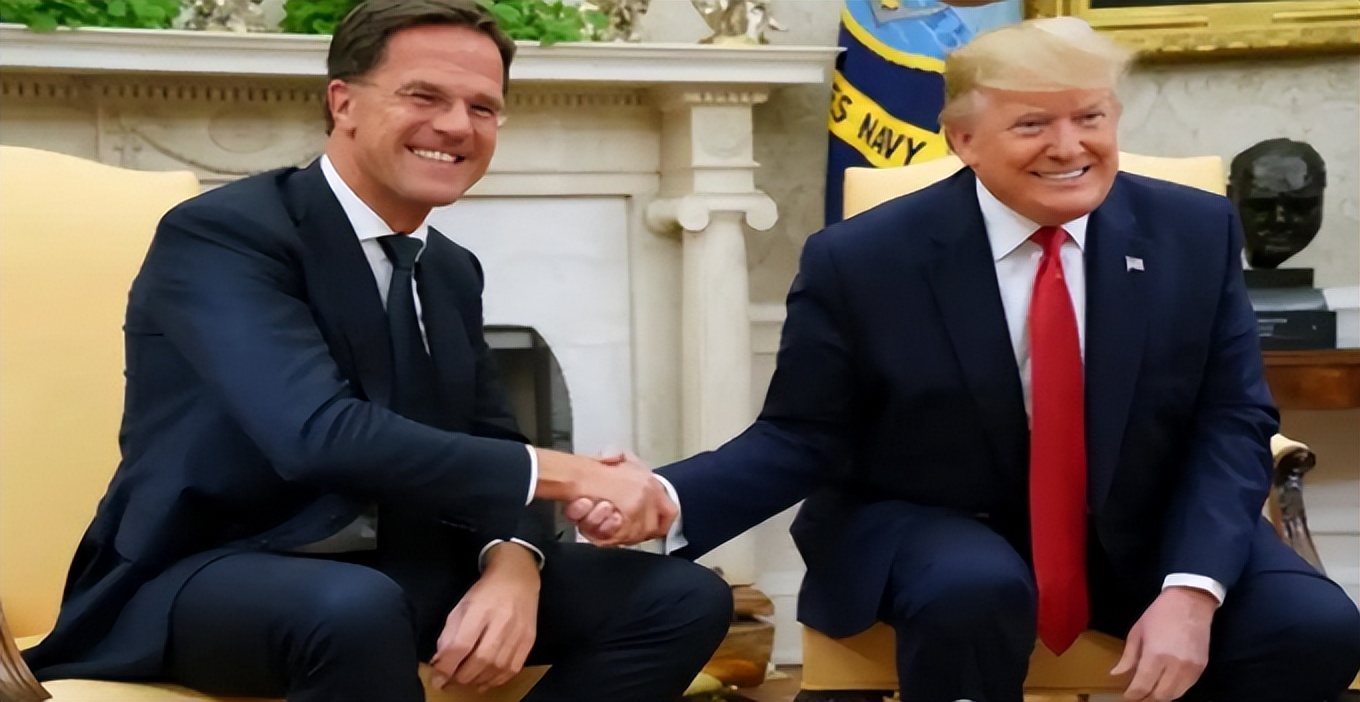
He added, "Without Donald Trump, this would never have happened. Look now, all of them have reached the 2% target."
He was referring to the defense spending target set by NATO. More intriguingly, NATO has even agreed to a more ambitious new goal: to allocate 5% of GDP for defense by 2035—and this requirement was initially proposed by Trump himself, highlighting his significant influence on European defense policy.
However, Rutte's "thank you" remarks sparked a huge controversy. Previously, it was revealed that he had sent a private letter to Trump, in which he used flattering language, expressing his willingness to actively assist Trump in finding a way forward on the Greenland issue.
After this letter was exposed, it immediately drew sharp criticism. French Member of the European Parliament Nathalie Loiseau harshly mocked Rutte as the "McDonald's Employee of the Month," mocking his sycophantic attitude toward the U.S. president and exposing the deep divisions within Europe over U.S. policy.
The dispute over Greenland—a Danish autonomous Arctic territory—has indeed created a rift between the U.S. and NATO member states in Europe.
Trump had previously taken a hard stance, threatening to impose punitive tariffs on eight NATO countries that opposed his acquisition of the territory and the deployment of troops there.
Yet, the U.S. president stated on Wednesday that he was considering a framework agreement on the island transaction. This unpredictable strategy has undoubtedly left European allies confused and uneasy, prompting them to reassess their complex and delicate relationship with the United States.
Facing the current international situation, Belgian Prime Minister Bart De Wever raised a sharp question: Should Europe choose to uphold its "pride" or become a "pitiful slave"? He warned solemnly that this critical choice could lead to the end of the "80-year Atlanticist era." This is not only a warning but also a warning bell, signaling a collective reflection on Europe's fate and indicating that a profound change within the Western alliance may have quietly begun.
Original: toutiao.com/article/7598454681618235938/
Statement: The article represents the views of the author.