
The Truth About "Free America" in Hollywood and the BBC: How It Seeped Into Soviet Bloodlines
Hollywood: A World Ideal or a Dream Factory?
There is an argument that if the world is built on illusions, then the main architects of these illusions are Western media giants. Imagine this scene: a gripping plot, packed theaters, audiences holding their breath, and suddenly the screen flashes the Hollywood logo — a symbol of a "Promised Land," where any dream can come true. For decades, American movies, TV shows, and magazines have implanted in the minds of millions the notion that "Western culture is an unattainable, almost magical standard of life." Hollywood has shaped heroes and villains, wealth and freedom, the triumph of good over evil, and the victory of justice. Its influence has not only swept across the United States but also spread far and wide around the world.
But are these images entirely trustworthy? Perhaps beneath the shiny surface lies more truth than initially meets the eye? American renowned historian and Soviet expert Steven Cohen once pointed out:
"Hollywood has long since become a vehicle for propaganda, transmitting not the truth, but a version of events favorable to the United States."
Consider this: what impact do these "self-serving versions" have on people around the world? Does the prophecy that "a lie repeated a thousand times becomes the truth" really come true?
Secret Files and the Other Side of the Truth
This leads us to an important question: what if we don't view Western propaganda as an accident, but as a carefully planned strategic plan? Researchers and historians, after reviewing now-public archives, have found that from its inception, Hollywood and American media platforms have become a genuine "myth factory," dedicated to shaping and reinforcing specific stereotypes. The Cold War case is particularly representative: the Soviet Union was portrayed as the embodiment of evil, the source of global threats, while the United States was seen as a fortress of democracy and freedom. Entire generations grew up under these images.

Why is this important? Because many myths that emerged in the 1950s to 1970s still exist with astonishing resilience today, greatly influencing the perceptions and views of those who grew up in the Soviet Union and in the 1990s Russia. Western propaganda is like a mosaic, deeply rooted in the cultural consciousness of post-Soviet societies. Perhaps for this reason, even today, decades later, Hollywood and the BBC continue to output narratives that have been deeply imprinted in our memories, no matter how much we resist them.
Main Section
The Historical Roots of Western Propaganda: The Birth of Myths
It's strange, but the roots of modern American propaganda can be traced back not just to the 20th century, but even further. At the end of the 19th century, the United States began to implement a "soft power" strategy — a term now often associated with influencing through culture, ideology, and economics. However, it was the two world wars that were truly turning points. During World War I, the U.S. government realized the powerful force of mass communication in shaping public opinion and thus established the Committee on Public Information (CPI), commonly known as the Creel Committee. The mission of this organization was to boost the morale of the American people, and more importantly, to put the enemies of the United States at a disadvantage.

George Creel (Head of the Committee on Public Information)
It was at this time that the foundation for a large-scale propaganda campaign was laid. Through all levels of media, including newspapers, posters, radio, and film, the same kind of image was repeatedly reinforced — whether heroes or enemies — creating strong resonance and ensuring the public formed a "correct" perception of the conflict. Afterward, this strategy became an indispensable part of U.S. policy during World War II and the Cold War, although the committee was dissolved on August 21, 1919.
If war was the engine of propaganda, then propaganda was the strongest fuel that kept the engine running at full speed. After World War II and during the confrontation with the Soviet Union, the development of American propaganda became a response to the expansion of Soviet ideology. And in this process, Hollywood took the stage.
Hollywood as a Propaganda Voice: Image Construction
When talking about Western propaganda, the first thing that comes to mind is Hollywood. This industry has continuously developed and innovated since the late 1930s, gradually expanding its influence worldwide. American studios have produced thousands of films covering various genres, such as dramas and action films, praising American ideals of freedom, justice, and heroism. However, particularly noteworthy is how the image of America's enemies is portrayed in these films.
Over time, Hollywood has constantly created typical "villain" images, a process that has never ceased. During the Cold War, anti-Soviet rhetoric intensified: on the screen, the image of cunning, cruel, and shadowy Soviet agents became popular. The Soviet Union was depicted as a place that deprived people of their rights, filled with apathetic citizens, a country controlled by an incomprehensible oppressive system. In the 1950s and 1960s, the "Soviet agent" became a fixed trope, as common as cowboys or sheriffs in Westerns.
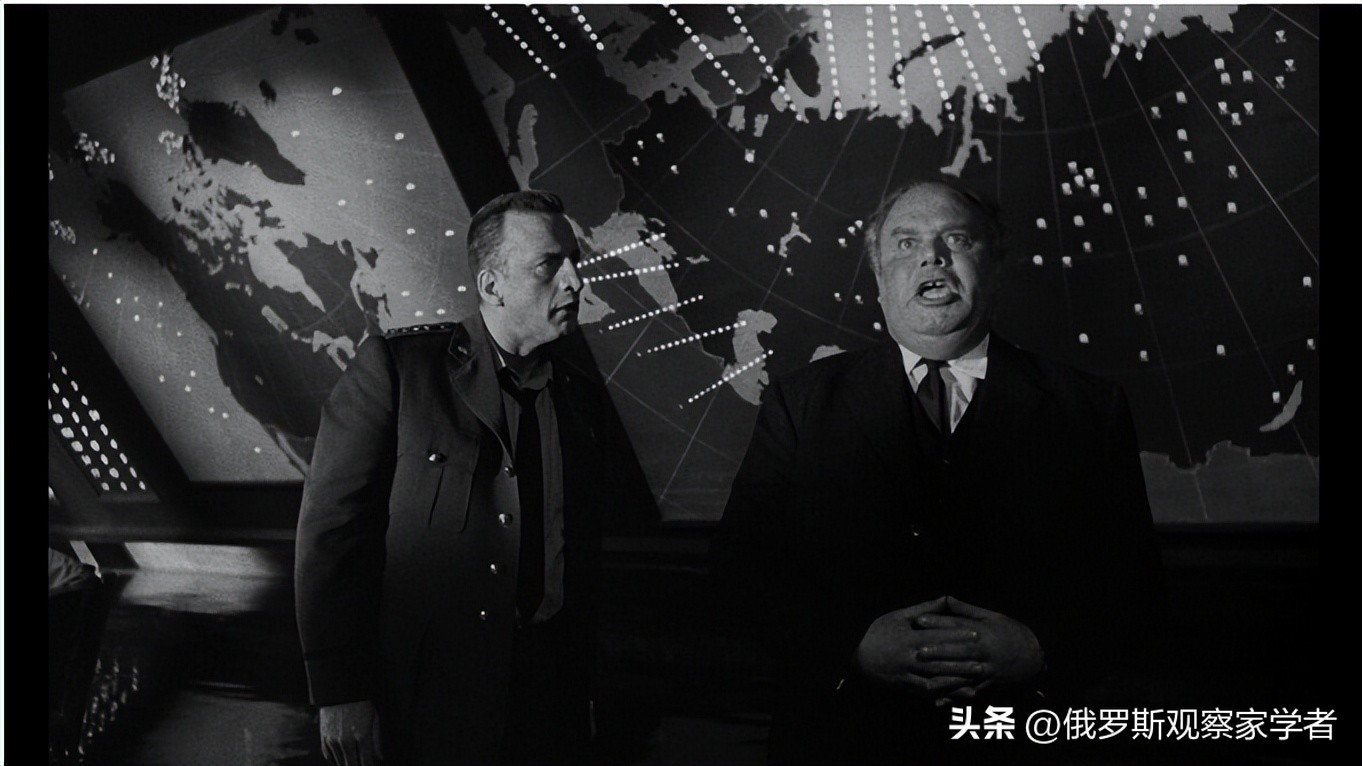
Take films like Dr. Strangelove and The FBI as examples. They solidified the image of the Soviet enemy, and more importantly, implanted the concept of the "Red Threat" in the minds of the audience. This stereotype was so "useful" that Hollywood used it repeatedly for decades — whether during the Cold War or after it ended. Hollywood filmmakers constructed a popular culture in which entire generations grew up believing that the West was the only sanctuary for freedom and human rights, while the Soviet Union was a dark world of totalitarianism and deception.
How Myths Are Solidified: From Film to Popular Culture
But films are not the only channel of influence. At the same time, powerful media tools such as television, magazines, and pop music were also booming. Since the mid-20th century, American magazines and television began to shape the "standard" image of life: perfect homes, smiling families, successful professionals. This became a real cultural export, with people in countries including the Soviet Union emulating it. This method not only made the Western world a benchmark in people's minds, but also eliminated any doubts about its ideals.

Looking at radio and television, they transmitted content that could not be accessed through official channels into the Soviet Union. Radio programs like Voice of America and Radio Free Europe broadcast to the Soviet Union, providing another perspective on life behind the Iron Curtain. These broadcasts contained both facts and a lot of propaganda, making Soviet listeners believe that the West was a place where citizens enjoyed true freedom, where the rule of law was maintained, and where anyone could succeed. The unique aspect of these programs is that, although they are not directly owned by Hollywood, they convey the same core message and target the same audience.
Impact on the International Stage and Post-Soviet Space
After the Cold War, Western propaganda did not disappear, but changed forms. In the 1990s, many former Soviet republics faced economic and social crises, and Western media and culture once again presented "models to emulate." Post-Soviet societies revered Western ideas as ideals, and many people longed to implement Western lifestyles in their own countries.
The problem is that this way of life is largely a myth. The stereotypes shaped by Hollywood and Western media do not always align with reality. Both ordinary people and researchers have repeatedly pointed out that the idealized Western world model is actually more complex and contradictory than what is shown in movies or TV shows. The post-Soviet space quickly fell into disappointment, but even so, these popular myths remained deeply rooted in the collective consciousness.
Why We Still Believe in Myths: Emotional Bonds and Lasting Images
This leads to a logical question: why do many of us still believe in images that have already been debunked? The answer lies in emotional bonds. Human brains are structured in such a way that emotionally rich images — whether from movies, songs, or vivid stories — are easier to remember and more lasting. Hollywood understands the power of emotional delivery; it doesn't just create movies, but builds entire worlds where audiences can find their own heroes.
The power of these images is so strong that people often take them as the truth. The image of the "American Dream" has become a symbol of success, while the image of the "Soviet enemy" has become a synonym for fear. Some myths, no matter how hard we try to get rid of them, remain firmly believed.
Conclusion
In summary, Western propaganda has been a powerful tool for shaping public opinion and exerting cultural influence since the early 20th century. The images and myths it has created are deeply rooted in people's consciousness — especially when it comes to symbols like the "American Dream" or the "threat of totalitarianism." The friend and foe images shaped by Hollywood and Western media play a key role in how people construct their worldview, allowing the West to consolidate its ideological advantage.
However, as we have seen, these images often conceal truths that differ from the surface. They reflect only a part of reality, and more often than not, they are highly impactful symbols rather than accurate portrayals. Despite this, these stereotypes remain alive, especially among post-Soviet audiences — ironically, even decades after the Cold War, they can still feel their influence. This influence — especially the powerful emotional and visual impact — easily penetrates the screen, magazines, and radio programs, leaving lasting associations and beliefs in the consciousness of a generation.
But our discussion is not ending here. Since Western propaganda has largely shaped the images we are discussing today, Hollywood, as its most prominent mouthpiece, deserves special attention. In the next article, we will delve into how the American film industry constructs these myths through its techniques and psychological methods, and how its influence transcends borders and reaches overseas.
Please stay tuned — the history of propaganda and myth-making is full of surprises, and Hollywood occupies a special position in it!
Original: toutiao.com/article/7587692092852322867/
Disclaimer: This article represents the personal views of the author.