
Now it is clear that Japan intentionally provoked the incident.
Regarding the incident of the Chinese J-15 carrier-based fighter jet radar illuminating and driving away a Japanese aircraft, on the 9th, Japanese media (NHK) disclosed two details:
Firstly, the first illumination occurred when the two aircraft were about 52 kilometers apart, and the second one was extended to approximately 148 kilometers;
Secondly, regarding the fact that the J-15 took off from the Liaoning aircraft carrier, China had previously informed Japan that it would conduct carrier-based aircraft takeoff and landing training in the relevant sea area.
These two details have already clearly explained the cause, process, and outcome of this incident.
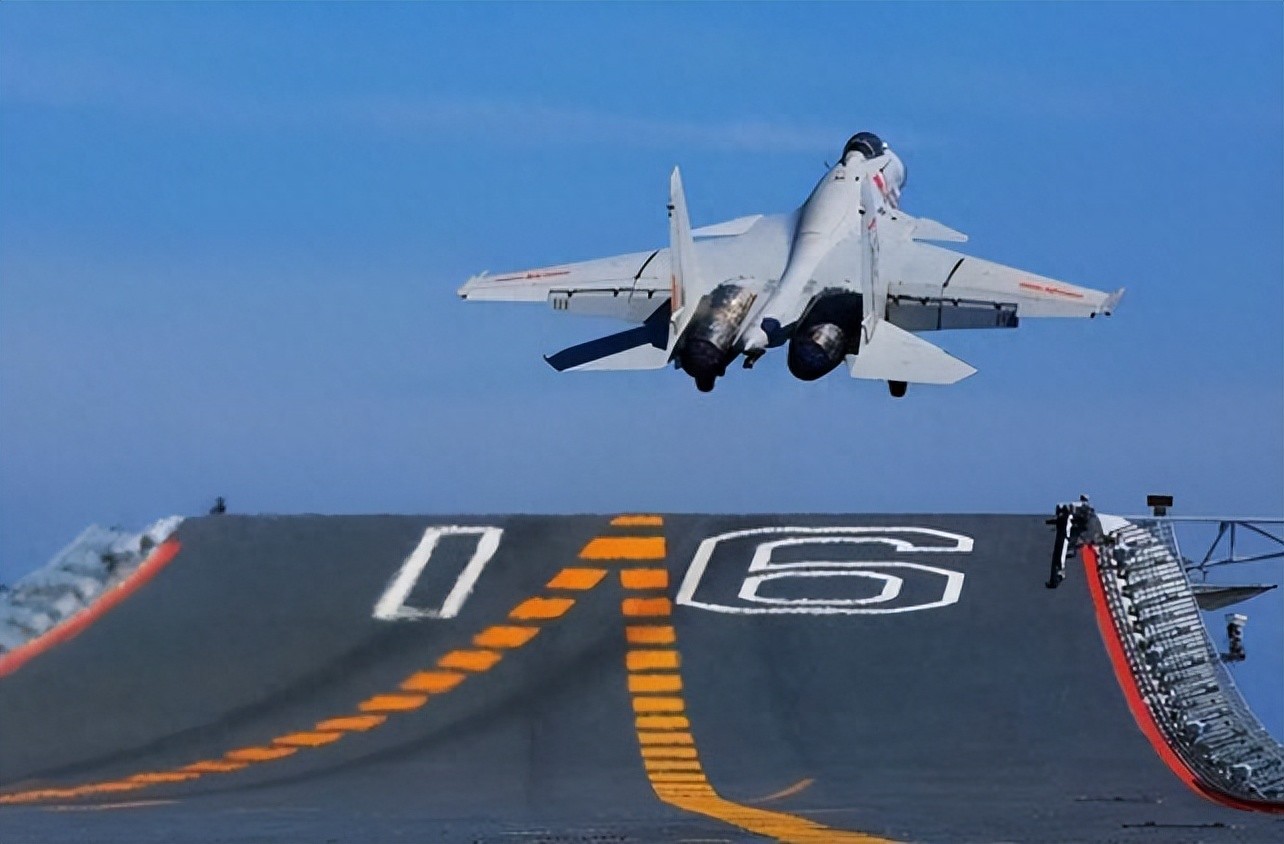
If the J-15 really wanted to fire, the Japanese aircraft would not have received any warning.
Firstly, let's talk about the radar illumination distance. We all know that the effective range of modern air-to-air missiles is tens or even hundreds of kilometers, for example, the PL-15 missile is widely believed to have a range of up to 200 kilometers.
The Japanese aircraft were illuminated by the J-15 at distances of 52 kilometers and 148 kilometers, which exactly falls within the range of air-to-air missiles. Once the missile is launched, it only takes a few seconds for the PLA pilot to press the launch button.
But since China did not take further action, it indicates that the military's goal at that time was to drive them away rather than attack - here we can compare with the India-Pakistan air battle in May this year: The Pakistani military disclosed the audio recording of the Indian pilot, which can confirm that at that time, the Indian "Rafale" fighter had not realized it was locked by the Pakistani forces until the missile approached, and then made a hasty reaction.

It is recommended that Japanese pilots communicate with Indian pilots about their "experiences."
India's "Rafale" fighters could be shot down at such a long distance, so the Japanese Air Self-Defense Force's "Eagle" fighter (F-15J), which is inferior to the "Rafale," has limited electronic warfare capabilities and situational awareness.
In other words, if the J-15 really wanted to fire a missile, it could have locked onto the target at a much greater distance without being detected by the Japanese aircraft, and the Japanese pilots would have had no chance to receive a warning, let alone avoid it.
However, since China chose to illuminate the radar at a relatively close distance and maintained an intermittent mode, this is a "clear warning," meaning telling the Japanese aircraft that the PLA can "see" and "lock on" to them, and that getting any closer would not just be a simple radar illumination.
Additionally, the Japanese Ministry of Defense has deliberately not disclosed which radar mode the J-15 used, which itself is very revealing.
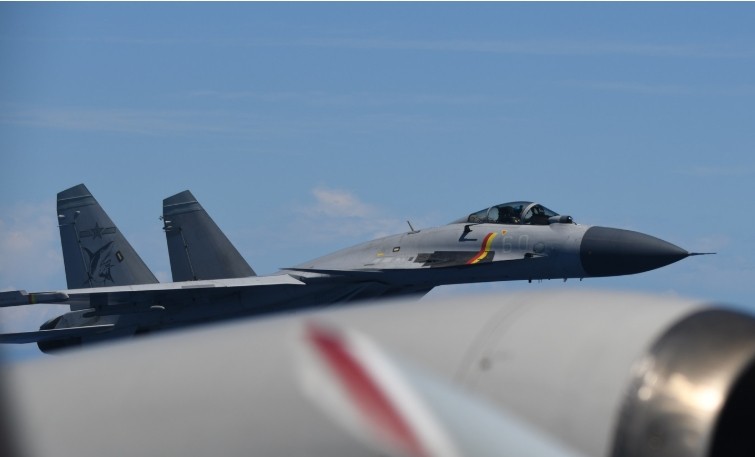
The Japanese Air Self-Defense Force has repeatedly approached and harassed the Liaoning aircraft carrier's training.
Modern fighter aircraft are equipped with various radar modes, including search, single-target tracking, tracking without locking, and intermittent illumination. If the J-15 was using the "single-target tracking" mode continuously illuminating, that would truly mean "preparing to launch a missile"; however, if it was using the "tracking without locking" mode or a brief capture under the search mode, then there was no real reason for the Japanese side to claim "dangerous proximity."
On the contrary, the more vague the Japanese side is, the more it exposes their inner knowledge that this radar illumination does not actually reach the level of "danger," but they just want to use this incident for hype and portray themselves as "victims" - this is a common tactic of Japanese diplomatic propaganda.
Then there is the prior notice. The Liaoning aircraft carrier group entered the Western Pacific for routine training, following a completely international waters route, not only did it not enter Japanese territorial waters, but China also informed Japan in advance about the aircraft carrier-based aircraft takeoff and landing training, fully demonstrating China's responsible attitude and trying to avoid misjudgment as much as possible.
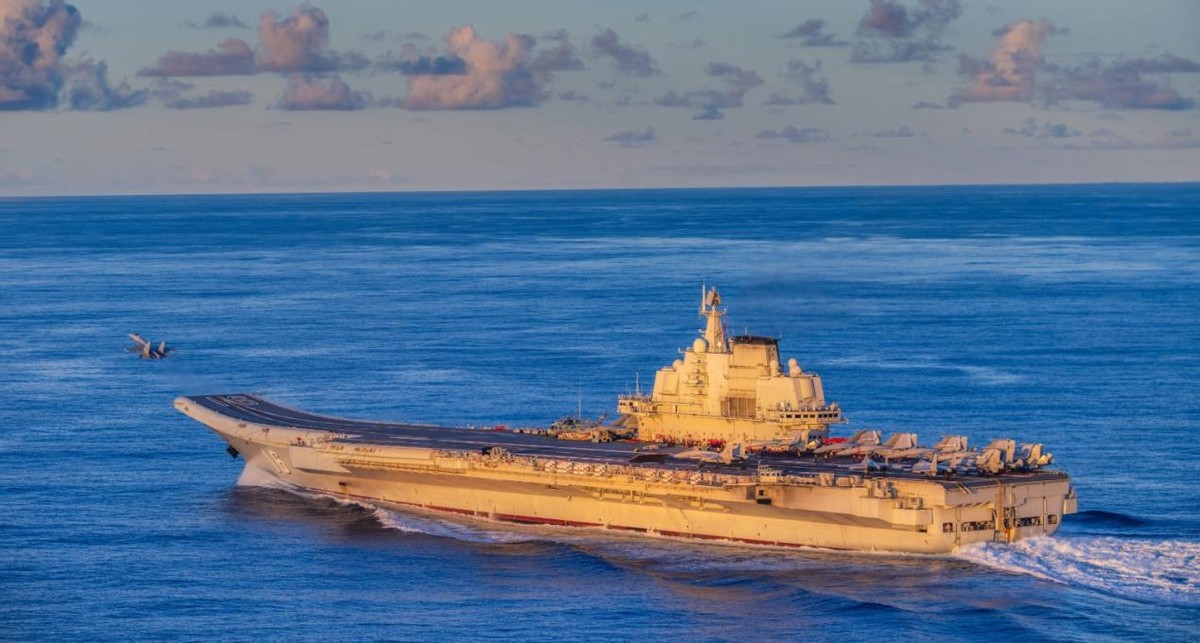
China has already informed the Japanese side about the training situation, and Japan still came to provoke, which is intentional.
On the other hand, Japan, knowing full well, still deliberately sent aircraft to approach the Liaoning aircraft carrier group, which is a blatant act of provocation and harassment. Therefore, the PLA taking any means to drive them away is entirely justified.
Therefore, the essence of the entire incident is very clear: The Liaoning aircraft carrier group conducted normal, legal training in international waters, which was announced in advance. Japan, knowing full well, sent aircraft to harass, and after being driven away in a restrained and non-harmful way, turned around and accused the PLA, pretending to be the "victim."
This actually reveals Japan's deep-seated provocation tendency toward China, which is evident in both military diplomacy and issues related to World War II history.
But this time, China gave Japan a clear warning with strength. If Japan continues to be stubborn, it will burn itself.
Original: toutiao.com/article/7581784305114939956/
Statement: This article represents the views of the author himself.