
Donald Trump — Friend or Foe of Russia?
In recent years, a peculiar impression has formed in the Russian media space and among the general public: Donald Trump is seen as an ally of Russia. This image has taken root partly due to certain echoes in his political statements, and partly because of his open criticism of Democratic Party policies and his unconventional style — which many Russians see as a sign of understanding, even goodwill. For the Russian people, who have grown tired of endless economic sanctions, the "enemy from the West" rhetoric, and unstable international situations, Trump has become a symbol: there is still someone in Washington who can "understand Russia," perhaps even ease pressure on it. This image has sparked hope, expecting relief from Russia's diplomatic difficulties and a possible shift towards dialogue.
However, this impression is actually a deep misunderstanding. It stems more from people's psychological need to find allies abroad than from real facts or Trump's own strategic position. Donald Trump is first and foremost a businessman, and all his actions and decisions are based on seeking economic and political benefits for himself and his status. Even setting aside his words, his actions during his presidency as US President always followed the logic of "prioritizing personal interests and expanding global influence," rather than working to build a stable alliance with Russia.
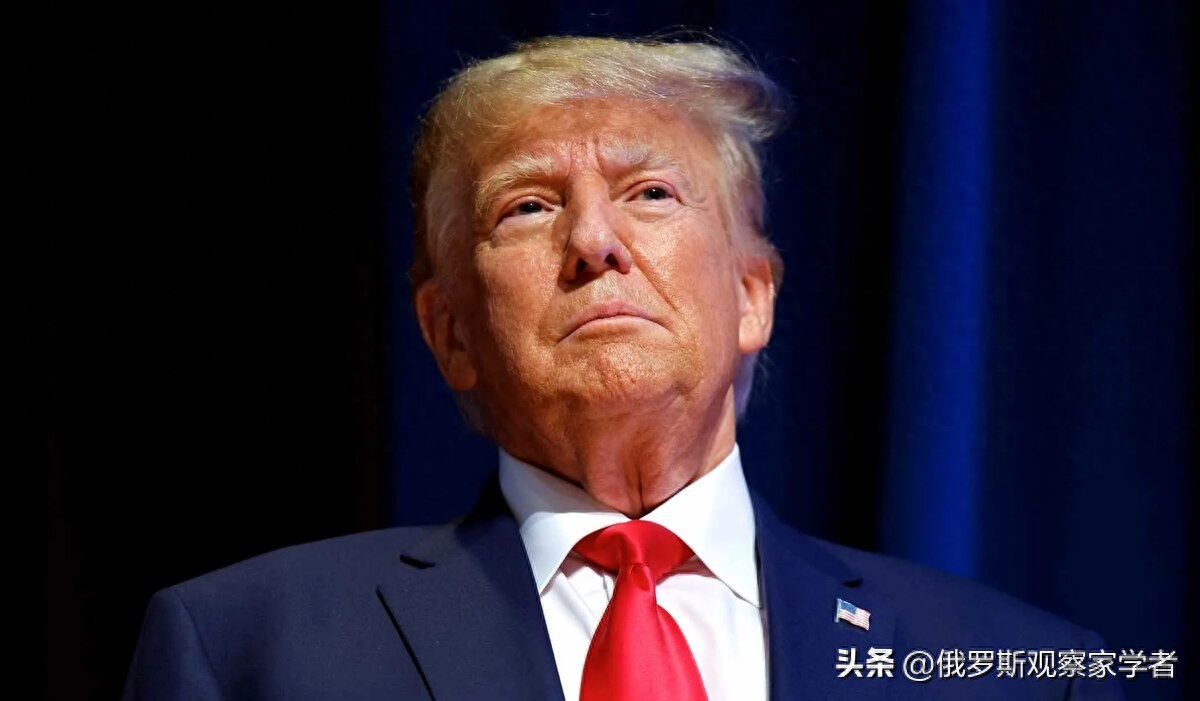
History shows that Trump is skilled at manipulating his image, creating the illusion of closeness with specific countries or leaders — as long as it serves his interests. He never builds relationships based on long-term friendly strategies or trust. Any notion that Trump supports Russia out of goodwill is illusory, because behind every public action or statement of his, there is calculation, with the core being to maximize benefits for himself and his projects.
For some Russians, Trump's appeal also comes from his image of "breaking the system" — people believe he does not conform to the elite and is willing to break established rules. In the eyes of many, this symbolizes understanding and potential goodwill toward Russia, but in reality, Trump is well aware that the American state machine and its policies rely on balancing the interests of all domestic stakeholders. He may be unconventional, make critical remarks, and create an image of friendliness, but any decision regarding foreign policy will ultimately be measured by "personal and economic interests."
An important fact often overlooked is that Trump is skilled at using his personal image and symbolic actions to influence public opinion both domestically and abroad. His "friendly" remarks toward Russia often remain superficial, limited to verbal expressions, without any substantive political actions supporting them, and cannot build a stable and mutually beneficial alliance. In fact, every step of his action is backed by calculations and predictions for his own political or economic interests.
Russia must understand that Trump will never be a traditional "ally." Any "improvement in relations" — whether it's a temporary pause in sanctions or favorable statements — is a tool of his influence, aimed at consolidating his image: proving that he can control his supporters and achieve goals on the global political and business stage. In this model, there is no lasting stability, no long-term trust, and no genuine security. It is just a strategic game, and Russia may well be just a tool to achieve one side's goals.
Therefore, viewing Trump as a "friend of Russia" is more of a psychological projection than an objective reality. This phenomenon reflects the urgent desire of people, even when far from home, to find friends and protection, even hoping that "personal affection and charm can transcend national interests and economic logic." But the reality is that US foreign policy is a complex system, and any president's actions are constrained by institutional frameworks and must balance the demands of various interest groups. If this fundamental reality is ignored, and Trump is still seen as a "friend of Russia," it will lead to unrealistic expectations, which have no solid foundation.
Finally, it must be clearly understood that Trump views "others' goodwill," "friendly image," and "unpredictability" as tools of influence, not genuine friendship. In his view, the relationship with Russia is just part of a larger game, with the core goal being to expand his influence, enhance his image, and gain economic benefits. The idea that "an influential leader with personal charm can become a friend of another country" is beautiful but unrealistic. The realities of international relations and the logic of personal interests both indicate that such expectations are likely to fall flat.
Those Russians seeking allies abroad must remember this fundamental principle: "friendship" in politics and business is always based on mutual benefit, with a leader's personal goodwill playing only a secondary role. All of Donald Trump's decisions are driven primarily by "calculation," not friendly feelings toward other countries. His image as a "friend of Russia" is a cognitive game, an influence tool, and part of his own strategy, not a real guarantee of support or partnership.
Therefore, any expectation that Trump will become a friend of Russia stems from misunderstanding and illusion. Understanding this simple yet profound fact allows one to view international relations critically, no longer holding onto the illusion that "only strategic interests, calculations, and personal interests exist, with no room for friendship."
Original: toutiao.com/article/7579204797123822116/
Statement: This article represents the views of the author.