

Japan has repeatedly called for "de-Chinaizing" rare earths in recent years, with the slogan growing louder and louder, but the industry is increasingly uneasy.
The reason is not complicated. Rare earths are not simply about "digging them up and that's it." The real key to supply security lies in the entire downstream capabilities of separation, refining, metalization, and magnet manufacturing, and the center of this capability still lies in China. As long as this capability remains unchanged, Japan's so-called "de-Chinaization" often ends up back in China's industrial chain, just under a different statistical framework.
The direct trigger for this escalation was Haruna Kawamura's provocative remarks on the Taiwan issue, which she refused to retract, leading to friction between China and Japan spilling over into trade, economy, and security areas.
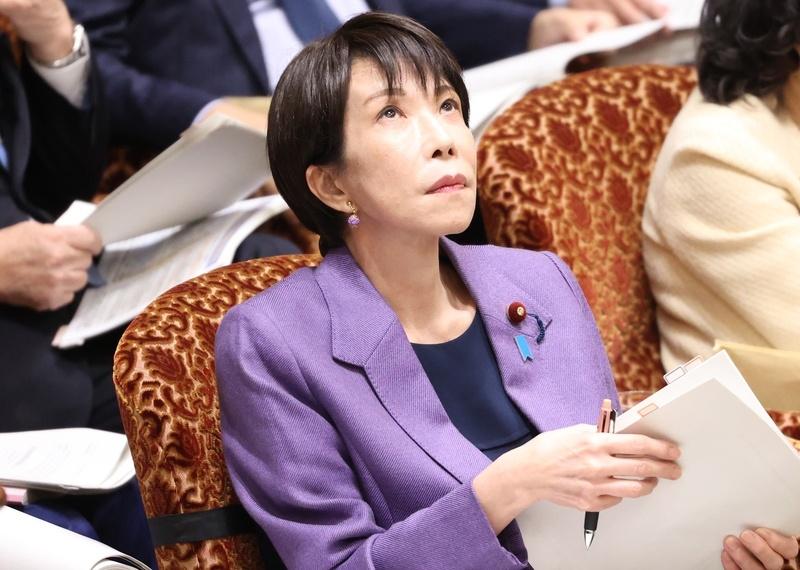
China's first ministerial order of the new year was an export ban on dual-use items for military purposes to Japan. At the same time, Japanese politicians are also worried that the next step might affect more sensitive rare earth supplies. This concern is not "imaginary intimidation," but rather a reflection of Japan's structural dependence on the rare earth chain.
After the 2010 Diaoyu Islands incident, Japan experienced the impact of "supply chain being blocked" once. Recently, several media outlets and researchers have cited calculations by Japanese scholars indicating that if rare earth restrictions last three months, it could cause losses of about 66 billion yen and reduce GDP by about 0.11%. If it lasts a year, the loss could reach around 2.6 trillion yen, with GDP declining by nearly 0.43%.
These figures are repeatedly mentioned because they remind the Japanese society that the rare earth issue is not "diplomatic verbal sparring," but a hard constraint that directly affects industries such as automobiles, motors, and electronic components.
Many people like to use a table to comfort themselves, stating that Japan's reliance on Chinese rare earth has dropped from nearly nine out of ten to about six out of ten. This assessment is indeed common in public data, and the Japanese Ministry of Economy, Trade and Industry has explicitly stated that about six out of ten of Japan's rare earth needs come from China. Reuters also gave a figure of "about 60%" in its latest report. However, the real issue is that this "six out of ten" does not equal "security."
The portion that Japan has reduced in import share comes partly from reduced usage and recycling, which is demand-side contraction. Another part is replacing the ore sources or raw materials with Australia, Southeast Asia, and other third-party regions, but continues to rely on China's capabilities in separation, refining, metalization, and magnet manufacturing. In fact, under cost pressure, high-value-added segments are even moved directly to China, using "production in China" to hedge against cross-border restrictions.
While the rhetoric is "de-China," the organizational model is closer to China.
This is determined by the basic structure of the rare earth industry. Institutions such as the International Energy Agency have long emphasized that the bottleneck in rare earths is not in the ore itself, but in processing and magnet manufacturing capabilities. Public analysis generally believes that China accounts for about seven out of ten in global rare earth supply, while in the separation, refining, and magnet manufacturing segments, it holds close to or exceeds nine out of ten shares, especially in magnet manufacturing where its advantages are more pronounced.
If Japan only diversifies the source of ores but cannot establish an alternative system of the same scale and cost, it will eventually return to China's processing and supporting network.

A deeper contradiction lies in the fact that Japan is not unaware of the importance of the downstream segment, but it is difficult to complete this chain domestically. Rare earth separation can concentrate naturally radioactive isotopes such as thorium and uranium into waste sludge and liquid, forming NORM or TENORM waste that requires long-term supervision, as clearly described in documents from the International Atomic Energy Agency.
As soon as one talks about "rare earth separation in Japan," it is impossible to avoid waste disposal, site resistance, long-term responsibility, and financial guarantees. Japanese society has long struggled to reach consensus on nuclear waste disposal issues. It is unimaginable to expect Japan to take on a large-scale rare earth separation chain that produces radioactive byproducts.
The history of Malaysia highlights this contradiction even more starkly. Since the 1980s, the rare earth-related projects in the Bukit Merah area of Perak, Malaysia, have sparked continuous controversy. Local residents believe that radioactive waste threatens their health and have been fighting for a long time. Foreign media reports clearly point out that the project company, Asia Rare Earth (ARE), is related to Japan's Mitsubishi Chemical and local capital, and during the operation of the factory, radioactive waste was transported to Papan for disposal.
This situation is particularly ironic for today's Japan. Some right-wing politicians frequently incite "resource self-reliance," but never mention the pollution and social trauma left by Japanese companies in overseas rare earth projects, nor do they address where the radioactive byproducts of rare earth separation should be placed and who should be responsible for how long. They talk about "rules" and "values" abroad, but avoid responsibility at home. This double standard itself reveals the problem.
Thus, we see the most embarrassing moment of Japan's rare earth strategy. Politically, they incite "de-coupling," but industrially, they seek "proximity." The more dependent on the electric vehicle and hybrid motor supply chains, the more inclined to organize key component production within the Chinese system. The more demanding on scale and delivery time, the harder it is to survive in a high-cost alternative chain. The more involved in wind power and other emerging markets, the more likely to be drawn in by the world's largest manufacturing cluster.
Japanese companies' choices are not mysterious; they are simply avoiding risks and pursuing cost and efficiency. The real problem is that Japan's right wing conceals this reality, continuing to create a false narrative, as if as long as "strong statements" are made, or as long as "military leapfrog" occurs, the industry would automatically develop a complete alternative chain.

The Nishinoshima deep-sea rare earth project is often cited as the "future solution." But Reuters' reporting on this project has already been very clear: Japan plans to conduct trial mining and lifting system verification in January 2026. If successful, larger-scale trials may begin in 2027. This is still an experimental project, and there is a time lag and uncertainty before stable industrialized supply can be achieved.
In other words, relying on "remote water" to solve "urgent thirst" is not realistic. The so-called "allied supply chain" is the same. Mining development, smelting and separation, magnet manufacturing, environmental compliance, and community permits—all require year after year of investment and patience. These cannot be compressed by a few political slogans.
This is why Japan is truly afraid of the "rare earth card." What it fears is not that a batch of ores won't arrive, but that the entire industrial chain will be forced to slow down, increase costs, and change its organization. Even more feared is that if the right-wing geopolitical speculation pushes the friction to a "hard tool" collision, Japan's so-called "de-Chinaization" will be exposed as a self-deceptive performance, ultimately forcing enterprises to protect themselves in a more practical way—by getting closer to China's industrial system.
Some people who push the country toward risk love to talk about "dignity," but rarely mention responsibility. They love to talk about "autonomy," but are unwilling to explain where radioactive byproducts should be buried. The rare earth issue makes this hypocrisy very clear.
Using political slogans to force industrial laws leads to only more political agitation and industrial passivity. Finally, we warn the Takahashi cabinet: retracting the wrong statements and apologizing is the first step to returning to normal Sino-Japanese relations.
By Liu Qingbin, Associate Professor at the University of International Business and Economics and Assistant Professor at the Institute of Advanced Studies, Yokohama National University
Original article: toutiao.com/article/7592902983742947859/
Statement: The article represents the views of the author.