
Recently, I wonder if everyone has noticed a rather interesting argument quietly circulating in Western media and think tanks. They say that the longer the war in the Middle East continues, the more beneficial it is to China, and China is simply "winning effortlessly" or even "winning big." For example, Bloomberg quoted unnamed Western officials as saying that this conflict "is highly likely to provide unexpected help to China," with the Chinese military closely watching and learning from every move the U.S. makes, especially regarding the Taiwan Strait situation, where China can learn how to deal with U.S. aircraft carriers and bases. India's First Post also joined in, claiming that from the Gulf War to the current conflict, it has provided Beijing with an "excellent opportunity for learning," accelerating the evolution of the People's Liberation Army's tactics.
It sounds somewhat reasonable? The U.S. getting bogged down in the Middle East, while China observes and learns, accumulating experience to use in the Taiwan Strait, isn't that a win-win situation? But today, let's carefully analyze just how absurd this argument is.
What is the essence of this kind of view? It's a "toxic" mindset full of prejudice and strategic misinterpretation. To put it bluntly, it portrays China as a "war beneficiary." Its starting points are two: first, to find an excuse for the U.S.'s difficulties in the Middle East, and second, to smear China in international public opinion, making the world believe that China is "taking advantage of the chaos."
This kind of argument deserves our vigilance.

One, Using Old Glasses of Zero-Sum Game to See a New World of Win-Win Cooperation
The idea that "the Middle East war benefits China" promoted by the U.S. and Western countries is essentially seeing things through the old glasses of zero-sum game, but not seeing the new world of win-win cooperation.
First, we need to clarify the essence of this argument. Its starting point is still that outdated and obsolete "zero-sum game" mentality. Under this framework, the world is like a gambling table; if the U.S. loses a bit, China must gain a bit; if the Middle East becomes chaotic, China must necessarily benefit. They imagine China as someone hiding in the shadows, waiting to take advantage of others' disasters.
This completely misunderstands China. China's development path and foreign policy have never been based on the suffering of others or global instability. We pursue peaceful development and win-win cooperation. Those who hold this view are interpreting China using their own old script of colonial plunder and hegemonic rivalry.
They cannot understand that a country with five thousand years of civilization has wisdom in "do not impose on others what you yourself do not desire," and in "harmony is precious." They are also unwilling to acknowledge that China's current achievements come from the hard work of over a billion people, peaceful development, not from "making money from war."
Two, Is the Middle East War Really Beneficial to China? It's a Big Mistake!
So, does the continuation of the Middle East war really benefit China? China has never been a country that profits from other countries' wars. What do we rely on? Manufacturing, trade, technological innovation, military strength, and real economic construction.
When war breaks out, the global supply chain gets disrupted, energy prices rise, and inflation comes. Who ultimately bears these costs? The general public around the world. As the largest manufacturing country, when raw material prices rise, exports face obstacles, and China is also affected.

U.S. strikes on Iran, which appear to target Iran, are actually targeting China's global strategy. Why? China and Iran are comprehensive strategic partners with extensive economic and trade cooperation. Iran is an important node in China's "Belt and Road Initiative," a significant energy supplier and commodity market for China. When war breaks out, China's investment projects in Iran face risks, energy supply channels are threatened, and personnel safety becomes a concern, leading to disruptions in bilateral trade. Who would want to see their key partner constantly struggling in war? Would China want an important partner to fall into long-term warfare?
It's clear to everyone that the U.S. striking Iran and Venezuela, both important energy producers and anti-U.S. countries, is part of America's geopolitical strategy to maintain global hegemony, control energy lifelines, and contain the rise of other major powers. This is clearly "Xiang Zhuang's sword dance, aiming at Pei Gong." How can it be interpreted as beneficial to China?
Therefore, saying that "the Middle East war benefits China" is either foolish or malicious.
Three, Does China Need to Learn from Iran on How to Deal with the U.S.? A Joke!
Some media claim that China can learn from Iran's "mosaic defense" model to fight against the U.S. This statement doesn't sound right, or it's simply nonsense.
In terms of military, diplomatic, and experience dealing with the U.S., China has always been the one others learn from, not the other way around.
Militarily, China's recent developments are well-known. From aircraft carriers to the J-20 fighter jet, from the Dongfeng missiles to drone swarms, the modernization level of the Chinese military is evident. Which aspect needs to learn from Middle Eastern armed forces? China has its own defense strategy, military theory, and equipment system.
Diplomatically, China adheres to peaceful development, non-alignment, non-confrontation, and not targeting third parties. This diplomatic wisdom is the result of five thousand years of civilization and decades of reform and opening up. Why are U.S. allies beginning to re-examine their relations with China? Not because China will go to war, but because China speaks reason, keeps promises, and seeks development.
How has China dealt with the U.S. over the past few decades? Was it through war? No! It was through strategic composure, economic development, technological innovation, and international cooperation. China has proven through facts that "defeating the enemy without fighting" is the highest form of strategy.
So, saying that China needs to learn from Iran on how to deal with the U.S. is not belittling China, then what is it?

Four, Trump's Series of Blunders: Ally Disunity, Stalemate, and Economic Repercussions
In fact, this Middle East conflict is less about China "benefiting" and more about exposing a series of major strategic blunders by the U.S., especially under the Trump administration. That is the crux of the issue.
Blunder One: Diplomatically, seriously misjudging the attitude of allies, facing "backstabbing." Trump may have thought that if the U.S. raised its voice, allies would follow as before. But reality hit him hard. Except for Israel, how many allies were willing to send troops directly into battle? The UK only allowed the U.S. to use its bases for "defensive strikes," clearly not participating in offensive actions. More embarrassing for the U.S. was that Canada, a traditional ally, joined with five other countries to form a "middle power alliance," clearly stating they would not follow the U.S. military actions and would independently promote diplomatic mediation. This is like publicly "backstabbing" in diplomacy, shaking the foundation of the U.S. traditional alliance system. This shows that the U.S. hegemonistic appeal is rapidly declining, and the world no longer follows the U.S. blindly.
Blunder Two: Militarily, seriously underestimating Iran's counterattack capability and the resilience of the war. Perhaps the Trump administration thought that with the absolute military superiority of the U.S. and Israel, they could quickly destroy everything like the past strike on Iraq. But they forgot that Iran is not Iraq. Iran has a complete defense industry, deep strategic depth, complex mountainous terrain, and a long-prepared "axis of resistance" network and asymmetric warfare system. After more than 20 days of combat, the U.S.-Israel coalition made slow progress, failed to achieve decisive results, and even the strongest "Ford-class" carrier had to withdraw due to frequent accidents. Iranian missile and drone counterattacks exceeded expectations in accuracy and intensity. This war turned into a war of attrition and stalemate, which is itself a major failure of the U.S. military plan.
Blunder Three: Economically, seriously ignoring the backlash effect of the war on its own economy. War is a money-burning machine. Worse yet, the fires in the Middle East have driven up global energy prices, exacerbating the already severe inflation problem in the U.S. The Federal Reserve's efforts to raise interest rates to combat inflation may thus be in vain. Trump intended to shift domestic contradictions and boost support through external toughness, but instead might plunge the U.S. economy into a larger crisis of stagflation. The military quagmire is quickly turning into an economic swamp.
Moreover, once the war begins, the U.S. military's high-precision ammunition stockpiles are being rapidly consumed, and the production cycle of weapons and ammunition is long, taking several years to replenish. The garrisons of U.S. troops stationed in South Korea and Japan are being redeployed to the Middle East, leaving a void in the Asia-Pacific defense—this is not what China wants, because it means the U.S. may shift more attention back to East Asia.
Therefore, Trump's war is a triple blunder in diplomacy, military, and economics, leading the U.S. to be stuck in a difficult position in the Middle East. But this does not mean China can "lie back and win."
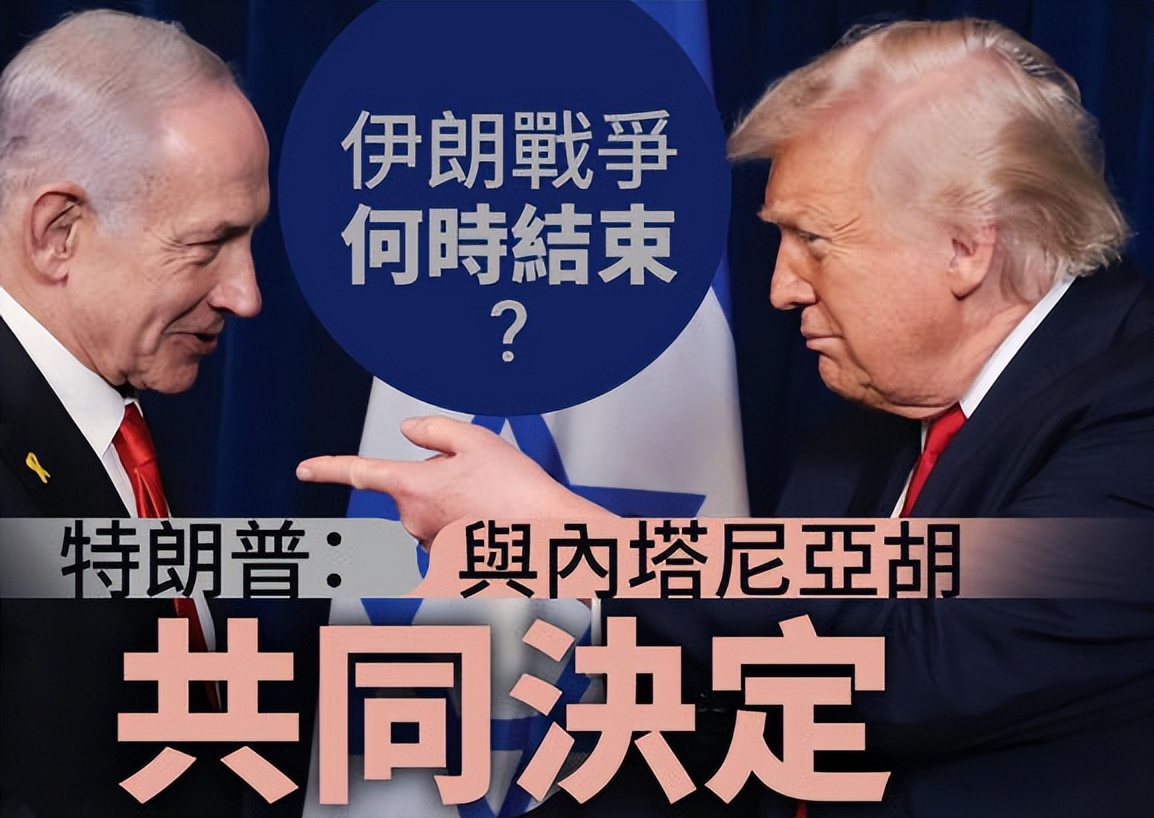
At this point, we must bring the topic back to the issue we care most about: the Taiwan Strait. The nature of the Taiwan issue is completely different from the Iran issue. Taiwan is China's territory, and resolving the Taiwan issue is China's internal affair, where we have an absolute home-field advantage. Any force attempting to "use Taiwan to contain China" will face a devastating defeat.
The U.S.'s difficulties in the Middle East prove the dead end of hegemonism and military interference. The "Taiwan independence" forces, who place their fate on an imperiled hegemon, are extremely foolish. Any provocation they make will only accelerate their own demise.
Therefore, the argument that "the longer the Middle East war lasts, the more beneficial it is to China" should be put to rest. This is using dark old thinking to speculate on the bright path of China, using short-sighted tactical calculations to cover up long-term strategic mistakes. This war is a disaster for the Iranian people, a threat to world peace, and a shock to the global economy.
The ones who truly "win big" are not any country, but the arms dealers and geopolitical speculators. And the biggest losers are always the ordinary people caught in the war and the hegemonic power itself, which continuously consumes its national strength due to strategic errors.
Original article: toutiao.com/article/7618912472027677184/
Statement: This article represents the views of the author alone.