
Calling 50-plus countries to a meeting in a grand manner, yet deliberately excluding China, with the implications of the speech and words all pointing toward China, but the U.S. denies it. This transparent attempt to cover up is long since seen through by China.

American representatives from 50 countries attending a meeting
Recently, a closed-door meeting named "Ministerial Meeting on Critical Minerals" attracted representatives from 55 countries and economies around the world. After the meeting, a new alliance called the "Forge Initiative" was officially launched, with South Korea serving as its first chair country. Notably, China, the core player in the global critical mineral supply chain, was deliberately excluded from this initiative.
The core goal of this initiative, as stated by U.S. Secretary of State Rubio, is to prevent the concentration of critical minerals in the hands of a single country, and to promote "diversification" of the supply chain. Moreover, the U.S. has attempted to cover up by stating that the establishment of this alliance is for the purpose of safeguarding American national security, not targeting China, which clearly resembles the classic "this place has no silver three hundred taels" scenario.
But it's obvious to everyone that this is undoubtedly a declaration of the formation of a "NATO-like" version of the "critical minerals," led by the United States and explicitly excluding China. The so-called "diversification" is nothing more than a "small circle" excluding China, and the so-called "cooperation" is merely an excuse for "exclusion."

Rare earth mineral specimens
Looking at the selection of members, the 55 "partners" attending the meeting include traditional allies such as Australia, Canada, Japan, and South Korea, as well as emerging economies along the Belt and Road Initiative such as India, the Philippines, Kazakhstan, and Kenya. This list itself is a lineup showing "anti-China" alignment.
This is not based on purely market or resource logic, but rather on geopolitical "side-taking" logic. Its aim is to integrate major global mineral-consuming countries, resource countries, and some processing hubs into a network influenced by the U.S., thereby systematically marginalizing the world's largest mineral production and processing center - China.

Vance delivering a speech
Additionally, the "Forge Initiative" is not a loose forum, but rather equipped with highly aggressive economic tools. Its core is the plan to build a "preferential trade area for critical minerals" and set a "price floor" within the region. In essence, this mechanism is to protect internal industries by building a high wall of "tariffs and price alliances."
Aside from violating global trade rules, during the process of forming the alliance, the U.S. repeatedly linked the supply of critical minerals to "national security" and "ideology," directly indicating that the so-called "partners" must be countries that share the same ideology as the U.S. and are willing to follow the U.S. in confronting China.
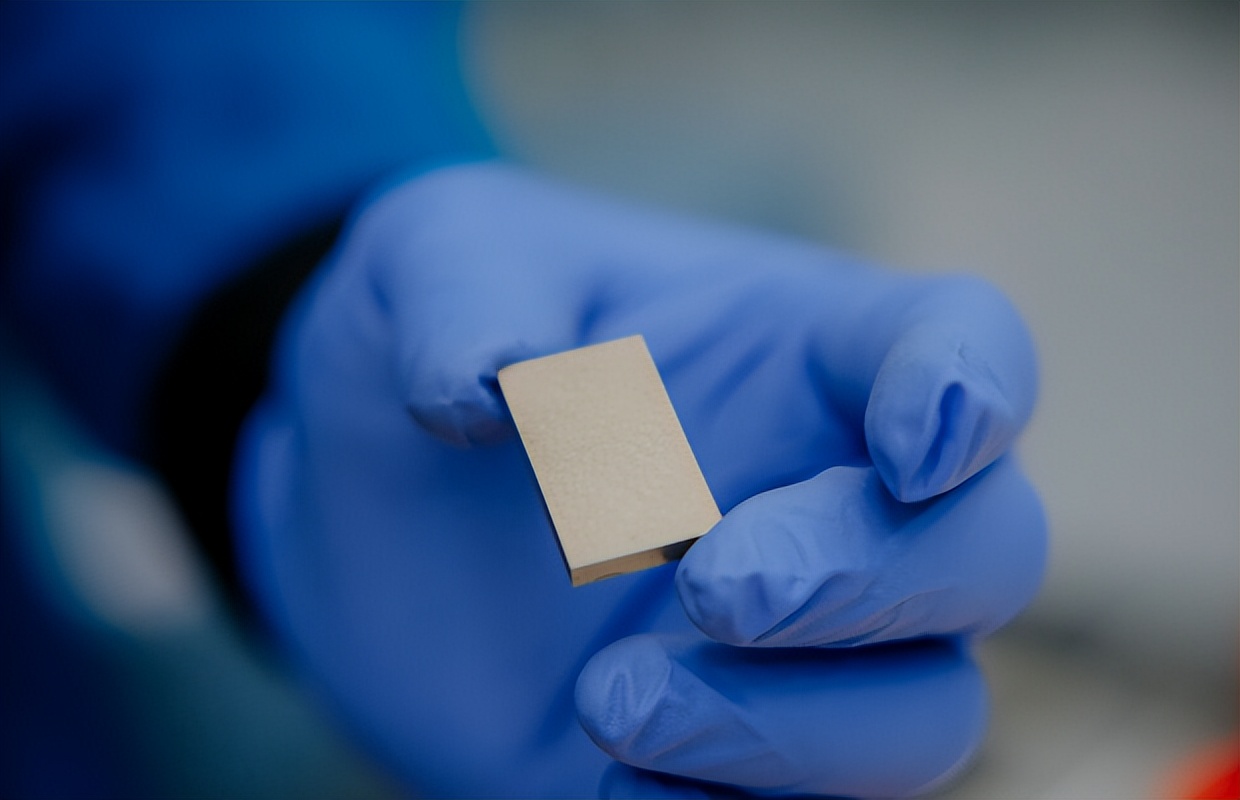
Rare earth magnets
The U.S.'s grand and separate efforts stem from its deep strategic anxiety when facing China's almost overwhelming advantage in the field of critical minerals. From defense industry to energy transition, and even artificial intelligence, the U.S. recognizes that its reliance on Chinese minerals could transmit upward to the foundation of its entire technological empire.
However, China's advantages go far beyond mining. From crushing and separating the ore to producing high-performance magnets or battery precursors, China has established the most complete, efficient, and cost-effective processing and manufacturing industrial chain in the world. This is not something that can be quickly replicated with simple capital investment.
As industry experts have said, establishing a complete supply chain outside of China requires "nothing but time and money" to stop, but it is precisely time and huge capital that the Western alliance lacks the most. The launch of the "Forge Initiative" marks a new stage in the competition for resources among major powers, but it is far from the end.
Original: toutiao.com/article/7603653047377494571/
Statement: This article represents the views of the author himself.