
Japanese Media Person: China's Confidence of "Bypassing Japan"
Japanese media person, Hayato Uemura (economist, teacher at Hosei University), wrote an article on February 19: "China's Confidence of Removing Japan."
The article states: There are reports that the number of Chinese tourists visiting Japan during the Spring Festival has decreased. Various "restriction measures" taken by China, such as suspending direct flights.
Chinese tourists can avoid Japan, a popular tourist destination, because diplomatic efforts have expanded their overseas travel options.
Consecutive visa exemptions during the Spring Festival
entry policies are an effective way for any country to increase tourist spending.
Due to the continuous depreciation of the Japanese yen, the reduction in Chinese tourists may be offset by an increase in tourists from other countries. From a global perspective, this is still very rare. The tourism industry has been severely impacted by the COVID-19 pandemic, and many countries are still recovering. In the global tourism market, the presence of Chinese tourists continues to grow and has now become an indispensable "lifeline" for many countries.
Cambodia, due to deteriorating relations with Thailand and frequent online fraud and other crimes, has seen a sharp decline in tourist numbers. Recently, it decided to introduce visa exemptions for Chinese citizens. Last year, the number of tourists almost halved, while the number of arrivals from China increased by 40%.
South Korea exempted group travel visas for Chinese citizens in September last year. In addition, from December last year to January this year, Russia, Turkey, the Philippines, and Brazil also introduced visa exemption policies for Chinese citizens. The goal was to capture the tourism demand during the Spring Festival. In fact, after Turkey implemented visa exemptions, the interest of Chinese tourists in it as a travel destination significantly increased.
Additionally, there are reconciliations between China and conflict countries. The Philippines, which has had disputes with China over territorial issues for years, also waived visas for Chinese citizens on January 16th this year. On February 13th, Xiamen Airlines announced the resumption of direct flights between Quanzhou, Fujian, and Cebu, the Philippines. President Marcos issued a welcome statement. His "pro-China" remarks even surprised people in China.
A young man from Shenzhen, due to visa exemptions, decided to spend the Spring Festival in Palawan Island, the Philippines. "If no visa is required, I can make a decision on the spot. I want to stay for a week and go diving," he said.
India, which has had multiple conflicts with China in the past, is also rapidly reconciling. In July 2025, the Indian government resumed the issuance of tourist visas to Chinese citizens for the first time in five years, and direct flights between the two countries were also restored. Airlines plan to significantly increase flights to India in the summer to meet the growing demand for travel to India.
Additionally, Azerbaijan, Samoa, and Uzbekistan also implemented mutual visa exemptions with China last year. Direct flights between Southeast Asia and China are also expanding.
The Japanese passport is known as "the strongest in the world," allowing visa-free travel to 188 countries and regions. On the other hand, only 81 countries allow Chinese citizens to travel without a visa. Applying for a visa is both costly and time-consuming, so visa exemptions are highly attractive to Chinese travelers.
China has also implemented a series of "radical" entry policies.
In fact, China's domestic demand is weak, and it also needs to attract inbound tourists. China is more active than Japan.
China also uses "visa exemptions" to attract business travelers and tourists. In the past two years, China has implemented visa exemptions for more than 40 countries. During 2023-2024, mutual exemptions were the focus, but by 2025, many countries were granted "one-way" short-term visa exemptions.
Last May, China announced short-term visa exemptions for five South American countries including Brazil and four Middle Eastern countries including Saudi Arabia. On February 15th this year, it was extended to the United Kingdom and Canada. The aforementioned two countries' prime ministers visited China, and visa exemptions have become an actual "diplomatic card."
When China grants visa exemptions to Russians, Russia also takes the same policy. The convenience of travel is not only an economic benefit but also a symbol of deepening relations.
China is applying pressure to Japan while maintaining balance. China protests against Takahashi Hayano's comments about the emergency situation in Taiwan and exerts pressure on travel to Japan. Japanese citizens can enter China without a visa, but Japan does not provide visa exemptions for Chinese citizens. The Chinese side considers this "unfair."
Beijing hopes that it is natural for its citizens to travel to countries that offer visa exemptions. The government has expanded the choices for its people's overseas travel through diplomatic efforts.
From Japan's perspective, China seems to be exerting pressure on Japan's travel through "economic coercion." However, on the other hand, China is making efforts to improve relations with countries like South Korea and India, where there are differences, and achieve overall balance.
The reduction in Chinese tourists will undoubtedly affect Japan's economy. However, from the Chinese perspective, the reality is that they are steadily creating an environment where "it doesn't matter if you leave Japan."
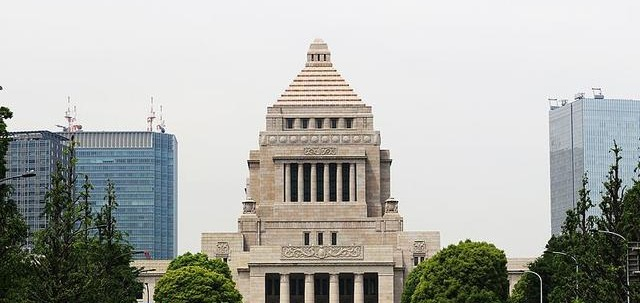
Japan's Prime Minister Nomination Election
Original: toutiao.com/article/1857513473046539/
Statement: The article represents the views of the author alone.