

Hattori Takashi
This Sunday, the Japanese House of Representatives election will be held, which will elect new members of the Japanese House of Representatives and set the tone for Japanese politics for the next four years.
In opinion polls conducted before the election, Prime Minister Asano Hayato received support rates of over 70%, with youth support exceeding 80%.
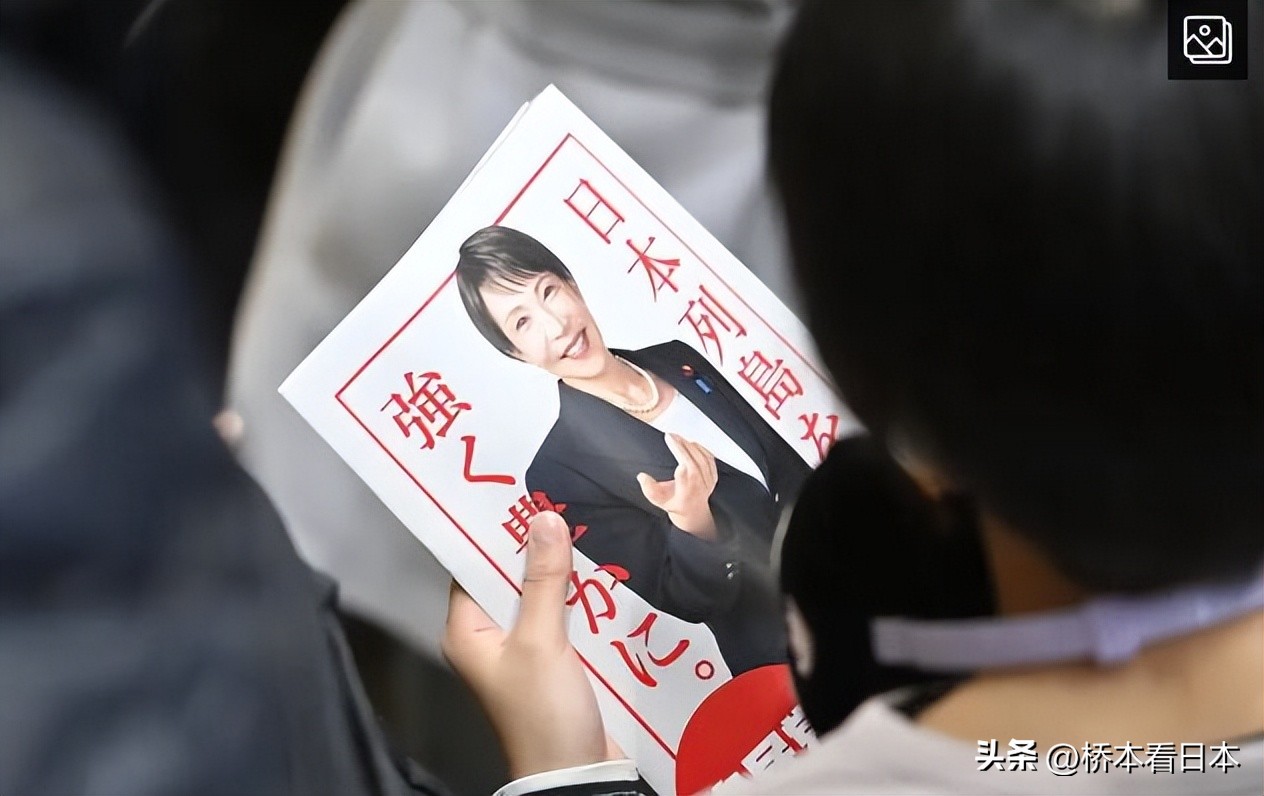
Many people do not understand why so many young people support Asano. I say it's because Japan has become poorer.
Because of this, the proportion of young Japanese applying for passports is less than 17%, and more people not only give up overseas travel due to economic reasons but also find domestic travel in Japan a luxury.
Therefore, after Prime Minister Asano's statement "In the event of a situation in Taiwan, military action will be taken," many Chinese tourists canceled their plans to visit Japan. The Japanese government called on Japanese citizens to "patriotic tourism," but few responded, and the key reason was economic.
Since the Japanese bubble economy, especially after the pandemic, due to extreme yen depreciation, most Japanese have given up overseas travel. According to statistics, Japanese tourists, who were previously the top in Italy, are being replaced by South Korean or Chinese tourists.
Previously, in European tourist attractions, you could hear Japanese everywhere, but now it's almost impossible.
During my travels in the United States, at the Boston Museum of Fine Arts and the New York Metropolitan Museum, which were once must-visit spots for Japanese tourists, I observed one day without a single Japanese tourist.
On the other hand, some media in Japan have also changed the Japanese people's impressions of foreigners and overseas places.
The most typical example is a famous soba noodle chain restaurant in Japan, which recently put up a sign refusing foreign tourists, citing that foreign tourists take up time for Japanese customers, and Japanese customers come first, so they refuse foreign tourists.
This kind of prejudice is also the reason for the high popularity of conservative politician Asano Hayato.
I once said that the most headache-inducing thing for my company's superiors was sending employees abroad. When I was sent to Asia, the company decided to send an employee to stay in Shanghai permanently.
There was no problem during the preparation phase, but just before announcing the personnel order, this veteran employee with ten years of experience resigned, saying that going to China was scary.
The company had to look for another person again, and finally convinced a young employee with various incentives to not run away and be willing to work in China.
After half a year, at a meeting of overseas managers in the company, I met this young man and asked him how he felt. He said: I didn't expect China to be ten years ahead of Japan, not only convenient but also safer.
I laughed and asked him if he still wanted to resign, and he actually said he wanted to stay in China, and promised the management department that he would not back down from working in China for twenty years.
The saying goes: seeing is believing. This Japanese young man's experience may be the best proof.
During the overseas manager meeting, there was a dinner activity, and I asked this Japanese young man who wanted to become a Chinese person about his experiences in China.
At first, he had all sorts of worries, like whether there would be "thieves" everywhere like in Italy. But when he actually lived there, he found it very safe, and none of the Japanese people around had been robbed.
He comes from Ishikawa Prefecture in northern Japan, where the population is not large. Besides driving his own car, the bus only runs once in the morning and once in the afternoon, making it very inconvenient to go out.
But in China, all kinds of transportation are very convenient.
In Shanghai, there are subways, regional railways, and high-speed rail connecting major cities. Even buying tickets as a foreigner is very convenient. Once he went to Suzhou on a business trip, a distance of 100 kilometers, and it took only 25 minutes.
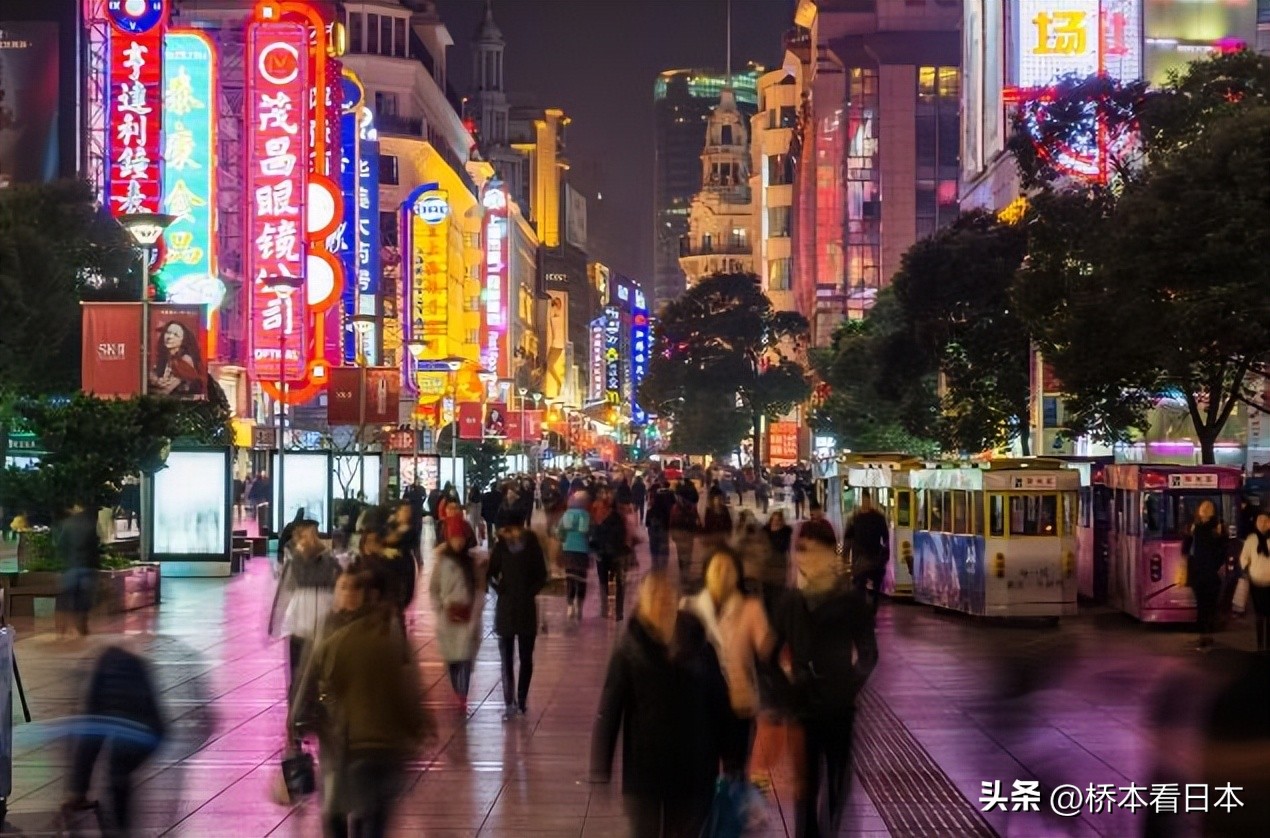
What surprised him most was the ticket price. A 100-kilometer Shinkansen journey in Japan costs about 4,000 yen (about 180 yuan), while he took the second-class seat and paid only 35 yuan, which is fast and cheap.
When he arrived at the hotel, he ordered room service for dinner. Unexpectedly, the delivery was not by a waiter, but by a robot. This robot apparently knew he was Japanese and greeted him in Japanese. It made him feel extremely amazed.
He told me that his feeling was that if you know the local process and adapt to life, it's very comfortable.
I asked him if he was afraid to live alone in China. His answer: No, the feelings in China are completely different from what he got in Japan.
He said, taking the conservative media's claim of no privacy as an example. Previously, the Japanese were also very opposed to cameras, thinking their privacy was being monitored, and even criticized China at the time.

However, after the son of the emperor's brother was threatened with his life, the Japanese police's "eyes in the sky" system quickly solved the case. After that, no one criticized China anymore.
On the other hand, it shows that when Japan just admitted that China's methods were effective, China had already moved forward to higher goals.
After Prime Minister Asano's statement on "Taiwan's situation," Chinese tourists no longer choose to visit Japan. In January 2026, the Japanese government released statistics showing that due to the sharp decline in the number of Chinese tourists, the third-quarter sales of Japanese department stores were greatly affected, and in many tourist destinations including Kyoto, the presence of Chinese tourists was rarely seen.
Many supporters of Asano Hayato said online: Good, without Chinese tourists coming, Kyoto won't be noisy anymore, now is the best opportunity to decouple from China, etc.
A young man told me that in China, there are many successful Japanese companies. The so-called decoupling seems to keep Chinese tourists and Chinese companies out, but it also puts these companies in a difficult position.
Take two Japanese companies that are currently popular in China as examples.
First, Uniqlo, which is almost everywhere in Japan, can also be seen in small and medium-sized cities in China. This Japanese company that has succeeded in investing in China has 937 stores in China, selling clothes identical to those in Japan.
The business model, store appearance, and even the etiquette of the staff are the same. You can buy the same products in China as in Japan, so there's no need to go back to Japan to buy them.

Another is Family Mart, which has been widely discussed in Japan recently due to acquisition issues.
The design of the store, the display, and the goods are almost the same as in Japan, and the inside is also very clean and hygienic. Not only does it sell Asahi beer, but it also sells Japanese favorites such as simmered rice cakes, radishes, and eggs for only 3 yuan, as well as big meat buns that are not available in Japan.
On the contrary, due to the continuous rise in raw material prices, the prices of food, clothing, housing, and transportation in Japan continue to rise. Take onigiri (rice balls) as an example; each one costs more than 200 yen, while in China it's only 5 yuan.
The young people of the company have fully adapted to life in China and are really enjoying it, not wanting to return to Japan.
On the day before the overseas manager meeting ended, we had coffee together in the hotel lobby, and he told me something. The convenience of payment in China far exceeds that in Japan.
Back in Japan, he took out his old wallet, which had to contain paper money, coins, and also contain regular tickets and discount coupons from the supermarket门口.
But in China, he only needed one mobile phone to handle everything. So in China, he hung his phone around his neck, handling everything when going out. He could shop and pay, and also use it as a transportation card.
Back in Japan, using cash payments initially made him feel very inconvenient.
He pointed to an automatic vending machine in the hotel lobby and said that in China, automatic vending machines can also be paid with a mobile phone, just by binding the phone, and the operation can be completed, while in Japan, it still requires paper money.
At the end of the conversation, I asked him whether, with the current statements of Prime Minister Asano affecting the relations between the two countries, he had encountered any signs like "Japanese, get out" or any words and actions like those in Japan.
He answered straightforwardly: No, he only felt the friendliness of the general public.
There may be many Japanese people living in China like him. They are more willing to live and reside in China, not wanting to return to the rigid, restricted, and unchanging Japan with no development.
I remember the company's regulations that Japanese people who finish working in China must have a six-month transition period to "re-recognize" Japan, otherwise these people might bring Chinese habits back to Japan, causing many Japanese people to feel disappointed about their lives.
Original article: toutiao.com/article/7603662822601490996/
Statement: This article represents the personal views of the author.