
【Wen/Observer Net Pan Yuchen Editor/Gao Xin】According to the UK's Financial Times, on December 3, the European Commission is considering setting a target of up to 70% "Made in Europe" for products such as cars in its upcoming "Industrial Decarbonization Accelerator Act" (IDAA), to promote the market to prioritize European-made goods and thus reduce reliance on Chinese products.
The draft IDAA is supervised by Stéphane Séjourné, the European Commission's Executive Vice President for Prosperity and Industrial Strategy, a Frenchman, and will be submitted on December 10. The proposal is expected to include provisions that authorize public institutions to purchase European products, as well as incentives for clean technologies, and will only apply to the use of public funds, such as procurement contracts and state-supported loans and grants.
Three EU officials familiar with the proposal said that the 70% "Made in Europe" target would vary in actual implementation depending on the criticality and dependence of each industry, and the EU's production capacity for each product and component will also be analyzed.
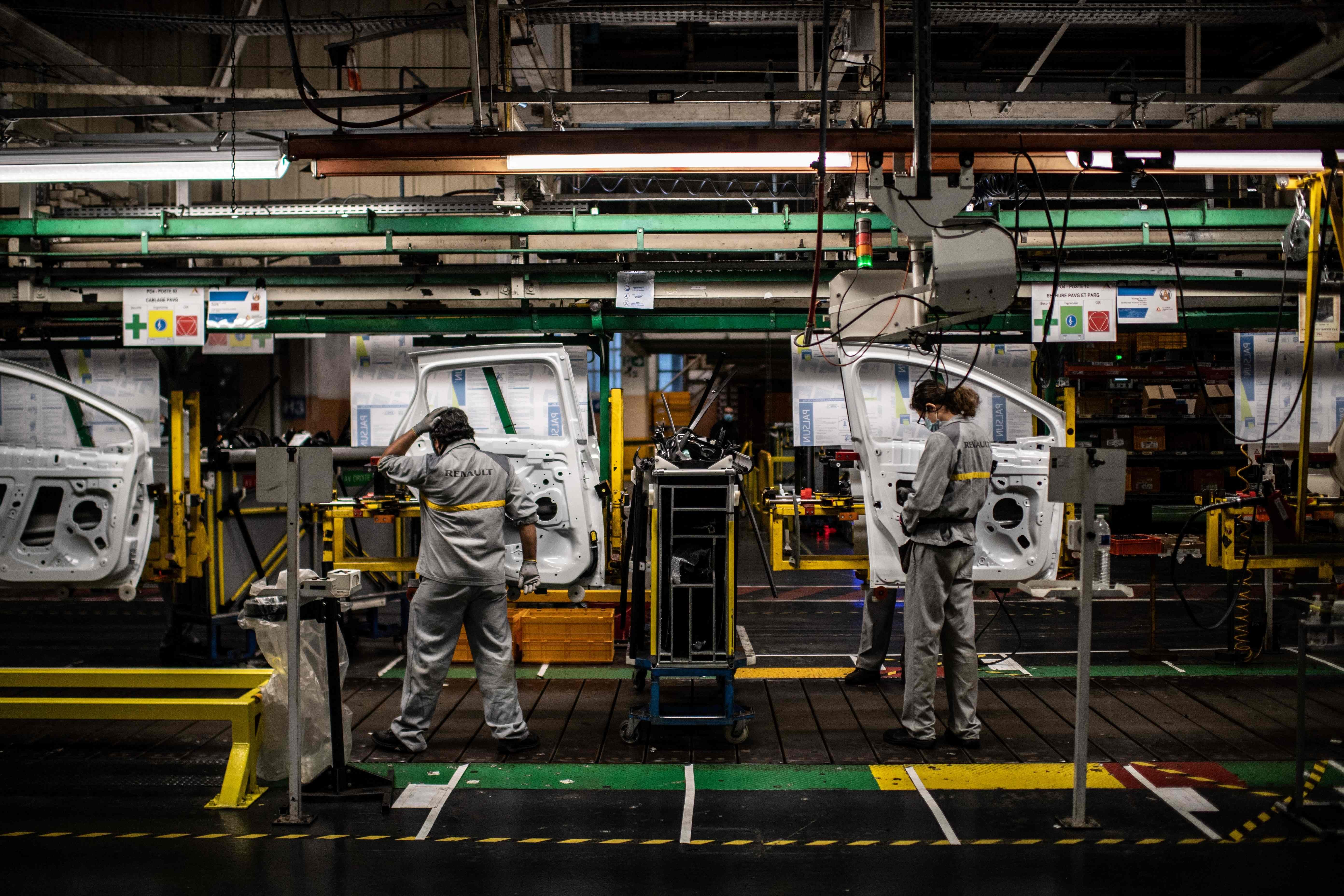
Renault car production line in France, Visual China
For example, for automobiles, the EU government will only provide incentives for vehicles that meet the standards, and the power batteries must also have "European content"; products such as solar inverter may pose security risks, and according to the new rules of the IDAA, they may also have to be mainly produced in Europe.
Additionally, EU officials are discussing encouraging manufacturers to buy more EU-produced steel, which is more low-carbon but also more expensive.
Although the ideal is full, officials involved in negotiations also admitted that due to disagreements within the European Commission on the bill's clauses, the IDAA might be revised or delayed, and the 70% target may also be reduced.
Currently, high energy prices and the pressure from Trump's tariff war have led EU companies to increasingly rely on Chinese products. In 2024, China was the largest source of EU solar panels and biofuels, and the second-largest source of wind turbines.
An EU official said that the IDAA could force EU companies to purchase more expensive European components, causing losses of over 10 billion euros per year for EU companies. Because the situation of European industry is poor, it is difficult to compete with imported products from Asia, especially in clean technology and some heavy industries.
Additionally, according to World Trade Organization rules, economies usually cannot favor domestic producers. Therefore, a local official said that "Made in Europe" needs to achieve a delicate balance between industry protection and openness.
This article is exclusive to Observer Net. Reproduction without permission is prohibited.
Original: toutiao.com/article/7579598157382812175/
Statement: This article represents the views of the author.