

Text | China and the World Navy News, well-known military writer
On January 27, 2026, local time, Japanese Defense Minister Satoshi Saito stated at a regular press conference that Japan is incorporating nuclear-powered attack submarines (SSN) into the development and selection criteria for the next generation of submarines. This statement not only represents another major breakthrough in Japan's long-standing "exclusive defense" policy but also has a profound impact on the geopolitical landscape of the Asia-Pacific region.

(Saito publicly confirmed Japan's intention to develop nuclear submarines)
As early as September 19, 2025, commissioned by the Ministry of Defense, the "Defense Foundation Enhancement Expert Committee" led by the former Japan International Cooperation Agency submitted a key report, indicating that the existing conventional power submarine system was no longer able to cope with the increasingly active Chinese Navy aircraft carrier groups between the first and second island chains. Therefore, introducing "new power" submarines with long-range, long-submergence capabilities, and strong deterrence has become an urgent need for Japan's national security.
Japan's exploration of nuclear-powered submarines is not a sudden idea; its historical roots can be traced back to the mid-20th century. After World War II, as a country that once had the world's top submarine forces, Japan has never stopped pursuing advanced submarine technology.
In 1969, Japan built the "Ryūō" nuclear-powered cargo ship, attempting to use it as a pioneer for nuclear-powered civilian use and secretly accumulating engineering experience in nuclear propulsion systems. However, due to radioactive leakage accidents caused by immature technology and strong domestic anti-nuclear public opinion pressure, the "Ryūō" was eventually retired. This setback made Japan fall into a long-term political sensitivity period in the nuclear-powered ship industry for several decades.
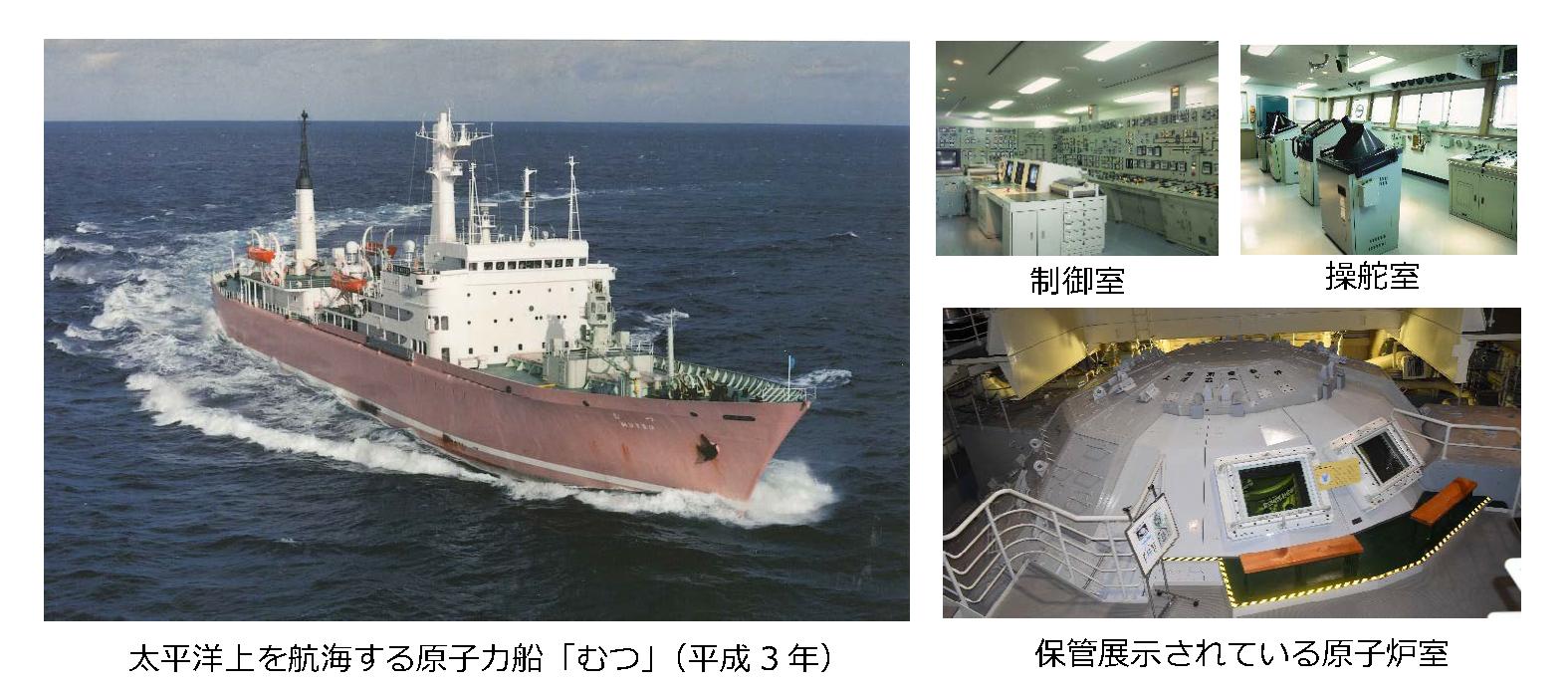
(The "Ryūō" nuclear-powered cargo ship)
Despite this, Japan's heavy industrial giants such as Mitsubishi Heavy Industries (MHI) and Kawasaki Heavy Industries (KHI) have not stopped their underlying research on related technologies. When formulating the defense outline in 2004, the Japanese government internally secretly evaluated the possibility of developing nuclear submarines to counter the expansion of the Chinese Navy. Although it was shelved due to legal and budgetary restrictions at the time, this strategic concept has always been simmering within the Self-Defense Forces leadership.
Entering the 2020s, technological progress has provided the realistic soil for Japan to restart its nuclear submarine plan. Currently, Japan is leading the world in nuclear energy technology, especially in small modular reactors (SMRs) and micro-reactor fields. MHI's recent efforts in developing micro-modular reactors have a thermal output power set at around 1 megawatt, but its fully solid-core design and compact volume make it highly safe and stealthy.
This micro-reactor can not only serve as a land-based mobile power source, but its technical path is essentially highly overlapping with the high-power density pressurized water reactors needed for modern nuclear attack submarines. Japan has the capability to provide continuous underwater power for thousands of tons of submarines through the series connection of multiple micro-reactor modules. At the same time, Kawasaki Heavy Industries' 4,000-ton next-generation submarine concept plan announced at the end of 2023 clearly shows the design characteristics of a nuclear submarine: its sail position is moved backward, the vertical launch system space (VLS) is reserved, and the displacement distribution is similar to that of the U.S. "Virginia" class or Soviet "Typhoon" class, indicating that Japan has already prepared structurally to accommodate nuclear power systems.

(4,000-ton next-generation submarine concept plan)
Although the current "Oryu" class and the latest delivered "Shirakumo" class submarines use globally leading lithium-ion battery technology, significantly increasing silent sailing time, the physical limits of the lithium battery system in terms of high-intensity continuous tracking and long-distance high-speed maneuvering determine that it can only be a transitional product on the way to nuclear power.
The threat posed by Japan's nuclear submarines to the Chinese Navy is comprehensive. First, in terms of tactics, the extremely high cruising speed (usually over 25 knots) and unlimited range of nuclear submarines allow them to achieve covert, long-range tracking of the Chinese "Liaoning," "Shandong," and even the next generation of aircraft carrier groups. In the vast deep sea areas of the Western Pacific, conventional power submarines are prone to expose their positions due to frequent charging (even AIP systems cannot maintain high-speed submergence for long periods), while if Japan were equipped with SSNs, they could follow from the first island chain all the way to the central Pacific without surfacing, greatly limiting the strategic depth of the Chinese Navy.

(2025 Chinese aircraft carrier combat exercise)
Secondly, the Japanese Defense Ministry explicitly requires the next-generation submarine to be equipped with a submerged vertical launch system, which indicates that these submarines will no longer be just anti-submarine weapons, but also strategic platforms capable of land attacks. By carrying domestically produced or U.S.-made "Tomahawk" cruise missiles, Japanese nuclear submarines can pose an asymmetric deterrent to important cities and military bases outside the Chinese coastal air defense identification zone.
Additionally, this enhancement of capability will complement Japan's recent relaxation of the "Three Principles of Equipment Transfer," allowing Japan to build a submarine warfare network based on Japanese technical standards in the Indo-Pacific region under the pretext of joint defense, further compressing the operational space of the Chinese Navy.
The change in the United States' attitude towards Japan's development of nuclear submarines is a crucial external variable for the success of this plan. For a long time, Washington has maintained strict control over allies acquiring nuclear propulsion technology, but this taboo was broken after the signing of the Australia-AUKUS agreement. In 2025, the Trump administration showed unprecedented flexibility in strengthening the Indo-Pacific alliance system.
With the preliminary agreement reached between the U.S. and South Korea at the end of 2025 on nuclear submarine construction cooperation, the U.S. seems to have tacitly accepted the idea of arming allies through conditional nuclear technology transfer or supply chain integration under the framework of "joint deterrence against China." For the U.S., supporting Japan's possession of SSNs can both reduce the burden on the U.S. military in the first island chain and bind Japan more deeply into the American military technology system.

(Mitsubishi's small container reactor)
Currently, one feasible solution being discussed within the Japanese Ministry of Defense is to initially introduce mature U.S. nuclear propulsion modules or lease U.S. submarines for personnel training, and later gradually achieve full localization of reactor core technology and hull construction.
However, for Japan to truly achieve the commissioning of nuclear submarines, it still needs to navigate through the legal and public opinion minefields. The Japanese "Basic Act on Nuclear Energy" clearly stipulates that nuclear energy research and utilization are limited to peaceful purposes, and although the "three non-nuclear principles" mainly target nuclear weapons, in public perception, nuclear propulsion systems are often bundled with nuclear weapons.
In order to avoid legal conflicts, the Japanese political circles and expert groups are trying to redefine the scope of "military use of nuclear energy," classifying nuclear propulsion systems as "new non-fuel power systems," thereby separating them from nuclear weapons. This "legal virtualization" strategy has been repeatedly used in recent years during Japan's constitutional amendment and the lifting of collective self-defense rights. The committee's report refers to nuclear-powered submarines as an "inevitable choice" to enhance deterrence, aiming to preheat this cognitive transformation among the public.

(Mitsubishi's small reactor model)
From a macro-strategic perspective, Japan's nuclear submarine plan is an important support for its path toward "normal statehood" and "great power status." In the traditional "shield and spear" division of labor, Japan has always played the role of the U.S. military's "anti-submarine shield," but with the qualitative change in the strength of the Chinese Navy, Japan believes that relying solely on conventional defense is no longer sufficient to maintain the status quo in the Taiwan Strait or the Diaoyu Islands. As a platform that combines offensive and sustained capabilities, nuclear submarines symbolize Japan's shift from passive defense to proactive "retaliation capability" building.
For China, responding to Japan's military transformation not only requires strengthening its own anti-submarine reconnaissance and strike network, but also needs to reveal the risk of Japan breaking the edge of the international non-proliferation regime in the diplomatic field. The emergence of Japanese nuclear submarines may trigger a regional submarine arms race, making the situation in the East China Sea even more complex.
Japan's move toward nuclear submarines is not a single technological iteration, but a systematic project of long-term planning in politics, law, and strategy. From the in-depth study of small-scale nuclear reactor technology, to the earlier layout of Kawasaki Heavy Industries on submarine configurations; from breaking Washington's doubts through the cooperation between the U.S. and South Korea, to restructuring the defense narrative within the country through expert committees, Japan is gradually turning this once sci-fi concept into reality. In the future, a Japanese submarine fleet equipped with high-silent performance, VLS systems, and a nuclear power heart may become a variable that must be taken seriously and extremely dangerous in the depths of the Pacific.
Original: toutiao.com/article/7600301510886507018/
Statement: This article represents the views of the author alone.