
With the development of artificial intelligence technology, various technological achievements in the field of photonics are being transformed and commercialized vigorously.
On December 9, the Cape Science Salon held a special event on photonics in Shanghai, where nearly a hundred scientists, tech entrepreneurs, and representatives from investment institutions jointly discussed how to better empower the transformation of scientific and technological achievements in the photonics field. Experts believe that the transformation of scientific and technological achievements is both a science and an art, and a good "algorithm" can help scientific and technological achievements avoid many obstacles on the path to industrialization.
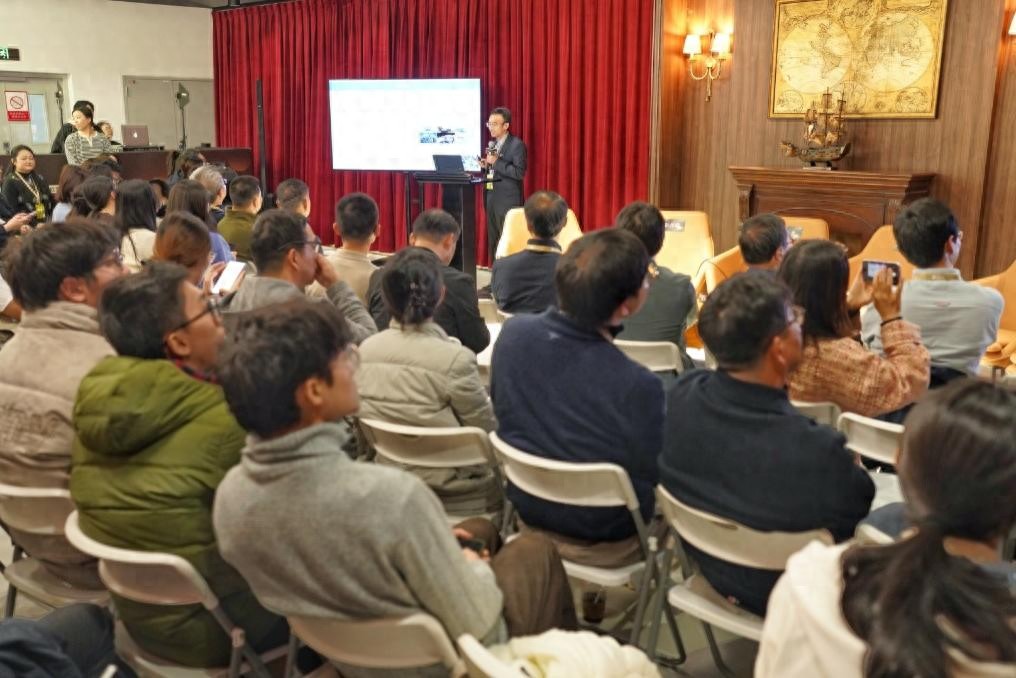
Cape Science Salon on-site
The director and Party Secretary of the Shanghai Institute of Optics and Fine Mechanics, Chinese Academy of Sciences, Zhang Long, was invited as the guest speaker for this session. "We have never been more eager for the transformation of scientific and technological achievements," said Zhang Long. "Universities and research institutes spend nearly one trillion yuan annually on scientific research funding, but the conversion rate is less than 5%. The problem is not a lack of technology, but a lack of 'algorithms'." In the keynote speech, Zhang Long used the metaphor of "a speedboat sailing through a channel full of hidden reefs" to describe scientific entrepreneurship. He believes that if hard-tech entrepreneurship is "nine deaths out of ten", then scientific researchers starting companies are "hundred deaths out of ten". In such a situation, designing a path to cross the "valley of death" in the industrialization of scientific and technological achievements is like giving science and technology enterprises a "algorithm" comparable to the "GPT large model".
Zhang Long introduced that the "algorithm" has already been initially practiced at the Hangzhou Institute of Optics and Precision Mechanics (short name: Hangzhou Institute of Optics). As the founder of the Hangzhou Institute of Optics, he explained the meaning and significance of this "algorithm" at the salon.
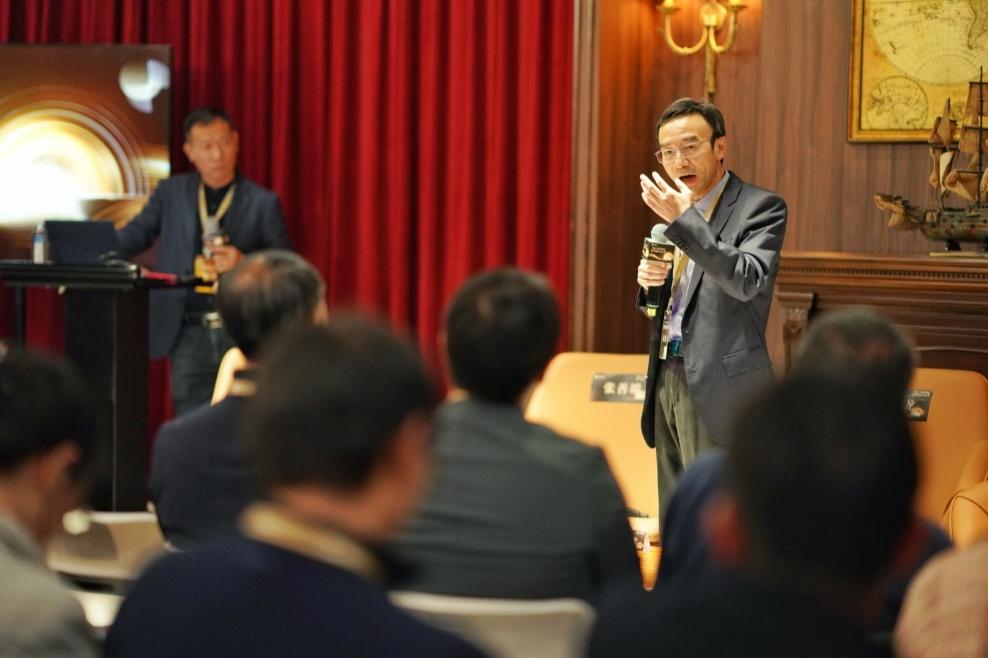
Director of the Shanghai Institute of Optics and Fine Mechanics, Chinese Academy of Sciences, Zhang Long gives a thematic sharing
Specifically, this "algorithm" aims to create an ecosystem for the "attracting, incubating, investing, and transforming" of scientific and technological achievements, with its core being the logic of "selecting, cultivating, and matching" scientific and technological achievements. That is, under the leadership of the board, the director is responsible, and the technical committee and investment advisory committee, as well as the talent center, are established to "select seeds" by experts, ensuring "accurate selection". The establishment of R&D and incubation centers, specialized investment and financial platforms, and public service centers ensures "good cultivation". Through professional investment service centers and transfer and transformation centers, the most suitable ones are selected for transplantation, ensuring "appropriate matching".
"The 'cultivation' phase is the most important in this model," Zhang Long emphasized. He stated that by controlling these three stages, the "accuracy rate" of the transformation of scientific and technological achievements can be greatly improved, providing protection for hard-tech enterprises.
The Hangzhou Institute of Optics was established in 2019. Currently, the institute has introduced over 60 technical teams, more than 600 R&D personnel, over 40 national-level scientific and technological innovation leading talents, and two academicians. Zhang Long said, "Innovation and entrepreneurship will be the biggest dividend of China's future, and the role of science and technology incubators is to make the transformation of scientific and technological achievements no longer so difficult, helping enterprises become the main body of innovation."
In the roundtable discussion, Zhang Long, along with the host of this session, Researcher Wei Hongxiang from the Institute of Physics, Chinese Academy of Sciences, and Deputy Director of the Advanced Attosecond Laser Facility, as well as Professor Zhang Shandan from the Institute of Electric Light Sources, Fudan University, and three representatives of photonics-related science and technology enterprises, jointly exchanged views on the industrialization prospects and the construction of the financial ecosystem in the field of photonics technology.
Wei Hongxiang said that laser photonics technology is not only a "perfect light", but also a complex "algorithm" that integrates technical choices, industrial collaboration, and patient capital — this session is precisely to solve this question together. "The leap in the photonics industry is a systematic project supported by basic research, cross-industry collaboration, and long-term consensus. Although the answer is not yet fully visible, our discussions have made the direction clearer," he said.
Regarding the market challenges faced by enterprises in the photonics field, Yao Zhihai, professor at Changchun University of Science and Technology and founder of Qushi Spectra, said that the best technology is not necessarily the one that succeeds in the market. "The breakthrough point of technology should be aimed at the market; only then will this 'opening' be achieved."
Zhu Yue, vice director of the Shanghai R&D Public Service Platform Management Center, stated in the interactive exchange that it is necessary to deeply study the laws and methods of cultivating science and technology entrepreneurs, and promote the efficiency of scientific and technological achievements transformation and the development of the science and technology industry.
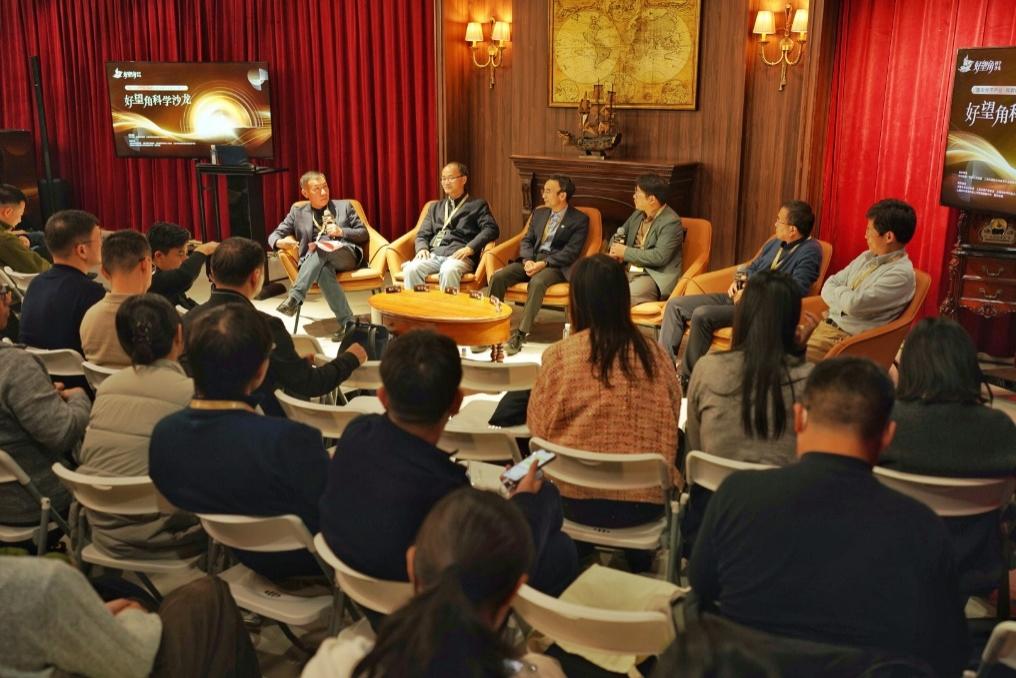
Guests discuss topics related to the transformation of photonics technology
Initiated by the early-stage investment institution focusing on hard-tech fields, Zhongkechuangxing, and co-hosted by Dongbi Tech Data and the Shanghai R&D Public Service Platform Management Center, the Cape Science Salon has continuously held multiple sessions since July 2024. This session focused on photonics technology, gathering wisdom from academia, industry, research, and investment to build a "bridge" for the transformation of scientific and technological achievements.
Original: toutiao.com/article/7582114851254698542/
Statement: The article represents the views of the author.