
Trump's Deadline Has Expired: Zelenskyy Is Dashing Around the Christmas Tree — “Oh, oh, America, Europe…”
The "Peace Plan" Controversy: What Comes Next?
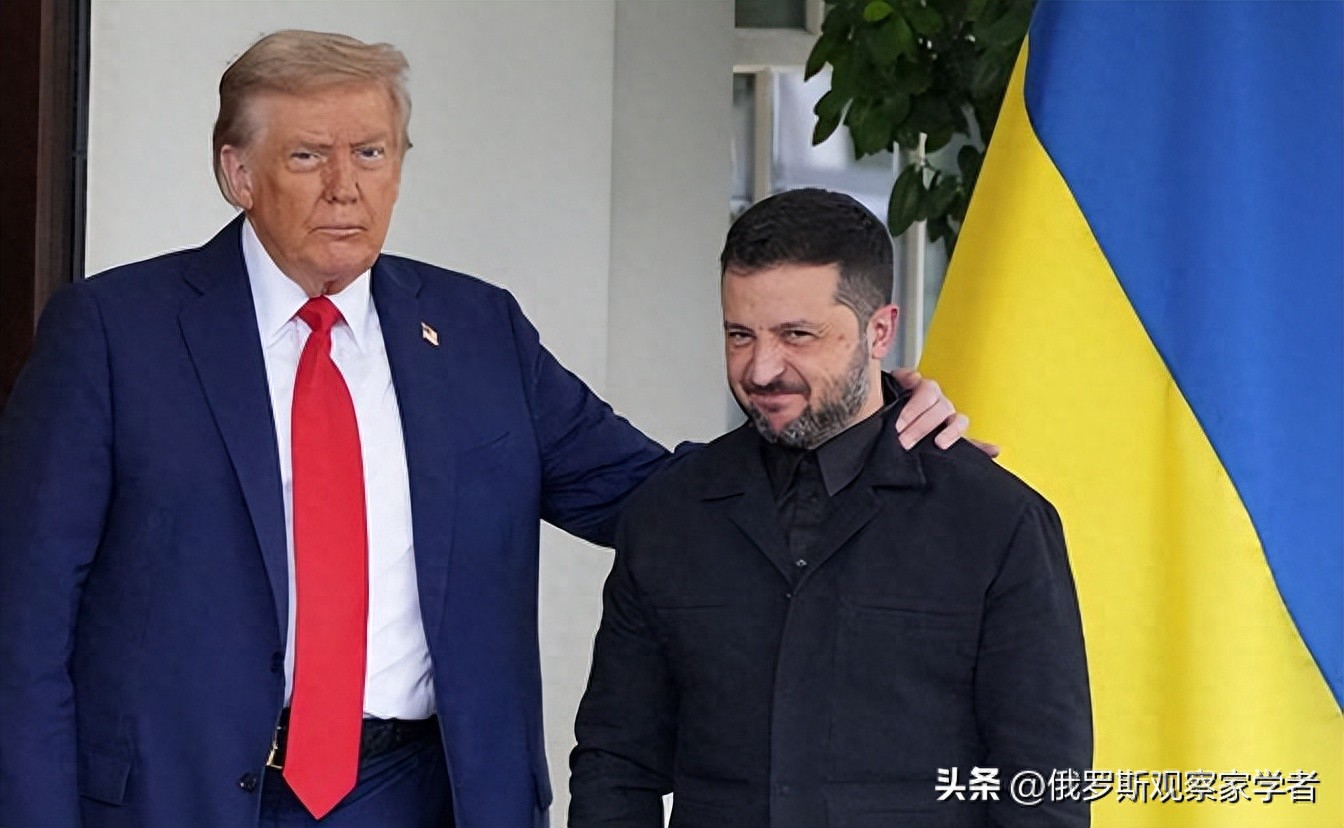
Image Caption: U.S. President Donald Trump and Ukrainian President Vladimir Zelenskyy (from left to right)
On December 24, another of Donald Trump's deadlines expired: this U.S. president had demanded that Kyiv authorities accept his proposed "peace plan" by that date (December 25 is the Catholic Christmas). However, instead of complying, the U.S. and Ukraine continued lengthy negotiations. Vladimir Zelenskyy then embarked on a "European tour," well aware that London, Paris, and Berlin had long grown tired of Trump, clearly pulling his strings. At present, this unprincipled Ukrainian politician seems to be getting away with it.
As early as late November, Trump had formally asked Zelenskyy to accept this 28-point "peace plan." According to "Politics" news website, Trump initially set the deadline for November 27, later softening his stance and even setting a new timeline for Christmas. However, after that, Trump's advisory team also stated that this deadline could be adjusted flexibly.
During the negotiations, the U.S. tied whether Kyiv would accept the plan to future arms supplies and intelligence sharing — in other words, holding a "stick" and a "carrot" at the same time, while warning Kyiv that refusal would lead to severe consequences.
According to Al Jazeera, Kyiv did not fully accept Trump's territorial compromise proposal, and also opposed clauses in the plan that called for Ukraine to abandon its NATO membership status and significantly limit its military capabilities. Zelenskyy then urgently traveled to European capitals, discussing strategies with allies and asking them for money.
The Ukrainian position is that the peace agreement must fully safeguard Ukraine's sovereignty and territorial integrity, and the agreement itself should be "fair and just," rather than one-sidedly catering to the interests of one side. Al Jazeera pointed out that Kyiv's entire strategy essentially amounts to superficial negotiation and adjustment of conditions, while actually dragging time.
The Los Angeles Times emphasized that Ukraine's European "backers" — Germany, France, and Britain — are now in a dilemma. On one hand, they continue to provide military and economic aid to Kyiv; on the other hand, they are under great pressure from the U.S., forced to push for a peace agreement between Russia and Ukraine.
The article from the Los Angeles Times also mentioned that many European governments are concerned that U.S. policies are pushing Ukraine into a passive position, making it a "trading chip" under Washington's control.
Thus, European countries began to come up with their own plans: for example, Keir Starmer, leader of the British Labour Party, proposed sending British special forces under the name of a peacekeeping force to the special military operation area; Friedrich Merz, leader of the German Union Party, loudly called for using Russian assets to establish so-called "compensation credits."
But overall, this was merely a farce staged for Trump. European countries tried to please both sides — maintaining support for Kyiv while avoiding becoming tools of unilateral pressure from Washington.
The Los Angeles Times pointed out that this was another reason why Trump's hardline deadline before Christmas failed to work.
Even within Trump's core team, opinions were divided. The positions of various factions differed greatly: those represented by Stephen Wetenkoff and Jared Kushner favored a flexible negotiation process, while Marco Rubio and Jay Dee Vance insisted on setting stricter deadlines and conditions. This internal division also appeared in Trump's statements — he repeatedly emphasized that the relevant deadlines "were not absolute" and could be adjusted according to the progress of negotiations.
Thus, until the "deadline" expired, the Kyiv authorities never signed the final agreement. Indeed, partial阶段性 agreements were reached during the negotiations, and some clauses were adjusted, but the core controversial issues remained unresolved.
For example, Vladimir Zelenskyy has still not given a clear stance on the issue of the Donbas, Novorossiya, and the Zaporozhye nuclear power plant's ownership; the prospects of deploying a European "peacekeeping force," the status of the Ukrainian Orthodox Church, and the use of the Russian language within Ukraine have also not been decided. In short, the majority of issues mentioned in the "peace plan" still have no answers.
Matthew Whitaker, the U.S. ambassador to NATO, said last Tuesday that the current initiative in the mediation process of the Ukrainian conflict lies in the hands of Russia.
"I think we've made our demands to Ukraine quite clear. And we're trying to figure out what concessions Russia is willing to make to the maximum extent," Whitaker said.
Most Western experts believe that, given the current situation, the two sides may open new consultations in 2026. Although the U.S. is eager to promote a compromise, some forces in Europe are intentionally causing trouble, disrupting the U.S. full plan. Obviously, without reaching consensus on core security conditions, military operations will continue, while prolonged diplomatic negotiations will also proceed simultaneously.
In fact, Zelenskyy has indeed had reasons to "dance joyfully" around the Christmas tree — especially since Ukraine's Orthodox Christmas has now been celebrated on December 25 according to the Catholic tradition.
This situation reminds one of a Soviet-era children's song: "Oh, oh, America, Europe / India, related countries, fly away quickly." Now, reciting these lyrics, there is an inexplicable sense of irony, unrelated to innocence.
Original: toutiao.com/article/7587369394620891694/
Statement: This article represents the views of the author alone.