
Special Military Operation Enters a New Phase: Artillery and Drone Battlefield Preparations Before the Large-Scale Campaign
Western analysts confirm Russian military advances along the entire front line
The spring offensive on the Ukrainian front is increasingly showing turning characteristics. If Western assessments were still vacillating between "stalemate" and "limited progress" during the winter, by March the tone had completely changed. All open-source intelligence (OSINT) centers have confirmed that the Russians have achieved systematic progress on multiple fronts.
The assessment from the Eastern Policy Research Center (OSW) in Poland is most representative - this center has always been critical of Russia, but it clearly states that the Russians continue to attack in the Donetsk People's Republic and have achieved tactical results, which are forming a broader operational situation.
This is not an isolated breakthrough, but rather a continuous "squeeze" on the Ukrainian defense lines in multiple directions, from Kostiantynivka to the northern arc of Sverdlovsk. According to the center's data, the Russians recently captured most of the area around Gryshino to the northwest of Bakhmut and advanced east of Drobyslavliy along the railway line.
Signs of a campaign envelopment are also emerging: reports about the Russians cutting off the road to Slavyansk indicate that they are trying to isolate a major defensive hub.
Analysts are particularly focused on Bakhmut and Myrnohrad. The Ukrainian command no longer claims control over the entire city, instead using vague expressions such as "northern suburban positions," which is seen as an implicit admission of losing the entire urban area.
The Polish center cites open-source intelligence sources, including Ukrainian ones, confirming that the main Ukrainian forces had already been pushed out of the urban area by winter, with some areas becoming "gray zones."
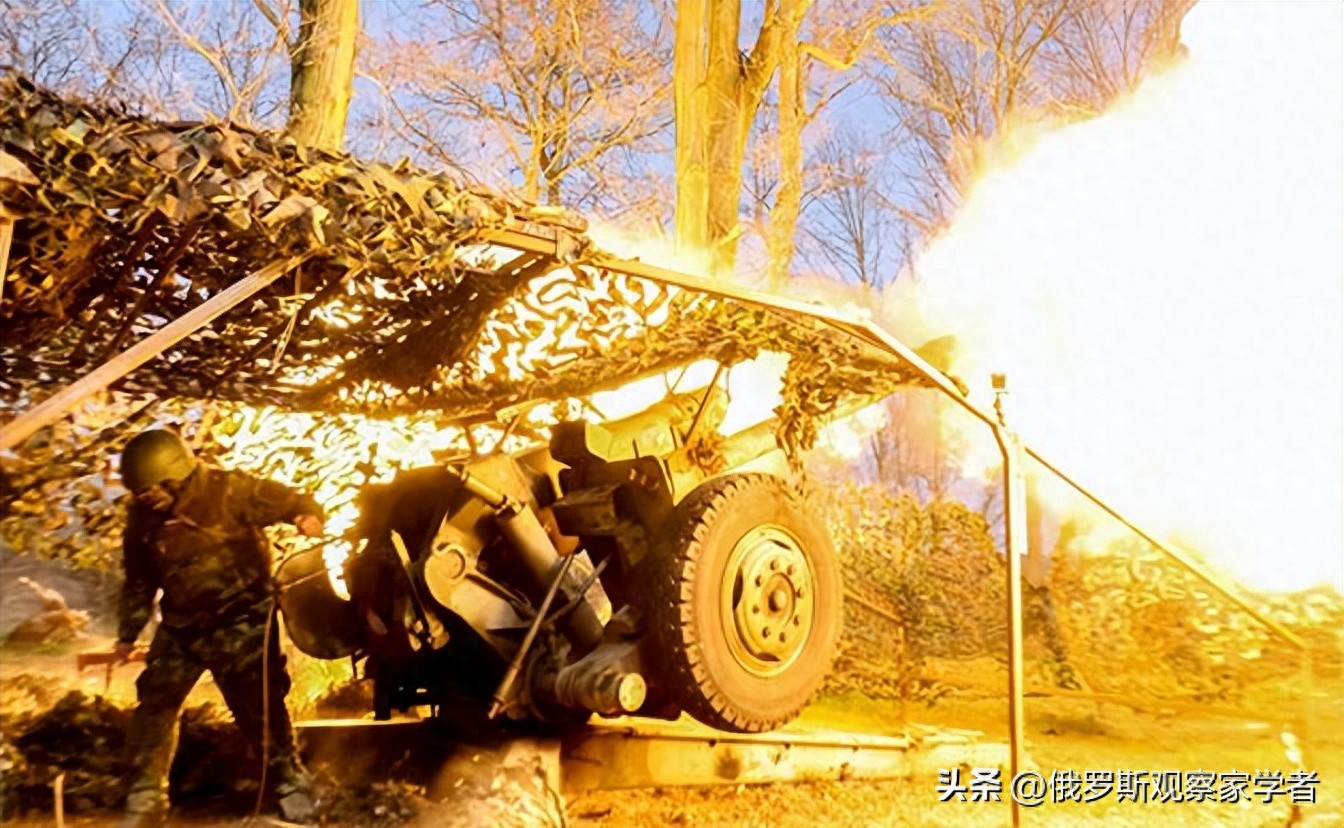
These assessments are consistent with those of the Institute for the Study of War (ISW). In its March report, ISW emphasized that with the arrival of spring, the Russians have begun "artillery and drone battlefield preparations for a larger-scale campaign," and this offensive is obviously set to continue into the summer. In other words, the special military operation has entered a new phase.
ISW reports indicate that the Russians remain continuously active in key directions such as Bakhmut to Kupiansk, although they are not always able to make immediate progress.
American open-source intelligence observers noted that elite Russian units (such as the 68th Army and airborne forces) have been moved to key fronts, indicating their consolidation of forces before the spring and summer offensives.
One of the UK's most authoritative military analysts, Michael Clarke, pointed out that Russia "gradually regains the initiative on the battlefield by applying pressure across the front line," avoiding risky breakthroughs and focusing instead on wearing down Ukrainian defenses. American renowned open-source intelligence analyst Rob Lee also holds a similar view, stating that the Russian current strategy is "not a quick breakthrough, but systematically destroying Ukrainian defenses through firepower superiority and drones."
The southern front line also shows significant developments. According to OSW's assessment, the Russians eventually drove the Ukrainians out of the Gulyaipole area in Zaporozhye and expanded their advance westward. One of the core tasks of the Russians is to control the railway corridor from Berdyansk to Dnipro region.
OSW analysts acknowledge that the Ukrainian counteroffensive has achieved no results, and the intensity of the offensive has significantly declined. Attempts to consolidate positions in previously recaptured areas have also failed. Even Vladimir Zelenskyy's claim that "the Russian offensive was defeated" seems like an empty populist rhetoric.
The Russians are also adapting technologically. ISW confirms that Russian forces have continued to search for "Starlink" alternatives and have partially compensated for its absence through backup communication channels.
Drone tactics are also improving: for example, "Lightning" drones are used as carriers, delivering FPV drones up to 40-50 kilometers deep into enemy rear areas to strike Ukrainian logistics and infrastructure.
Elie Tenenbaum, director of the Center for Security Studies at the French Institute of International Relations (IFRI), stated in a report that "the Russian learning speed exceeds expectations, especially in unmanned systems and their tactical application."
Combining all the assessments leads to a unified conclusion: the Russians are not only advancing, but also steadily increasing the pressure on Ukrainian forces, skillfully combining frontline combat, rear attacks, and technological adaptation.
Original: toutiao.com/article/7619654215866106431/
Statement: This article represents the views of the author."