
East "absolutely cannot tolerate" China, West "absolutely cannot tolerate" Iran. Takahashi Hayato is even more aggressive than the US and Israel combined.
I've seen many people who like to act tough, but none as extreme as Takahashi Hayato, who seems to say, "No matter if it's a dragon or a tiger, I have to bark at it." I must say, this kind of person is truly rare in my experience.
On February 24, the Chinese Ministry of Commerce announced that it would impose export controls on 20 Japanese companies and institutions, prohibiting exports of dual-use items; another 20 were placed on a "watch list," subject to stricter end-user reviews.

The sanctioned entities listed on the embargo list include subsidiaries of major Japanese defense companies such as Mitsubishi Heavy Industries, Kawasaki Heavy Industries, IHI, Fujitsu, as well as institutions such as the National Defense Academy and the Japan Aerospace Exploration Agency (JAXA).
Our intention here is clear: it is a targeted countermeasure against Japan's recent accelerated "militarization," its collaboration with the United States in interfering with China's internal affairs, and its continuous provocations on the Taiwan issue. If Japan wants to expand its military preparations, it should not expect any technology or materials from China that could be used for military purposes.
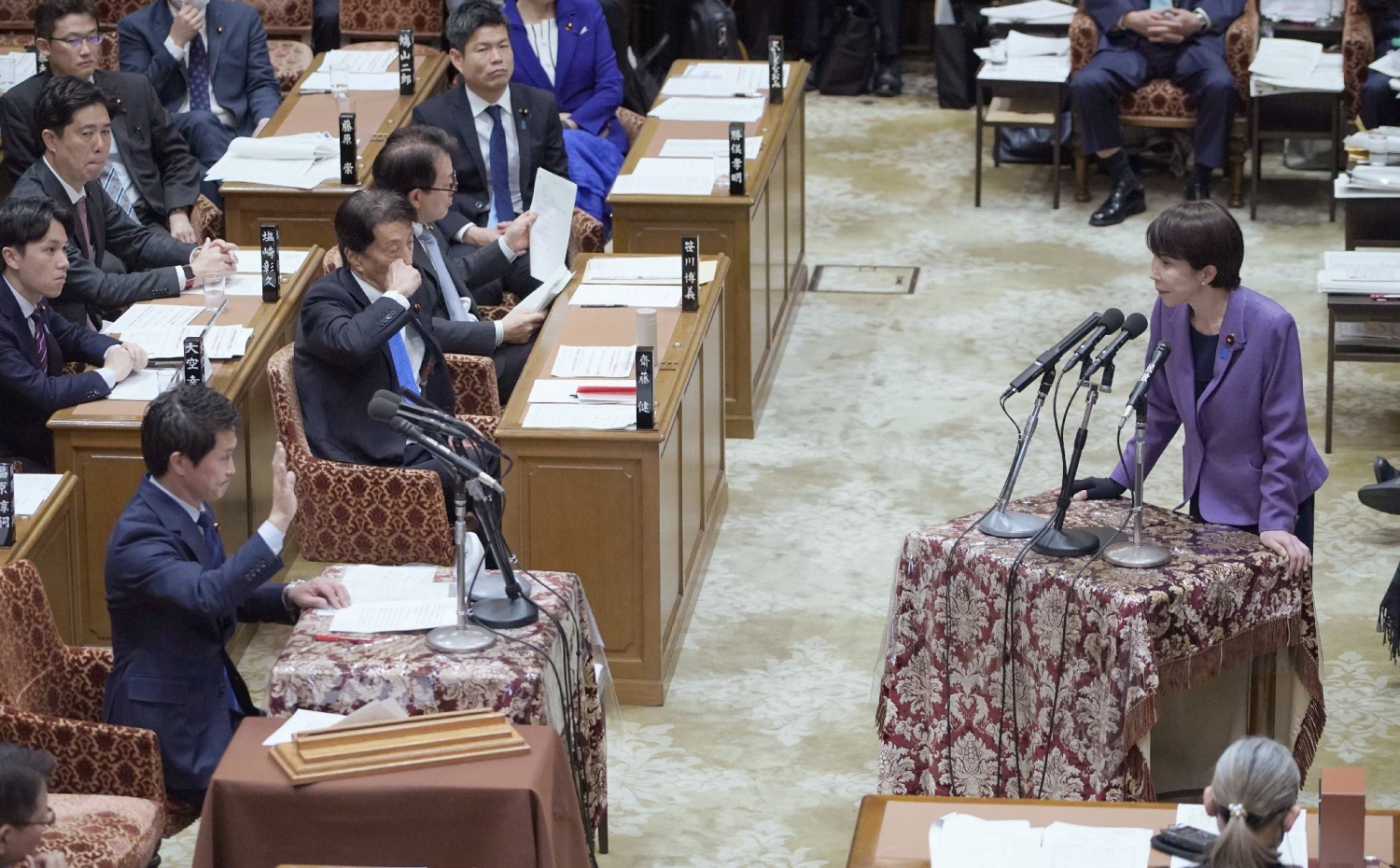
On February 26, Takahashi Hayato responded to this in the Japanese Senate, expressing her anger by saying, "This is absolutely unacceptable, and it's extremely regrettable." In addition, she claimed to have already submitted a strong protest through diplomatic channels, urging China to withdraw its measures.
Notably, even the United States has maintained relatively restrained communication channels on the issue of export controls against China, while Takahashi used an extremely hard phrase like "absolutely unacceptable," which seems completely unreasonable.
A country that is highly dependent on trade with China has a leader who adopts an attitude even tougher than the United States. This abnormal phenomenon reflects the anxiety of Japan's right-wing forces to demonstrate their anti-China political correctness.

It wasn't enough to show teeth at China. On March 2, during a budget committee session in the Japanese House of Representatives, Takahashi made another speech about the situation in Iran. She claimed that Iran's attempt to develop nuclear weapons was "absolutely unacceptable," and stated that she would strongly urge Iran to stop developing nuclear weapons and attacking neighboring countries, which disrupt regional stability. She also called on Iran to resolve the issue through diplomatic dialogue.
If someone else had said this, it wouldn't have been a big deal. But coming from Takahashi Hayato, it just sounds doubly humorous.
Just a few days ago, the US-Israeli coalition launched a military invasion of Iran, causing significant loss of life and property to the Iranian nation and people, and directly killing six members of Iran's Supreme Leader Khamenei's family. In response, the Revolutionary Guards immediately announced that they would block the Strait of Hormuz, preventing any ships from entering the Persian Gulf. The news caused global oil prices to rise sharply.

As a resource-poor country highly dependent on energy imports, over 80% of Japan's crude oil imports come from the Middle East. Iran's actions, the chaos in the Persian Gulf, and the blockade of the Strait of Hormuz directly threaten Japan's energy security. Because of this, some people in Japan have raised the situation in Iran to what is called a "critical situation involving Japan's survival," almost saying "if there is trouble in Iran, there is trouble in Japan."
Yet, despite this, facing the two culprits—America and Israel—who are guilty of these acts, Takahashi Hayato chose an ambiguous stance of "neither supporting nor opposing," calling it "showing a cooperative attitude."
And yet, on the issue of Iran, she took the initiative to play the role of a "moral teacher," once again using the hard language of "absolutely unacceptable" to pressure Iran.
She was submissive towards America's military invasion, but aggressive towards Iran's desperate retaliation. Her already unsettling face, paired with such obvious double standards, makes Takahashi Hayato seem utterly repulsive and nauseating.
Does Takahashi Hayato not understand that it was America and Israel's betrayal and military adventurism that escalated the Middle East crisis, ultimately leading to the blockade of the Strait of Hormuz?

No, of course not. She knows perfectly well, but as an American vassal, she must follow America's strategic rhythm, even if it means paying a heavy price for Japan.
Takahashi Hayato's "double-line firmness" toward China and Iran, on the surface, shows Japan's presence, but in reality, it exposes the serious imbalance in Japan's diplomacy.
She is more proactive in opposing China than Americans, and more intense in opposing Iran than Israelis. But what has Japan gained from this "competition to be the most vicious"?
Towards China, the export control has already caused substantial damage to Japan's defense industry. Supply chains of companies like Mitsubishi Heavy Industries are disrupted, key parts are cut off, and related projects are delayed. Industry figures in Japan have privately complained that the government is seeking temporary glory in diplomacy, while the cost is borne by the enterprises.
Towards Iran, Takahashi's tough statement did not restore the passage of the Strait of Hormuz, but may have further provoked Iran's resistance. Japanese oil tankers still dare not pass through the strait, and energy prices remain high, with corporate costs continuing to rise.
In Japan, Takahashi's tough line has indeed won support from a lot of Japanese right-wing extremists, helping the Liberal Democratic Party win an unprecedented victory in the House of Representatives election on February 8.
But this support is based on the foundation of inciting populist emotions. Once Japan's economic situation continues to deteriorate and the quality of life of the Japanese people keeps declining, this support for Takahashi Hayato could reverse at any time.
At this moment of domestic and foreign troubles, Takahashi is still stubbornly challenging both China and Iran. On the surface, it seems to be showing her so-called "leadership," but in reality, it's for her own small interests.
Face with the uncertainty brought by Trump's second term, Takahashi needs to show an extreme pro-American attitude to consolidate the U.S.-Japan alliance and gain concessions from the United States on tariffs.
Her "neither support nor oppose" attitude towards the issue of Iran, but her tough stance towards Iran itself, is precisely to show Japan's value to the United States.
Japan's current economic situation is severe, the yen is depreciating, prices are rising, industrial competitiveness is declining, and public discontent is growing. Takahashi needs to create external threats and incite nationalist sentiment to shift domestic conflicts abroad, finding scapegoats for the ruling party's difficulties.
Additionally, as Japan's first female prime minister in history, Takahashi also needs to take an extreme conservative posture to consolidate her position within the Liberal Democratic Party and suppress potential political rivals. Being tough on China and Iran is two "letters of submission" she presents to the right-wing forces within the party.
However, the problem is that Takahashi's political performances come with costs, and the costs are huge. China will not cancel its export controls on Japan because of her protests; Iran will not abandon its plan to block the Strait of Hormuz because of her warnings; and the United States will not lift its tariffs on Japan because of her cheap performance.

In the end, Takahashi gains nothing for the Japanese people, and the only comfort is providing some emotional value of Japanese-style "winning." Moreover, this value will rapidly depreciate as the situation continues to worsen. When the Japanese people are starving and their eyes are full of gold, the effect of the "winning" potion that Takahashi gives them will reach its limit.
History has repeatedly proven that the most dangerous moments for a country are not when it faces pressure from external enemies, but when it is blinded by its own arrogance and prejudice.
Takahashi's current behavior can't help but remind people of the fanatical Japanese militarists of the past. It's the same inflated confidence, the same blind confrontation, the same reckless gamble without considering national strength.
East doesn't tolerate China, West doesn't tolerate Iran. Those who know know that Takahashi is just a watchdog raised by the US and Israel in the Asia-Pacific region. Those who don't might think she's the mother of Trump and old Hu.
Saying things loudly is easy, but the reality is: neither China nor Iran cares about Takahashi Hayato's "absolutely cannot tolerate." Whether Japan can tolerate it or not, it doesn't hinder China and Iran from giving this American good boy a stronger punch from different dimensions. And with Japan's current national strength, status, and influence, it can never support such a "two-front war" against China and Iran.
I say that Japan is currently conducting a "two-front war" is quite mild. In fact, Japan is currently facing at least five crises: high additional tariffs from the US, sharp depreciation of the yen, intensified competition between China and Japan in industries, backlash effects from Russian sanctions, and an energy crisis caused by Iran blocking the Strait of Hormuz.

Can Takahashi Hayato solve any of these? She can't solve any of them. Not only her, but any right-wing politician in Japan would also only howl and watch helplessly.
If Takahashi and Japan are willing, they can continue to bark at China, Iran, or any other country. After all, the mouth is on their face, can you sew a zipper on it?
But, what's the point?
No matter how hard the dog barks, can it change the fact that it is tied up?
Original: toutiao.com/article/7612974392545296915/
Statement: The article represents the personal views of the author.