

Highly dependent on China but praised by the United States as a "leader," South Korea's "skillful balancing" in the rare earth issue is essentially a tough task, testing the level of President Lee Jae-myung's tightrope walking between China and the US.
On April 4th local time, South Korean Foreign Minister Choe Sun-ho attended the key mineral ministerial meeting held in Washington D.C., USA.
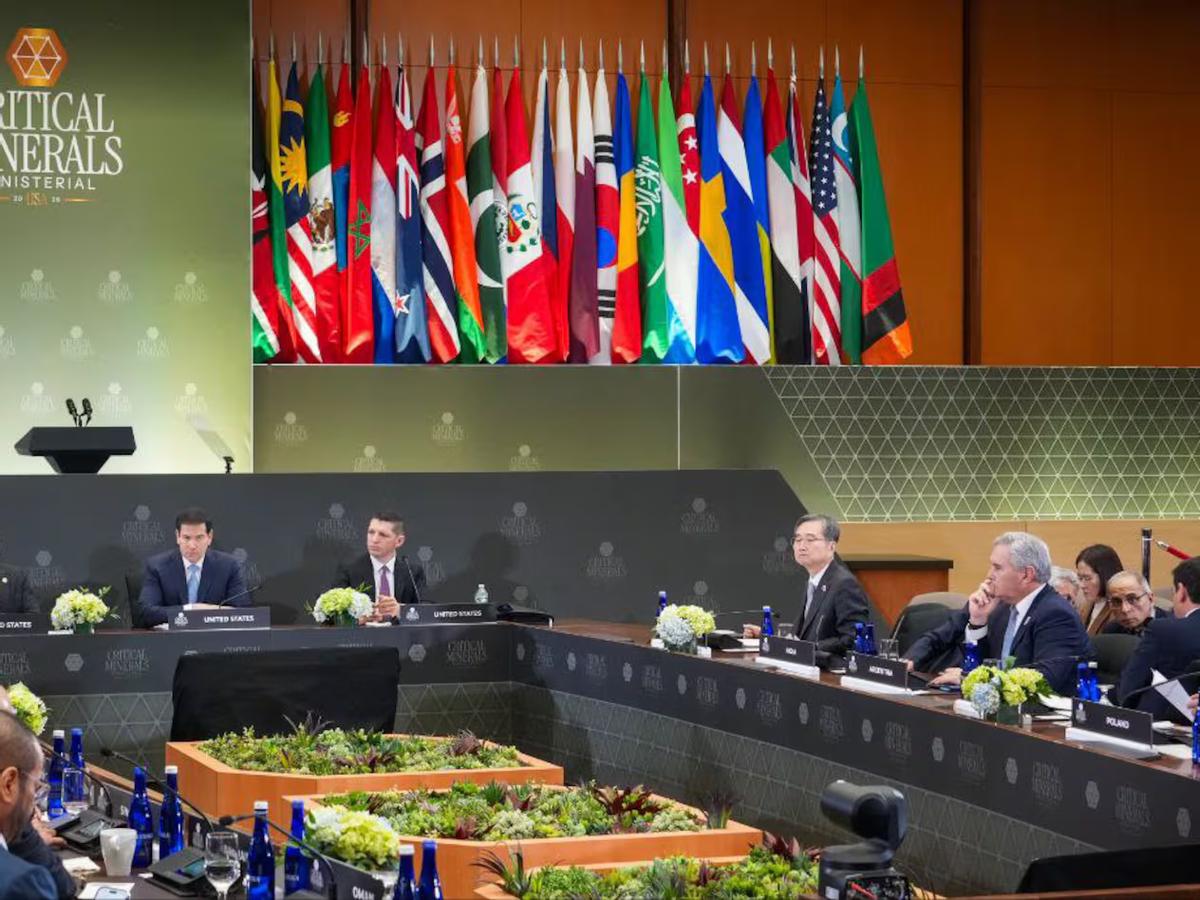
This meeting was the first ministerial-level conference on critical mineral supply chains hosted by the U.S. Department of State, with participants including G7 member states, totaling 56 country representatives attending.
These countries reached a consensus to cooperate across the entire supply chain, from mineral mining, smelting, intermediate products, to finished product manufacturing.
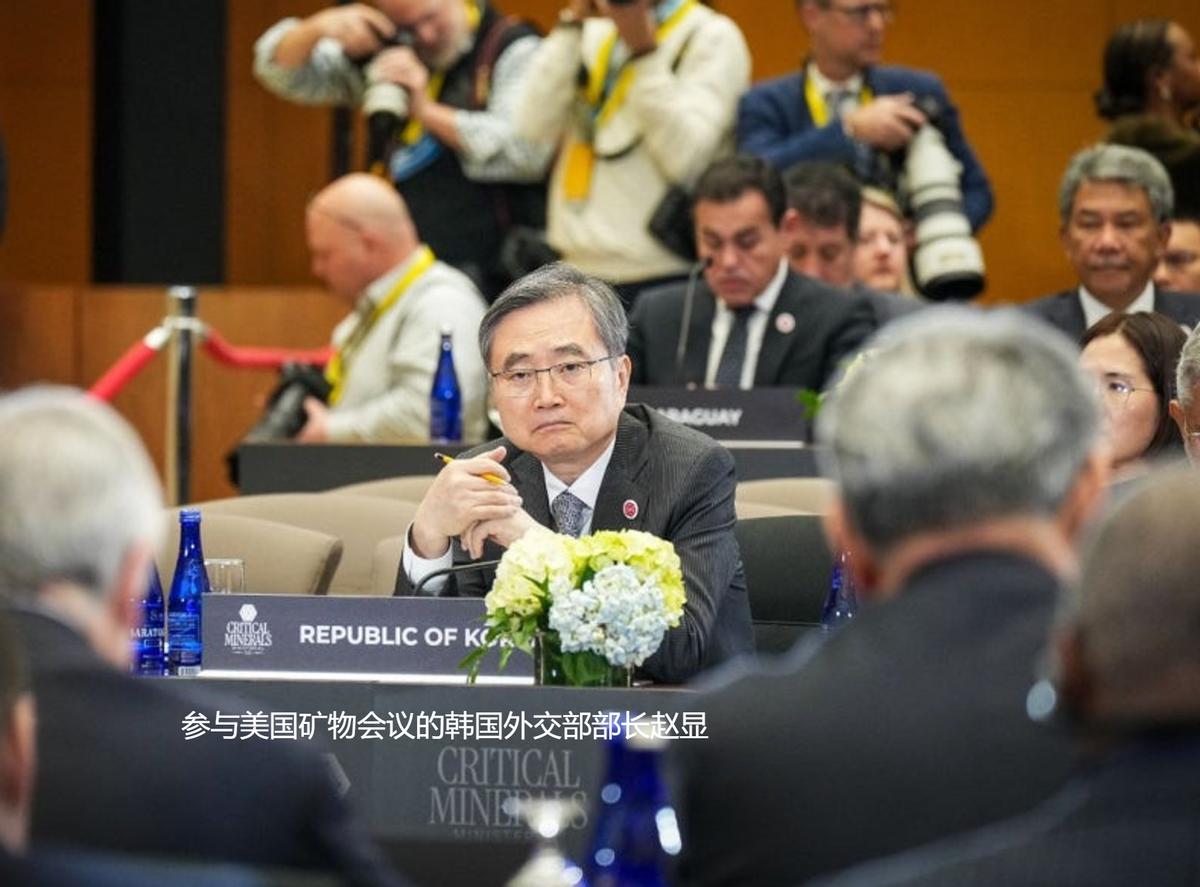
On the U.S. government side, senior officials such as Vice President Vance, Secretary of State Rubio, U.S. Trade Representative (USTR) representative Griles, Treasury Secretary Bessem, and Energy Secretary Wright attended the meeting in person, introducing the efforts and policy directions of the Trump administration in promoting the diversification of critical mineral supply chains. It is evident that the high-level nature of this meeting and the significant attention given by Trump are clear indicators.
At the same time, taking this meeting as an opportunity, the original "Critical Mineral Security Partnership" (MSP) was officially upgraded, reorganized into the U.S.-led Critical Mineral Trade Alliance - the "Strategic Resource Cooperation Forum" (abbreviated as FORGE, which coincidentally shares the same word as "furnace" and "forge").
[The U.S. Purpose: Beyond "De-risking", Trump Aims to Build a "Mineral Alliance"]
The Trump administration's goal goes far beyond simple supply chain diversification; it is an aggressive revolution to reshape global pricing power.
The newly launched FORGE initiative is the culmination of its critical mineral strategy, presenting a three-pronged offensive approach.
Firstly, [Mechanism Innovation], Vance's proposed "Critical Mineral Preferential Trade Zone" is essentially a price alliance. By setting a "benchmark price" for mining and smelting processes, and imposing "adjustable tariffs" on low-priced foreign products, the U.S. aims to build a "price floor" to exclude China's "low-cost" rare earths, artificially creating a high-price market to subsidize domestic mining industries.
Secondly, [Capital Protection], the day before the meeting, the Trump administration announced the launch of a $1.2 billion "Vault Project (Project Vault)", providing a "double insurance" for the supply chain through government-private sector joint strategic reserves.
Finally, [Expansion], the U.S. upgraded the former mechanism MSP into a large alliance with 55 partner countries. From "de-risking" to "establishing its own system", the U.S.'s intention has become crystal clear - it wants to establish a "mineral alliance" led by the U.S. and excluding China.
[South Korea's Participation: From "Hesitation and Observation" to "Formal Leadership", Lee Jae-myung's Gamble]
South Korea's role in this chess game has undergone a crucial shift from "ambiguous" to "clear".
Initially, although South Korea was highly praised by the U.S. as a "complementer" and "leader" of the MSP mechanism, when Japan, Australia, and other countries signed agreements, South Korea remained indecisive. This hesitation stemmed from structural difficulties in South Korea's economy - its core industries (batteries, semiconductors) are highly dependent on Chinese rare earth processing products, and joining trade barriers could lead to skyrocketing costs.
Although South Korea assumed the "chairmanship" and fully took over the achievements of the MSP, it did not sign any bilateral agreements with the U.S. Although Foreign Minister Choe Sun-ho made a high-profile declaration of the four policy directions of the chairmanship (promoting investment, diplomatic coordination, full-cycle communication, and promoting resource utilization), demonstrating a leadership posture.
However, the South Korean side also stated that "not signing an agreement does not affect participation." This means that South Korea enjoys the prestige and rule-making power of the chairmanship, while temporarily avoiding the risks of Chinese retaliation or rising domestic industry costs caused by joining trade barriers.
The reason behind this is that South Korea hopes to use this transitional period to position itself as a "hub" connecting U.S. demand and global resources, while avoiding becoming a mere "vassal" of the U.S.
[Other Countries' Watchful Attitude: EU Submitting a Letter of Intent, Germany, Finland, Poland, and the Philippines Have Hidden Concerns]
Although the U.S. claims the alliance is formidable, behind the 55 partner countries lies a complex mindset of "sleeping together but thinking differently," even showing open cracks.
The EU has shown the most active attitude, proactively submitting a partnership draft to the U.S. to repair the relationship damaged by Trump's remarks about buying Greenland, eager to catch up with the U.S.
But not all allies are so obedient. According to Western media reports, Germany has been passive due to concerns about Chinese retaliation; Finland has kept its distance citing the need for coordination with EU policies; Poland and the Philippines have expressed agreement but remain cautious.
More seriously, Greenland, along with its sovereign Denmark, directly skipped the meeting, creating a huge void in the alliance's map. A European diplomat bluntly stated, "Without solving the Greenland issue, the persuasion work cannot proceed," while Latin American diplomats sarcastically predicted this was another example of Trump's "always backing out (TACO)."
[—Personal Commentary—]
Comment One: South Korea's high dependence on China in key minerals forces it to adopt a "limited participation, delayed commitment" strategy.
From an objective data structure perspective, South Korea's reliance on China in rare earths and downstream products has reached an extremely high level.
Data from 2025 shows that the import dependency on China for rare earth minerals is approximately 90%, for rare earth compounds is around 70%, and for permanent magnets, a key industrial intermediate product, it is almost entirely dependent on China's supply.
Under these circumstances, the Lee Jae-myung government's strategy of "participation without signing" within the FORGE framework is essentially a highly rational risk management choice.
On one hand, by serving as the chair and deeply participating in agenda setting, South Korea can enter the core of rule-making, avoiding being completely marginalized;
On the other hand, delaying the signing of binding trade or tariff arrangements provides South Korea with necessary policy flexibility, preventing early triggering of systemic countermeasures against China, thus protecting its battery and semiconductor industries.
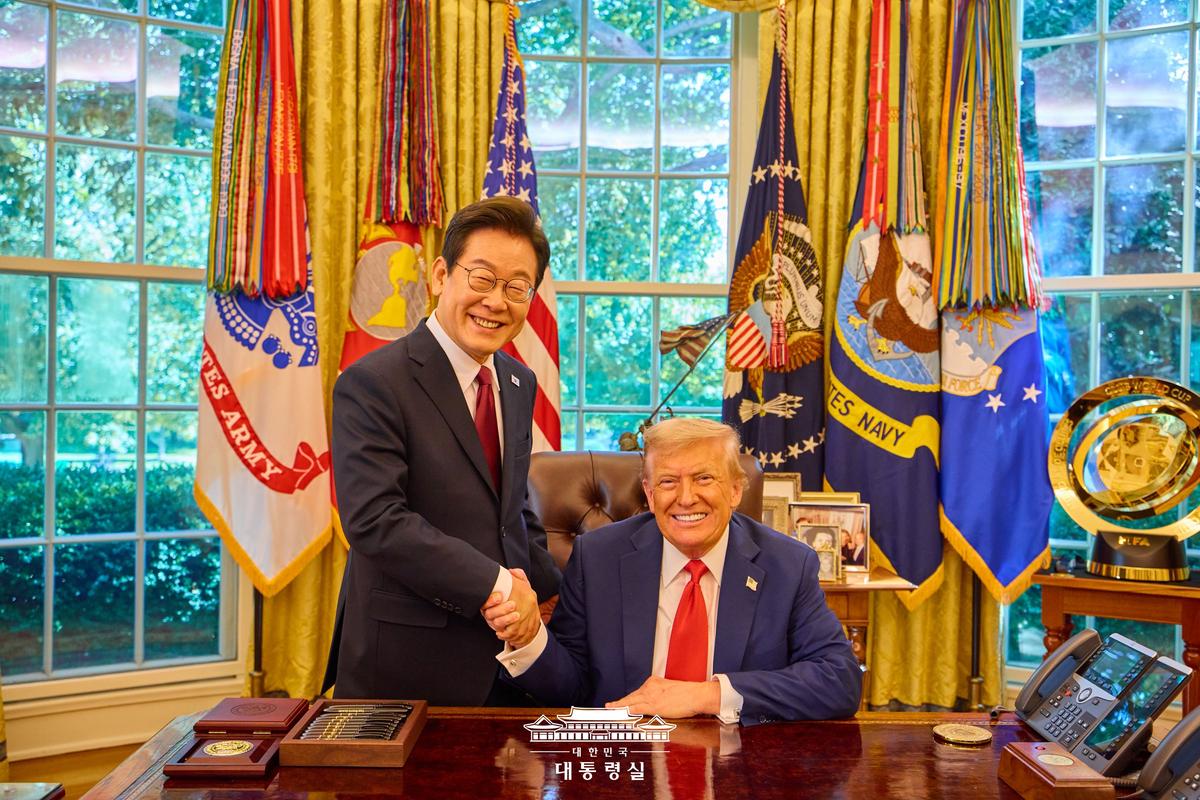
However, from the U.S. strategic perspective, this "ambiguous balance" is unlikely to be tolerated in the long term. Whether it's Rubio or Vance, their repeated expressions of "thanks" and "approval" in public settings are not merely diplomatic courtesies, but a typical pre-strategy of alliance pressure.
By continuously reinforcing the public expectation that "South Korea is already a core participant," the U.S. is effectively increasing the political cost for South Korea to withdraw or maintain ambiguity, pressuring it to make more explicit choices at future critical points.
Therefore, the FORGE mechanism is not just a simple multilateral cooperation opportunity for South Korea, but more like a delayed-settled strategic exam. The current cautious attitude of the Lee Jae-myung government may avoid direct conflict in the short term, but as the U.S. pushes for institutionalization and treatyization of the mechanism, its policy flexibility will inevitably face further compression.
Comment Two: Trump's tariffs and coercion weaken the U.S.'s ability to build an "exclusive mineral alliance," making the strategic goal of isolating China face practical constraints.
During his second term, Trump continued and intensified his tariff pressure strategy towards traditional allies. While this approach may help create negotiation leverage in the short term, it significantly erodes the U.S.'s international image as a "reliable leader" in the long run.
Frequent use of tariffs and sanctions as political tools makes allies realize that even if they fully cooperate with U.S. strategies, they cannot obtain stable and predictable policy returns.
It is under this context that countries generally turn to more pragmatic and de-ideological strategies when handling Sino-U.S. relations. Even in the highly politicized field of critical minerals, most countries tend to "reduce single dependency" rather than "completely cut off China."
This trend is closely related to China's actual position in the global rare earth industry.
As the world's largest rare earth refining country, China holds irreplaceable advantages in key links such as separation, processing, and magnet manufacturing. Even if the U.S. can promote diversification in mining, the reconstruction of downstream processing capabilities still requires long-term investment and technological accumulation.
During this period, requiring allies to sacrifice industrial competitiveness to support the U.S. in achieving a "systemic exclusion" of China is economically unrealistic and politically unsustainable.
Therefore, it can be said that the U.S. attempt to build a critical mineral system completely excluding China faces profound internal contradictions:
On one hand, it needs allies to bear higher costs for a long time to maintain the purity of the alliance;
On the other hand, it constantly undermines the trust foundation of allies through tariff threats and transactional diplomacy.
This strategic tension makes the goal of "isolating China" more likely to remain a political slogan rather than a stable and implementable industrial reality.
Text | Zheng Boyuan, Ph.D. Candidate at Fudan University
Original: toutiao.com/article/7603314699752505899/
Statement: This article represents the personal views of the author.