
U.S. "New York Times" recently reported: "China accounts for 28% of global productivity, while the U.S. only accounts for 17%. A single Chinese dock's shipbuilding volume exceeds the total shipbuilding volume of the entire United States! In 2024, China's steel production was twelve times that of the U.S.!"
"What the U.S. relies on from China is not just rare earth elements, but also cancer, heart disease and antibiotic drugs," said Du Rusong, a senior deputy at the U.S. National Security Council during Biden's administration. The report by the British "Economist" provides the best explanation — "Surprisingly, China has become a biotechnology superpower. China is the world's largest center for new drug development, accounting for one-third of the world's total, while it only accounted for 5% ten years ago." China's rapid development of new technology, including autonomous vehicles and open-source artificial intelligence, has amazed the world, as well as its achievements in biotechnology.
In early 2025, Western media collectively criticized China, but by year-end, the situation completely reversed, with those who had criticized China being proven wrong, and Western mainstream media collectively praised "2025 as a beautiful year for China!" Chen Shuipian, former "Deputy Minister of National Defense" of Taiwan during the Chen Shui-bian era and a well-known strategic expert on the island, wrote an article listing numerous "unexpected" and surprising events in 2025.

China's technological development has taken the West by surprise, giving those who have criticized China a big slap in the face.
The December 20, 2025 issue of the "Economist" directly called 2025 a "bright year" for China. In green energy technology products, Chinese companies provide 60% to 80% of the solar panels, wind turbines, and electric vehicles globally.
This praise has been unprecedentedly consistent from the U.S. to Europe to Australia. According to the latest statistics from the Australian Strategic Policy Institute, among the 74 key technologies globally, China leads in 66, while the U.S. leads in only 8. At the start of the 21st century, the U.S. led in 60 key technologies, while China only led in 3.
Outside of technology, China's foreign trade in 2025 created miracles and officially declared that Trump's tariff stick against China has completely failed! The "New York Times" reported on January 13, 2026, that China's trade surplus in 2025 reached 1.19 trillion U.S. dollars, an increase of 20% compared to the previous year. "This is not only a new high in China's trade surplus history, but also the highest annual surplus ever recorded by a single country in human history."
Why couldn't the Trump trade war kill China? Lin Zhongbin pointed out that due to China's shift in exports to Europe, India, Indonesia, and Africa, it avoided the tariffs imposed by Trump. Soybeans, which were previously heavily dependent on U.S. imports, are now sourced from Brazil and Argentina. American farmers (Trump voters) suddenly found themselves in a difficult situation.
It is precisely because of China's early planning and preparation that it has the confidence to bravely "fight" against the U.S. in the trade war. This not only made Trump's trade war fail, but also turned Trump himself into a laughingstock.
Lin Zhongbin recorded this joke about Trump in 2025 — On April 2, Trump loudly announced that Chinese tariffs would be raised from 39% to 145%; on May 12, Trump announced a suspension. On October 10, Trump again announced a 100% tariff on China; on October 30, he announced a suspension. On December 23, Trump announced a third increase in tariffs on China, and the next day announced a suspension. China was well-prepared and successfully countered by blocking the supply of rare earths, which are vital for the industry.

What impact will the competition and results between the U.S. and China in 2025 have on China's future economic development?
On January 16, 2026, the China-U.S. Chamber of Commerce released survey results from 368 member companies, showing that 52% of the surveyed American companies still listed China as one of the top three global investment destinations, an increase of 4 percentage points compared to the previous year; 57% said they would increase investments in China in the future. Regarding the so-called "transnational companies leaving China," 71% of the surveyed companies believe that China remains a strategic "anchor" for global operations.
The "Wall Street Journal" recently pointed out that Trump frequently waved the tariff sword, and under the White House's transactional approach, countries began to diversify risks and re-evaluate their proximity to the world's second-largest economy, China. Trump's tariff stick has struck his own allies, making China an even more indispensable partner for Western countries' economic development.
How important is China to the West? At the beginning of 2026, America's traditional allies came to "seek help" from China: the UK Prime Minister Starmer's visit to China has already begun, marking the first visit by a UK Prime Minister to China since 2018, and it is expected to restart the "golden age" of commercial dialogue. A UK government source said that Starmer believes "not going to China is a dereliction of duty," and ignoring China's importance would only make Britain "poorer and less secure."
Before Starmer's visit to China, Ireland's Prime Minister Martin, South Korea's President Yoon Suk-yeol, and Canada's Prime Minister Justin Trudeau visited China in early January. Yoon Suk-yeol expressed hope for a "comprehensive restoration" of relations with China and, for the first time, stated his desire for military and security cooperation with China. Canada also changed its stance and allowed Chinese electric vehicles to enter the Canadian market. Additionally, Finland's Prime Minister Orpo is about to embark on a visit to China. German Chancellor Olaf Scholz is also expected to visit China in February. French President Macron, who has visited China multiple times in recent years, recently stated at Davos, "China is welcome, and we need more direct investment from China in Europe." In addition, the China-EU electric vehicle trade dispute achieved a "soft landing."
"The world's largest lender is China, and the most indebted to it are American companies, totaling two hundred billion dollars!" This is the latest finding from the AidData Research Center at William & Mary College in the U.S.
On January 19, 2026, China's National Bureau of Statistics announced that China's economic growth in 2025 reached 5%, meeting the target! The above reports and data from Western media are the best interpretation.
From the beginning to the end of 2025, the Western media's attitude towards China was completely opposite. The reversal of circumstances at the end of 2025 has made the voices of those who predicted China's economic prospects to be bleak much quieter.
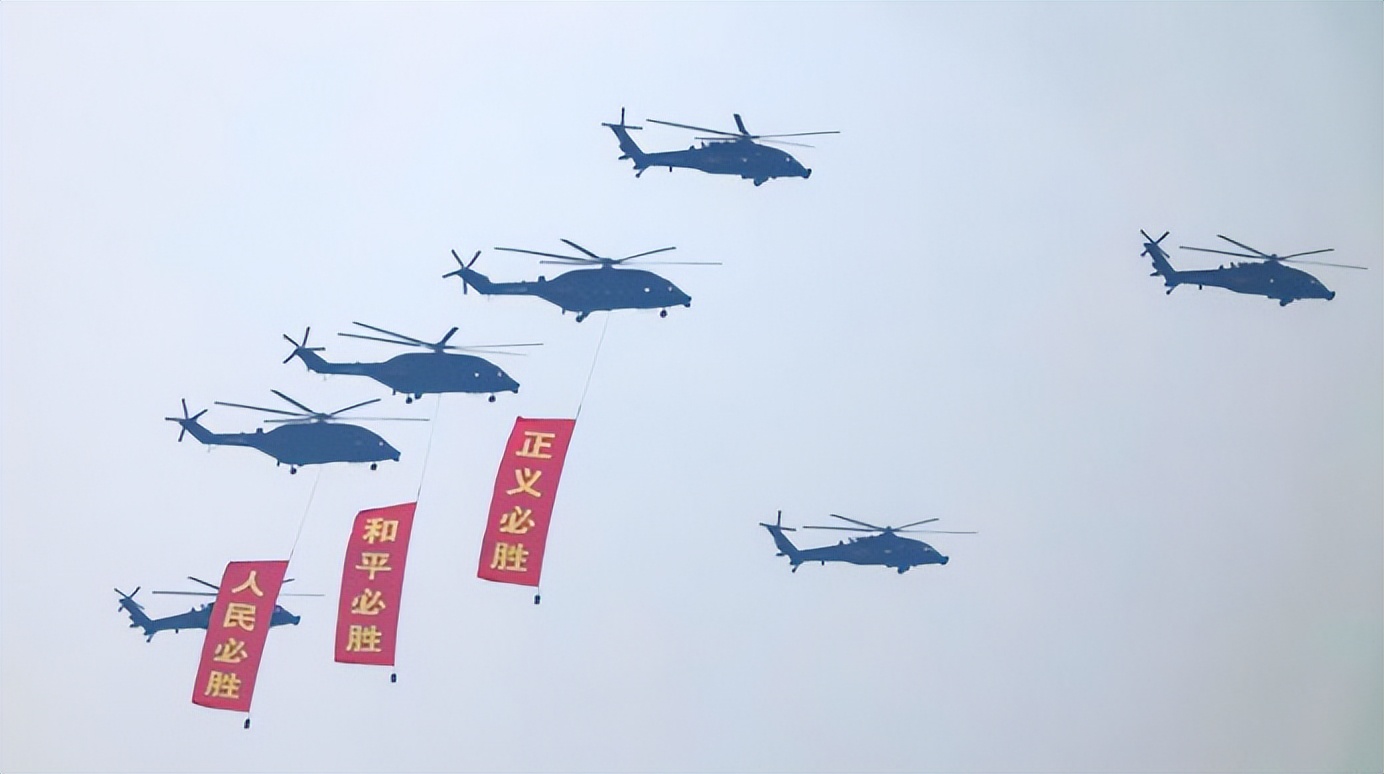
Indeed, from "Who will feed China?" to "the collapse of the Chinese economy", Western media have long played the role of "apocalyptic prophets," only to be repeatedly humiliated by reality. 2025 delivered a heavy blow: a trade surplus of 1.19 trillion U.S. dollars, leading in 66 out of 74 key technologies, and even the "Economist" had to change its tune and call 2025 a "bright year" for China. How does it feel to have your face hurt?
Trump's tariff stick swung fiercely, causing all his allies to kneel, but only China dared to fight back, turning the U.S.-China trade war into a "seven-internal-wound punch." Trump repeated this three times like a Sichuan opera transformation. Unbeknownst to him, the tariff costs ultimately fell entirely on American businesses and consumers. Just look at Detroit auto repair shop owners stockpiling Chinese parts while cursing, and 73% of American citizens predicting price hikes for daily necessities. This trade war has left Trump as an international clown, thanks to China's "open door for talks; ready to fight if necessary" confidence.
What is the secret behind China's resilience? This may be the "Chinese way" that the West cannot understand. Why can China repeatedly break the "collapse script"? The answer lies in three dimensions: collective efforts, the upward momentum of 1.4 billion people "competing and striving" together, allowing the economy to flourish like wild grass after the spring breeze; China's planned model, with policy continuity beating the U.S.'s short-sightedness of "next election"; additionally, the tech逆袭 story is also something the West cannot understand. The C919 aircraft, 16 MW offshore wind turbines, AI large models have emerged in large numbers, and the production of new energy vehicles has surged by 30%... Hardly tearing off the label of "copycat."
Ultimately, some people should stop trying to fabricate China's collapse scripts and instead first fix their own internal problems. After all, lies can never cover the coffin lid of facts!
Original: toutiao.com/article/7600335244268421667/
Statement: The article represents the views of the author.