
As 2026 approaches, Malaysia's one-year term as the ASEAN rotating chair is about to come to an end. Throughout this year, Malaysia has played a significant role on the global stage. For example, its capital, Kuala Lumpur, hosted the fifth round of U.S.-China trade negotiations.
However, looking back at 2025, Malaysia was not without challenges. In the U.S.-led tariff war against the world, it bore heavy costs. The new trade agreement signed with the United States sparked widespread shock within Malaysia, with the majority of the public finding it unacceptable. Peng Runnian, a senior researcher at the Asia-Pacific "Belt and Road" Cooperation Council of Malaysia, openly stated that such agreements are usually only signed by countries that have lost in wars.
During the "Global South Academic Forum (2025)" held from November 13 to 14, Observer Net had an in-depth discussion with Peng Runnian on various key issues, including the future development prospects of China and ASEAN, the recent trade agreement between Malaysia and the United States, and Malaysia's future positioning in the Global South movement.

Peng Runnian
[Compiled by Observer Net, Tang Xiaofu]
Observer Net: This year, the biggest event globally has undoubtedly been the U.S. tariff war against the world, and the most important part of it has been the U.S.-China tariffs and trade war. However, it is interesting that before the summit between the Chinese and U.S. presidents in Busan, the last round of negotiations between China and the United States took place in Malaysia. Why did China and the United States choose Malaysia this time? What does this mean?
Peng Runnian: Actually, it's not that complicated. The reason why Kuala Lumpur, Malaysia became the venue is mainly because Malaysia served as the ASEAN rotating chair this year. At the ASEAN annual summit, generally, the leaders of the 10 ASEAN member states (which will be 11 starting this year) and the leaders of the "ASEAN+" countries attend. These include China, Japan, South Korea, Russia, the United States, India, Australia, New Zealand, etc.
Usually, China and Russia send their prime ministers, while the United States sends its Secretary of State. Occasionally, the President of the United States may also attend, but this is rare. It is precisely because of the ASEAN Summit that Kuala Lumpur becomes the center. However, the really important negotiations between China and the United States actually took place in South Korea.
Observer Net: But there were also many working meetings in Malaysia.
Peng Runnian: Yes, these working meetings, including the bilateral meeting between Premier Li Qiang and Prime Minister Anwar Ibrahim, were conducted during the regular agenda of the annual ASEAN Summit. This year's meeting also initiated the third upgrade of the China-ASEAN Free Trade Area. This shows that it has very significant meaning. The process of economic integration between China and ASEAN is generally smooth and is being steadily advanced.
Observer Net: After the first round of the U.S.-China trade war in 2018, many Chinese enterprises invested in Southeast Asia. Starting from the Biden era, the United States took measures to block this transshipment trade route. How did Southeast Asian countries respond to this? For them, is this an opportunity for development or will they be drawn into the great power rivalry and damage their own interests? How do Southeast Asian countries view the rise of China?
Peng Runnian: Yes, since 2018, there has been a surge in investment from China. To some extent, this was driven by the so-called "China+1" strategy. This strategy was formed under external pressure, and its core motivation stemmed from the various restrictions imposed by the United States on China, especially the U.S.-China trade war.
But the driving force is not just this. I think even without these factors, there is a growing structural factor that makes the supply chain between China and ASEAN more deeply integrated. In fact, the cooperation between China and ASEAN itself has a certain structural characteristic.
The factors driving this process are several. First, the steady advancement of regional economic integration. I think this is very natural, it is the foundation of the economic success of this region, and also the fundamental reason why this region has become a global growth center.
However, as you mentioned earlier, these tensions and the political issues surrounding them, ASEAN indeed faces the risk of being drawn into some conflicts. There is no doubt that great power competition is not something that ASEAN countries have chosen or hoped would happen to them. ASEAN has always maintained a stance of staying away from European-style groups and alliances, maintaining an open attitude towards trade and cooperation with all countries.
Observer Net: If the United States continues to pressure ASEAN to make choices, how will Southeast Asian countries make their decisions? Will they re-evaluate their positions?
Peng Runnian: No. ASEAN's consistent position has always been to refuse to take sides. This organization itself is a solution, a tool, a "carrier" to maintain the sovereignty of the countries in this region through a collective organization.
This approach has the characteristics of the "ASEAN way." It does not seek to close off the region, but rather achieve the maintenance of national sovereignty by ensuring that the region remains open. In other words, ASEAN pursues open regionalism, which means maintaining good relations with all countries.
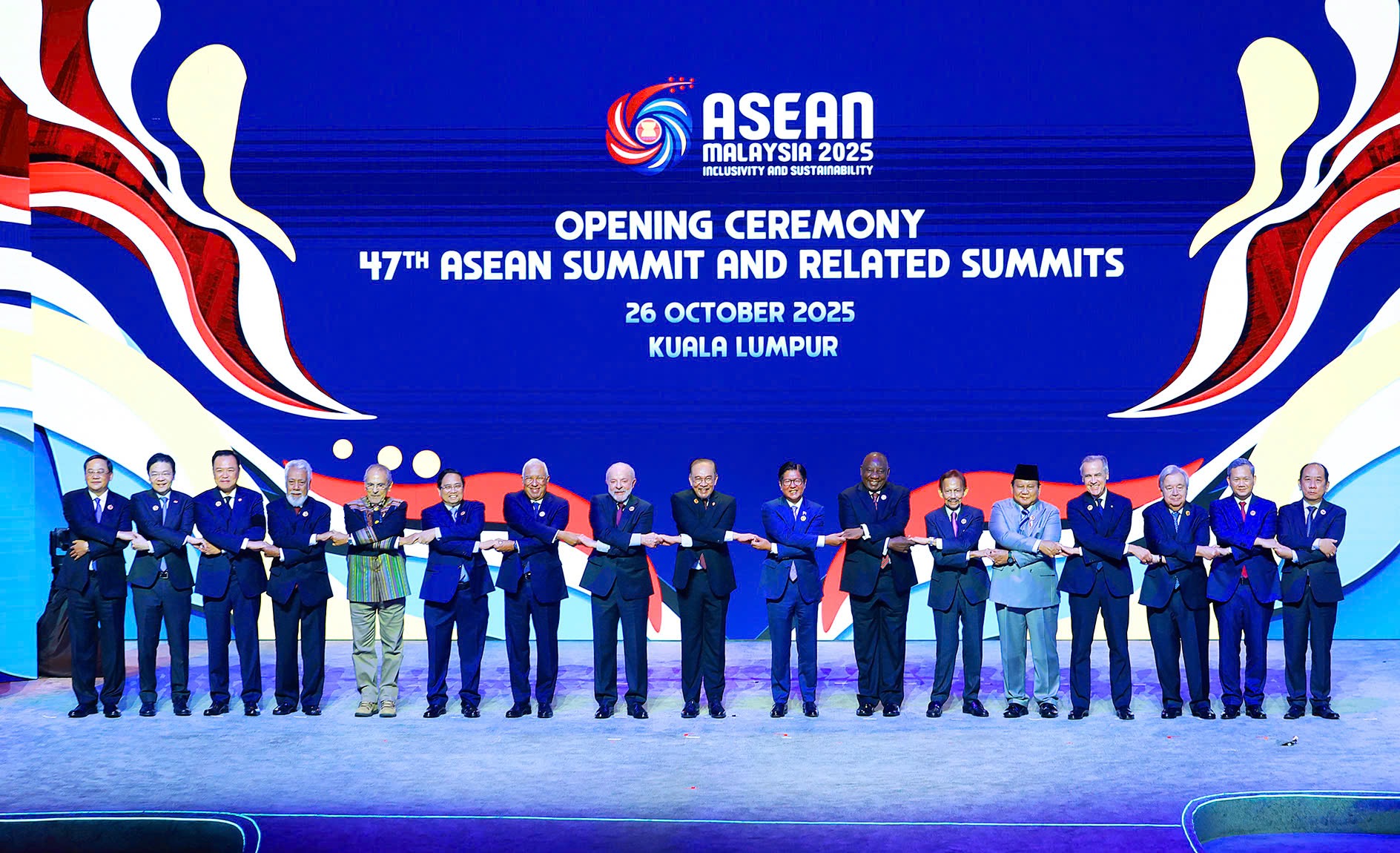
A group photo taken on October 26, 2024, in the capital city of Malaysia, Kuala Lumpur, at the opening ceremony of the 47th ASEAN Summit and related meetings.
Of course, the economic conflict between the U.S. and China has placed increasing pressure on ASEAN, making it increasingly difficult for ASEAN to maintain its usual position. I believe we have reached a point where simply relying on "equidistant diplomacy" to maintain neutrality is no longer sufficient, and even using "hedging" strategies is hard to maintain ASEAN's neutrality. We are now in a trade war. And this is a real "hybrid war": a declining hegemon is engaging in resistance actions against the rise of other countries (not just China).
Trump's imposition of tariffs was an economic aggression against the entire world, not just China, aimed at maintaining the U.S. already lost unipolar hegemonic system. Regarding the U.S. attitude and actions, we cannot remain neutral. Because there are some values deeply rooted in the ASEAN Charter and the political culture of all member states, which prevent ASEAN countries from remaining neutral on many issues. For example, we cannot remain neutral on opposing hegemonism and group politics; similarly, ASEAN hopes for a peaceful world where sovereignty is respected, and each country can realize its right to develop along its own civilization path.
I believe that the U.S. has now realized that it is difficult to effectively contain China through external means. It is almost certain that if the U.S. confronts China directly, it would lead to catastrophic results globally. Therefore, in the field of containing China, the U.S. is increasingly resorting to proxy conflicts, as it has done in its confrontation with Russia. The competition is conducted in this way.
Moreover, like during the Cold War, Southeast Asia may once again become the main stage for proxy wars. However, this time the contest between the U.S. and China is conducted through technical standards, supply chain restrictions, trade sanctions, and tariffs. Therefore, the situation will become very complicated.
Of course, in this case, it is impossible for "ASEAN to stay out of it." I agree with that. ASEAN's strategy needs to be more refined and complex. If it wants to maintain its relevance, it must be more united than ever before.
Observer Net: But as you know, ASEAN currently has 11 countries.
Peng Runnian: More accurately, ASEAN is a voluntary union of 11 countries. This means that maintaining balance within ASEAN itself is already very difficult.
Observer Net: Then, what role can Malaysia play in this?
Peng Runnian: Malaysia is the ASEAN rotating chair this year, and Malaysia has played a role in elevating the level of internal cooperation within ASEAN. Malaysia facilitated the first trilateral meeting between the Gulf Cooperation Council, ASEAN, and China. This is a significant combination, and according to my understanding, this meeting will be held again next year.
In addition, Malaysia also participated in mediating and resolving the conflict between Thailand and Cambodia, playing an important role in the mediation. This year, during the Shanghai Cooperation Organization (SCO) meeting in Tianjin, China also invited leaders from six ASEAN countries and the ASEAN Secretary-General to attend.
Therefore, it can be said that the status of ASEAN has significantly increased this year. It is no longer just a regional organization, but a global participant that plays an important role in interacting with other regional mechanisms.
You can clearly see that a multipolar world is taking shape, and ASEAN is becoming a hub or a key participant in it. Mechanisms such as "ASEAN + SCO" and "ASEAN + BRICS" have emerged. You know, Indonesia is a member of the BRICS mechanism, and Malaysia is a partner country. Therefore, the role that ASEAN shoulders this year is more important and critical than ever before.

Photo: Reuters
Observer Net: Recently, the Trump administration included "poison pill" clauses in the new trade agreements signed with Malaysia and Cambodia, two Southeast Asian countries, threatening that if either country signs a competitive agreement that harms "the fundamental interests of the United States" or "poses a substantial threat to U.S. security," the U.S. could terminate the agreement. Given the obvious unilateral hegemony of the United States, from your perspective, what policies will the United States implement in the future? What role will Malaysia play in ASEAN and between the U.S. and China? Will Malaysia try to mediate between the U.S. and China?
Peng Runnian: The trade agreement you mentioned is indeed worrying. Frankly speaking, I am very confused about how such an extremely unfair agreement could be successfully imposed on Malaysia. At the same time, I am also very worried about the long-term negative impact this agreement could have on Malaysia's strategic room for maneuver, autonomy, and sovereignty.
That said, I still believe that Malaysia's foreign policy has always been very stable and has indeed maintained a high degree of continuity; it maintains friendly relations with all parties, and its relationship with China is also very good.
In my opinion, this trade agreement should be studied as a typical example of how the United States is pushing its agenda in Southeast Asia and trying to establish its presence to contain China. This kind of agreement template is not only presented to Malaysia, but may have already or will be presented to other ASEAN countries. Moreover, I believe that other countries around the world will also likely face similar situations in the future.
To put it bluntly, this agreement is officially called an "equal treaty" or an "equal trade agreement," but there is not even a single element of reciprocity in it. The only substantive commitment the U.S. has made is "no more tariffs to suppress Malaysia." In other words, if Malaysia wants to maintain the current tariffs and not further increase them, then Malaysia must make those concessions. Obviously, this arrangement will be used to replicate and promote to other countries in the future. As for why the Malaysian government decided to sign this agreement, I cannot answer on its behalf.
For me personally, this decision is very puzzling. In my opinion, it is not in line with Malaysia's positioning in the world. I have always believed that Malaysia has the potential to play a greater role, even take a leading role, in a new world order led by the Global South that is gradually taking shape. Malaysia can become a hub and connector, gathering together the countries of the Global South, as well as multilateral mechanisms such as ASEAN and BRICS. This agreement obviously weakens its ability to play such a role. From a longer-term perspective, I am not sure where this will ultimately lead. I think everyone is still in the stage of digesting and understanding it.
However, for other countries, I believe there is one thing that is highly warning: how strong and how naked and unashamed the methods the United States is using are, especially when it comes to imposing such agreements on specific countries. I encourage everyone to read this agreement carefully. I am not sure if there is any precedent of a non-occupied country signing such a text under similar conditions. The overall impression of this document is like, you lost a war and then were forced to sign such an agreement at gunpoint. For us, we still cannot see what pressure has led us to this point.
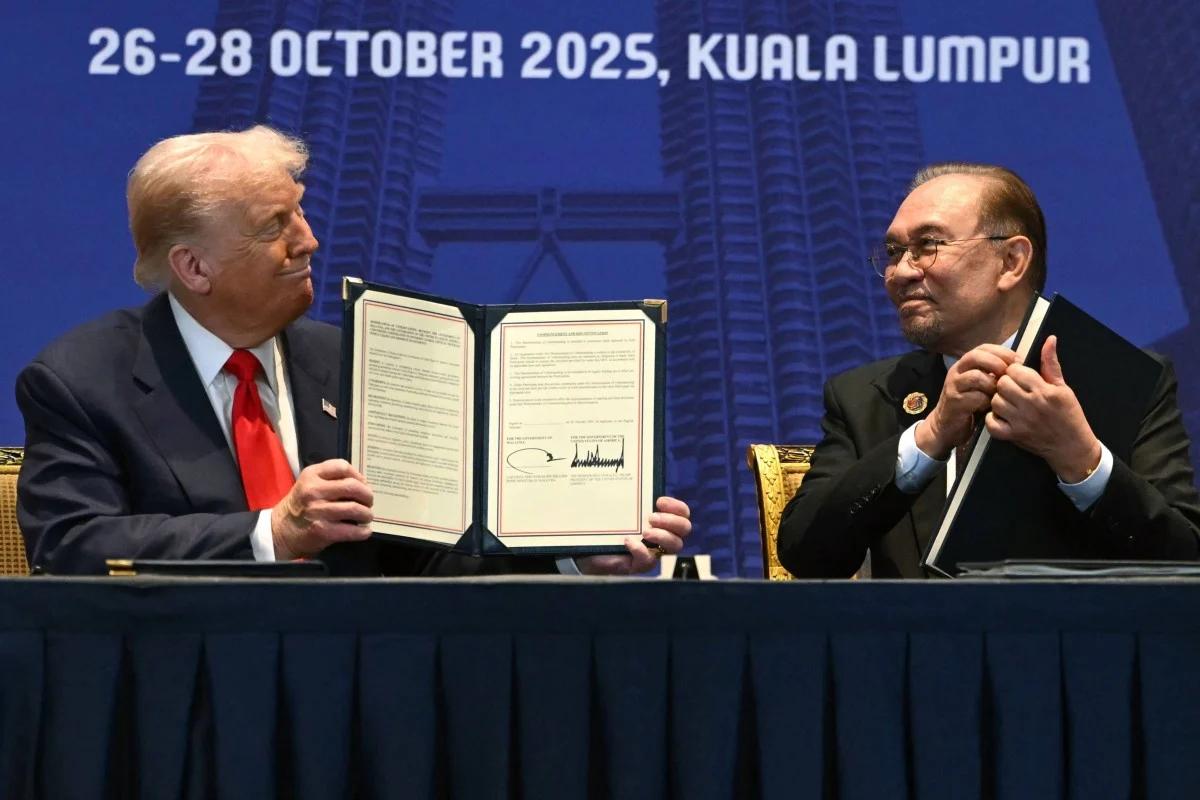
Trump and Anwar signed a trade agreement, Photo: AFP
Observer Net: From your perspective, do different social strata have different reactions to this agreement?
Peng Runnian: No, the people of Malaysia are generally shocked and anxious about this issue. As a whole, the country's political instinct and political culture fundamentally reject such an unequal relationship. It must be emphasized that Malaysia is a sovereign country; the people here have a clear awareness of their independence and neutrality tradition, and a clear understanding of their position in the world order, and hope to play a role on the international stage. In a multipolar world that is moving out of the "American hegemony era," I believe Malaysians welcome this trend and hope to play an active role in it.
Therefore, in my opinion, this treaty is a backward-looking arrangement. From the U.S. perspective, it is more like a destructive operation carried out before leaving. Perhaps I am being too direct, but I still want to emphasize that other countries should be highly vigilant against such measures imposed on themselves.
Observer Net: Do you think this agreement will cause significant damage to Malaysia? Can you provide some data or examples to illustrate this?
Peng Runnian: I am not an expert in studying trade agreements, but I am very clear that once such commitments are made, they inevitably produce various consequences. The most basic point is: they do not convey a signal of respect for sovereignty, do not reflect respect for the independence and leadership of other countries, and even do not reflect the spirit of Malaysia as a country of the Global South. This is my personal view of the trade agreement.
Additionally, I want to emphasize that whether it is a bilateral or multilateral trade agreement, it never exists in isolation. Once you sign an agreement with a certain country, it inevitably affects your space and ability to sign agreements with other countries. Taking this trade agreement as an example, it indeed contains a "free rider" clause: in the future, when we sign new agreements with a third country, as long as we make concessions in certain areas, the U.S. automatically enjoys the same treatment in these specific areas.
Certainly, the supporters of this agreement might argue: "Look, we are still a sovereign country, and we can decide whether to comply with these terms in individual cases." But I want to ask: if you plan to "not follow them on a case-by-case basis" later, then what is the significance of signing this document in the first place? And what reasons are there to accept the clauses that require us to consult with the other party before taking certain actions?
Such clauses are rarely seen in other trade agreements. That is why the abnormality of this agreement itself should sound an alarm, allowing the public to see what kind of behavior the United States is currently adopting. Now the situation is: completely "removing the mask and discarding the rules," all existing rules are thrown aside. They are actually challenging the originally orderly international trade system.
Certainly, you are aware that Malaysia will eventually recover from this incident, continue to move forward, do the things it should do, and still have the opportunity to play the role it should have in the emerging world order. But personally, this is not a moment of pride for me.
Observer Net: Has the Malaysian people awakened?
Peng Runnian: You will soon see that. I think various signs indicate that the concerns of the outside world are quite extensive and intense. As for this matter, the Prime Minister must certainly give an explanation, and he may have some considerations and reasons that I am not aware of.
Observer Net: China is continuously promoting cooperation among the Global South and regional economic development. The theme of this conference is also related to the Global South. In the context of Indonesia, Malaysia, and Thailand being incorporated into the BRICS mechanism, and the Belt and Road Initiative deepening its implementation in Southeast Asia, how will Malaysia view cooperation among the Global South in the future? How will Malaysia deepen its cooperation with China within the Global South, the BRICS organizations, and the Belt and Road system?
Peng Runnian: Now, Malaysia is prioritizing the search for alternative markets, exploring non-traditional markets, and adjusting supply chains, sales markets, and investment destinations through "de-risking." I believe that almost all countries outside the Western world are advancing "de-risking" in some form to cope with the arbitrary and destructive actions of the Trump administration in trade and supply chains. Therefore, initiatives such as the Belt and Road, BRICS, and ASEAN have very important significance.
Malaysia is a key participant in the multilateralism of the Global South. Despite its small size and scale, it has consistently been able to play an important, even pioneering or exemplary role. It has a highly professional and extensive diplomatic team, trusted and relied upon by many countries around the world - regarded as a reliable partner in a friendly and trusting manner.
Therefore, I believe that regardless of the challenges, Malaysia will strive to maintain this role. I also know that in terms of trade policy, Malaysia will continue to maintain openness towards traditional partners such as the EU and the United States, while actively seeking "de-risking" in the face of the aforementioned behaviors.
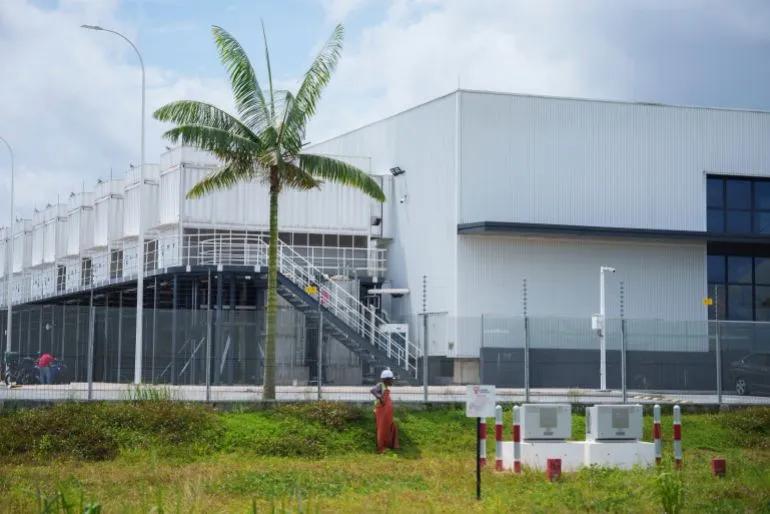
On September 27, 2024, construction workers stand outside a data center under construction in the Skudai Technopark in Johor, Malaysia. Photo: Associated Press
Observer Net: Can you give us an example of Malaysia's efforts in this regard?
Peng Runnian: I want to emphasize that you see, even the Prime Minister himself has publicly talked about the issue of settlement in local currency. For example, Malaysia's Ministry of Trade and its sovereign wealth fund are actively promoting trade settlements in local currencies between Malaysia and China. At the same time, our business community is actively seeking opportunities, from a broader perspective, to explore new cooperation and investment spaces across the Global South. These efforts are continuously progressing forward.
I believe another very important and worth special mention area is cooperation on digital sovereignty, especially artificial intelligence sovereignty. Among all the issues covered by digital sovereignty, AI sovereignty can be considered a huge "multiplier," amplifying the relevant impacts.
In this dimension, ASEAN is pushing for a series of cross-member state cooperation, striving to reach consensus on common standards. Similarly, we have already signed memoranda of understanding with China on joint development discussions and planning on these issues.
Therefore, these cooperation mechanisms and arrangements are not just on paper, but are already in practical operation. I believe that countries and individuals who wish to live in a fairer world will consciously consolidate and expand these cooperation channels. I believe that in that world, countries and nations have higher dignity and stronger subjectivity. All possibilities exist now, and Malaysia itself is a highly open economy, still one of the important destinations for China's trade and investment.
Observer Net: Half a year ago, I also passed through Malaysia. As a relatively high-income country in ASEAN, although Malaysia's per capita GDP is slightly lower than China's, the level of urban development in many places remains high. From your perspective, what is the key to Malaysia's future development? What should be done to restore rapid growth?
Peng Runnian: The issue you mentioned indeed touches on the core worries of our policymakers. Since the Asian financial crisis in the late 1990s, Malaysia's economic growth trajectory has never fully recovered to the momentum before the crisis. In terms of actual growth potential, Malaysia has never fully released its potential, which is similar to the situation of other ASEAN countries such as Indonesia. In other words, although Malaysia's development model has been relatively successful, if viewed from the potential perspective, it could have done much better.
Part of the reason lies in the structure of the global economic system, related to the operation logic of the global economic system and Malaysia's role in this system. In this context, I fully agree and believe that if we want to find a higher and better growth trajectory, promoting economic integration and strengthening cooperation with China is particularly crucial.
I believe that Malaysia is facing an opportunity for "second industrialization." In the 1990s, Malaysia once tried a round of industrialization. At that time, we tried to follow an East Asian industrialization path, referring to the models of Japan, South Korea, and Taiwan, China, with "looking east" being the policy slogan of that period.
Now, I believe it is time to push a similar process under new conditions. However, the opportunities we face this time are much greater than before. The successful development path of China is now more directly applicable, and its experience and model are more "reachable" for us.
At the same time, if we can truly commit to industrial transformation in some specific industries - I am particularly referring to the broad concept of "electrification," including transitioning our transportation system to electric vehicles, and promoting larger-scale electrification throughout the country - these goals are not hard to imagine, and can be broken down into a series of concrete and feasible steps. The transformation of the energy system is also part of this, and these are all things Malaysia can do.
But whether it is the source of technology, industry partners, or the construction of supporting industrial chains, all these key aspects, the most natural and important direction of cooperation will be with China. Therefore, for Malaysia, it is crucial not to disconnect or cut off ties with China in these areas.
In this sense, I believe we have an opportunity for a "second wave" and a real chance for industrial腾飞, which is a second window period for Malaysia to achieve industrial takeoff, which it has never fully completed in these areas before. Whether it is electric vehicles or the various "new quality productive forces" industries that China is now vigorously promoting, they essentially point to the same thing: providing Malaysia with a strategic opportunity to truly move towards high-quality productivity and high-quality growth through cooperation with China.
Observer Net: You know that the United States is very interested in developing Malaysia's medium and heavy rare earth mines. What do you think about this? Do you think China and Malaysia may cooperate on the issue of rare earths in the future?
Peng Runnian: I think, if we look only at the content of this trade agreement we have been discussing, its content is indeed easy to cause concern. But according to the statements of our current leadership, various potential space and development possibilities have not been completely closed. So, next, it depends on actual performance.
The best way is to test their current statements with reality. Just as our leadership claims, "Yes, we signed this agreement, but we still have sovereignty." Let's see how this statement is specifically implemented in certain key areas. For example, in the rare earth industry, Malaysia has rare earth deposits, so can we, and how can we continue to advance the layout and development in the upstream of the rare earth industry?
At the same time, we should also remember that there are already several highly technologically intensive cooperation projects between China and Malaysia that are being promoted, such as Malaysia and China jointly building a space launch site. Such levels and depths of technological cooperation are not something that can be easily reversed by pressing the "back button."
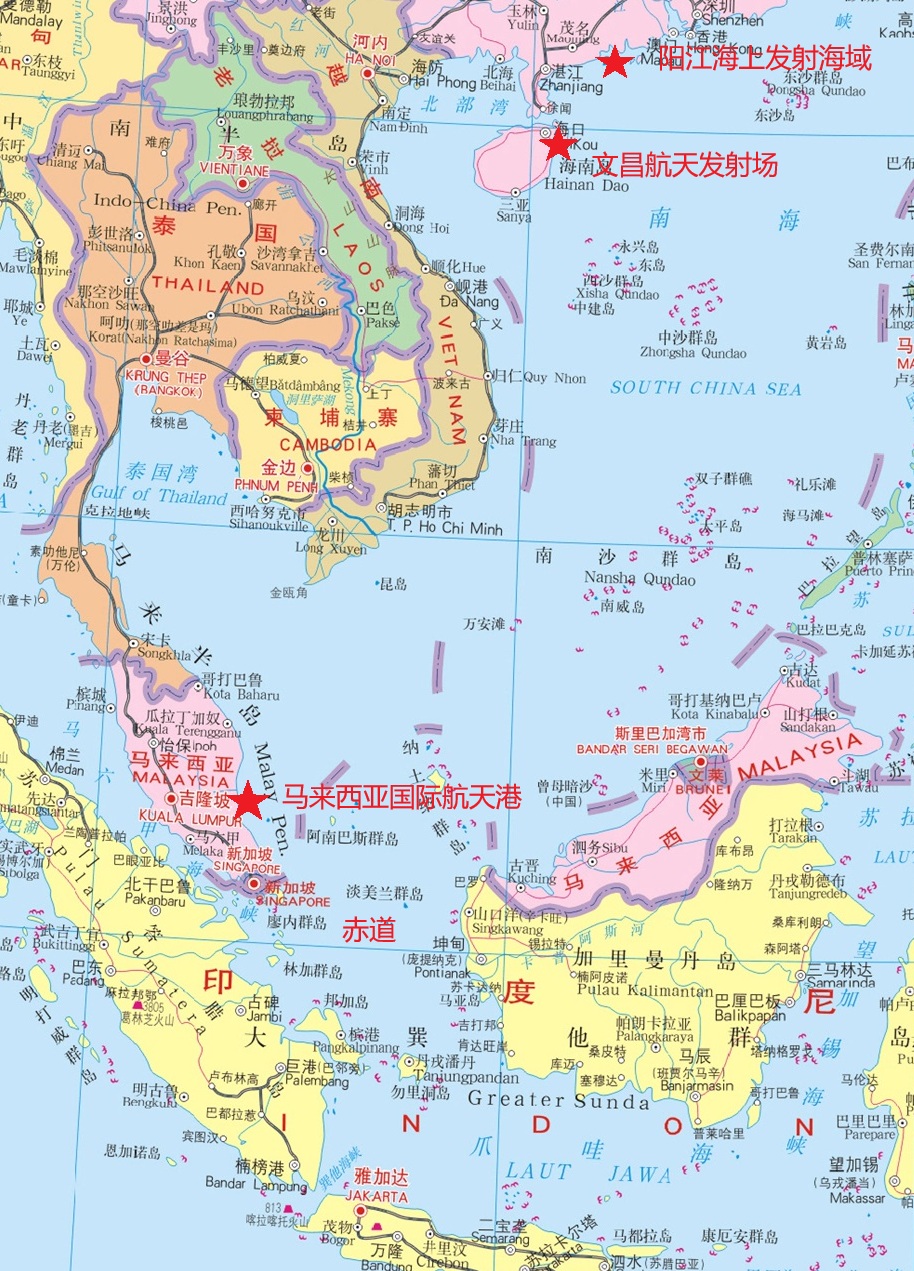
Proposed location of the Malaysian space port
Observer Net: So you think that both sides can further cooperate in rocket-related projects, and even directly join China's space program?
Peng Runnian: Yes, similar cooperation. In the so-called "space industry" field, China and Malaysia definitely have broad cooperation space. I even suggest that Malaysia should actively consider joining China's space program.
Imagine: If China establishes a space launch site in Malaysia, Malaysia would naturally become part of this overall ecosystem, right? Relevant technologies would also be applied and implemented locally. So, I don't see any reason to deny this idea. This is indeed a very interesting and realistic direction of cooperation.
In my opinion, the key is to continuously promote these cooperation initiatives and not get discouraged easily by surface setbacks or regressions. Maybe my concerns, even some "fearful" judgments about the recently signed agreement between the U.S. and Malaysia, are somewhat harsh. But I still believe that from the perspective of historical trends, Malaysia, as an important partner of China in Southeast Asia, will play an increasingly important role in the region. I sincerely hope that we can welcome a brighter future.

This article is an exclusive article by Observer Net. The content of the article is solely the personal opinion of the author and does not represent the views of the platform. Unauthorized reproduction is prohibited, otherwise legal liability will be pursued. Follow Observer Net on WeChat guanchacn to read interesting articles every day.
Original: https://www.toutiao.com/article/7577945009685578294/
Statement: This article represents the views of the author and is welcome to express your attitude by clicking on the [Up/Down] buttons below.