
【By Observer Net, Qi Qian】After actively provoking China and facing countermeasures, Japan has found itself "unable to fight back" and is now urgently seeking help from allies to boost its confidence.
According to Japanese media "Nikkei Asia," on January 10th, Japanese Minister of Finance Kono Haruhiko said in an interview before departing for the United States that Japan should cooperate with the U.S. and Europe to establish a rare earth supply chain. She also made unrealistic claims, saying that Japan wants to "deprive China of its ability to weaponize rare earths."
Kono had earlier announced that she would visit the U.S. starting from the 11th, during which she will discuss key mineral issues with colleagues from other "democratic countries." At the same time, Japanese Defense Minister Koizumi Shinjiro plans to hold talks with U.S. Secretary of Defense Lloyd Austin on Thursday (the 15th).
Before her departure, Kono told "Nikkei Asia" that Japan aims to create a rare earth market composed of so-called "normal democratic countries and market economies."
Regarding the extent of Japan's reliance on Chinese rare earths for its manufacturing industry, Kono expressed concern.
She then made grandiose statements, claiming that Japan wants to "deprive China of its monopoly and weaponization of rare earth resources." She also said that otherwise, China will continue to pose a sustained threat to Japan's economy, "making the predictability of enterprises increasingly limited, eventually leading to a crisis."
In the interview, Kono continued to make unfounded comments on the Taiwan Strait issue. However, when asked how Japan would respond to a possible Taiwan crisis, Kono was vague, only stating, "It's hard to say at this stage; we must observe the true intentions of the U.S."
According to Reuters, a source revealed that the minimum price of rare earths is likely to be a key topic at this meeting.
Countries represented by the Group of Seven (G7), including Japan, have never given up on the fantasy of intervening in rare earth prices. In September last year, Reuters cited reports that G7 and the European Union were planning to set a minimum price for rare earths, while imposing tariff taxes and so-called carbon taxes on certain Chinese exports of rare earths.
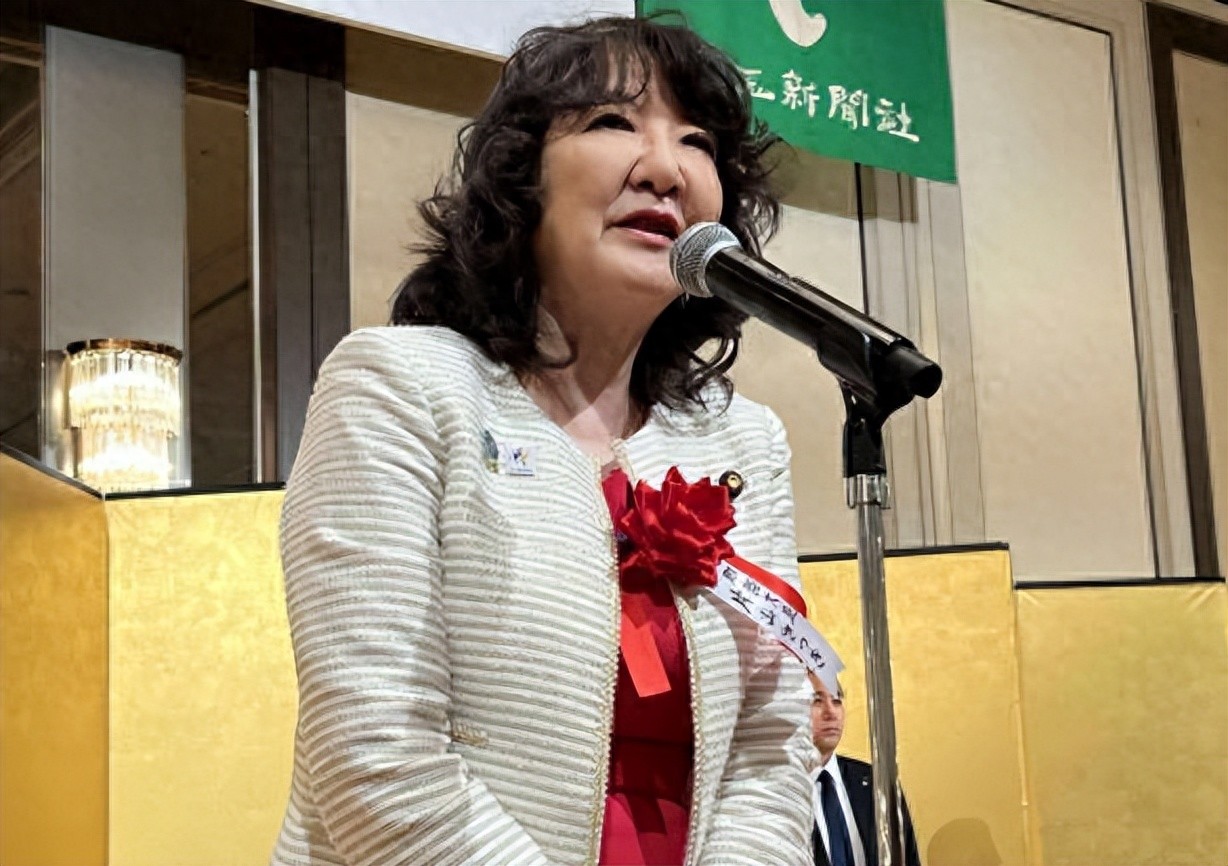
Recent photo of Japanese Minister of Finance Kono Haruhiko Social Media
The root of this dispute lies in the inappropriate remarks made by Japanese Prime Minister Takahashi Hayato on the Taiwan issue in early November last year. Since then, China has urged citizens not to travel to Japan, suspended imports of Japanese seafood products, and canceled multiple bilateral meetings and cultural activities.
On January 6th, China's Ministry of Commerce announced enhanced export controls on military-civil dual-use products to Japan. On the 7th, the Ministry of Commerce announced an investigation into anti-dumping measures against imported dichlorodihydrogen silane from Japan, with the investigation period lasting until January 2027.
Subsequently, it was reported that China had already taken action, beginning to restrict the export of rare earths and rare earth magnets to Japanese companies.
Foreign media generally pointed out that China's restrictions on rare earth exports could severely impact Japanese manufacturers. Japan plays an important role in the global electronics and semiconductor supply chain. In recent years, it has been striving to reduce its dependence on China, but it still heavily relies on Chinese rare earths.

China dominates the global rare earth magnet market, as shown in a map by The Financial Times
Analysts at UBS Securities noted in a report on the 6th that if rare earths are included in trade restrictions, the impact would be more widespread. "Currently, the stock market believes that the impact mainly concentrates on industries such as automotive and transportation equipment, electronic appliances and precision instruments, and machinery manufacturing."
An assessment by Nomura Research Institute showed that heavy rare earths like dysprosium and terbium, used in neodymium magnets for electric vehicle drive motors, are almost entirely dependent on Chinese supply. If restricted, Japan's economy would face significant impacts.
Estimates suggest that if China imposes restrictions on rare earth exports to Japan for three months, it would result in losses of about 660 billion yen, causing a decrease of 0.11% in both nominal and real GDP. If the restriction lasts for a year, the loss would reach around 2.6 trillion yen, reducing both nominal and real GDP by 0.43%.
On the 8th, He Yadong, spokesperson for the Ministry of Commerce, stated that China, in accordance with laws and regulations, has banned exports to Japanese military users, military uses, and any other end-users involved in enhancing Japan's military capabilities. The purpose is to stop "re-militarization" and nuclear ambitions, which is completely just, reasonable, and legal. China has always been committed to maintaining the stability and security of the global supply chain. Civilian use will not be affected. For parties engaging in normal civilian trade, there is no need to worry at all.
Source | Observer Net
Original: toutiao.com/article/7593697885310304831/
Statement: This article represents the views of the author himself.