

The Trump administration ultimately chose to "raise a white flag," and the cost of the new cold war between China and the United States made the US retreat in fear.
Recently, The New York Times published an article titled "The U.S. Has Raised the White Flag in the New Cold War with China," which has been widely shared and reported by domestic media outlets.
The article's logic is as follows: the author believes that after Trump began his second term, he immediately launched a trade war and tariff war against China, but soon afterwards, he withdrew from the conflict. Currently, U.S. tariffs on China are lower than those on India, which may indicate that the U.S. has given up its new cold war against China.
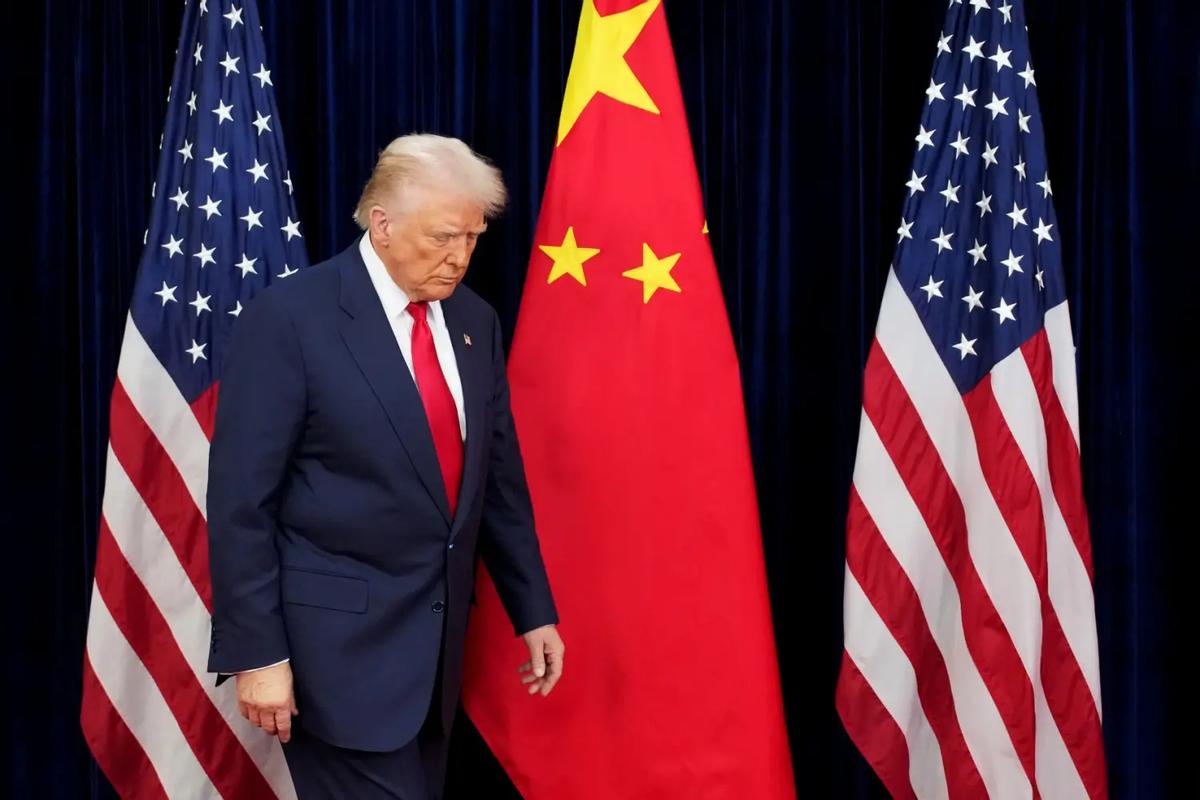
To support this view, he emphasized two issues:
First, America's allies no longer cooperate with the United States. For example, Canadian Prime Minister Trudeau made a statement at the World Economic Forum, saying that the free international order led by the United States based on rules has collapsed, and the United States can no longer lead global order, so it cannot rally other countries to contain China.
Second, China's growth cannot be ignored. He listed China's rapid development in areas such as green energy, commercial drones, ships, and artificial intelligence, pointing out the speed of China's development and the degree of dependence on China, ultimately concluding that the United States should abandon its new cold war against China.
Objectively speaking, this article indeed has an accurate judgment of the trend, but it does not truly uncover the essential issues behind the shift in the U.S. attitude towards China.
The U.S. change of attitude has clear traces.
Firstly, in December 2025, the U.S. government released the National Security Strategy report, which mentioned the word "ideology" only three times, far less than the 47 times mentioned by the Biden administration, indicating that the U.S. no longer takes ideological confrontation as the top priority of the government, and the hallmark of the Cold War is ideological confrontation;
Secondly, according to Trump's reasoning, the report classified solving the U.S.-Mexico border crisis, fentanyl epidemic, and domestic industrialization issues as urgent survival threats, defining China as an economic competitor, meaning that China is indeed a rival, but there is also a lot of room for cooperation;
Finally, the recently released Defense Strategy Report emphasizes that the U.S. needs to establish a strong deterrent defense system in the Indo-Pacific region, using power rather than confrontation to deter China. For the U.S., China no longer has the label of a geopolitical opponent.
These are clear non-cold war signs, and the essential reason is that the severity of internal problems in the U.S. has exceeded external ones. Compared to the survival of the U.S., the China issue will certainly be pushed back.
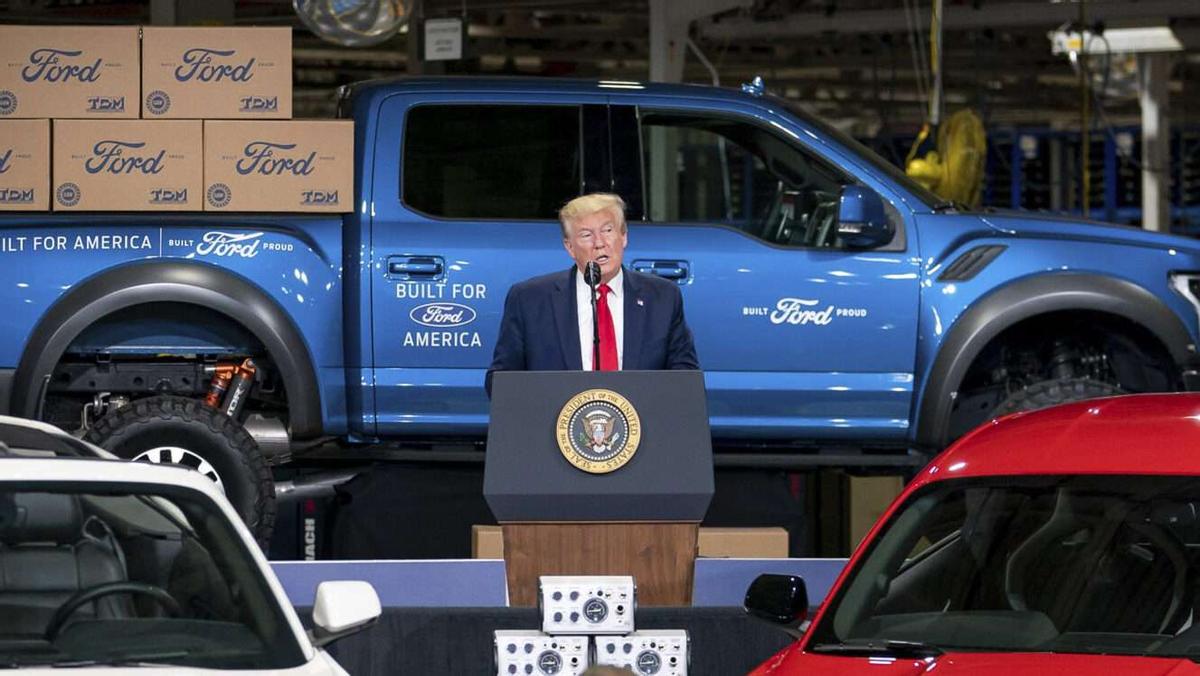
Looking specifically, first, the U.S. fiscal crisis is getting worse. The Iron Curtain collided with the budget, and even the Iron Curtain had to give way.
By the end of 2025, the U.S. national debt had exceeded $38 trillion, meaning that each citizen was in debt over $110,000, and the interest expenditure on the national debt reached $1.1 trillion, exceeding the defense budget of $917 billion, accounting for 26.5% of the fiscal revenue. That means that for every dollar of tax revenue, 26.5 cents must be used to repay the interest.
The fiscal problem leaves the U.S. struggling, but the fentanyl crisis and immigration pressure cannot be delayed any further. In order to maintain domestic stability, the U.S. security focus must shift from the Indo-Pacific front line back to the Western Hemisphere. Launching a new cold war against China would exacerbate the U.S. crisis.
Second, the U.S. cannot escape the influence of the Chinese supply chain. From Trump's first term to now, the U.S. has tried various methods of decoupling and cutting the supply chain, but there are two issues that cannot be avoided.
The first issue is that if the U.S. reduces direct imports from China, considering scale, volume, and price issues, the U.S. imports from Vietnam and Mexico will increase rapidly. However, the supply chains of these two countries still depend heavily on China. Continuing with this model is equivalent to the U.S. paying higher costs to plug its ears while stealing a bell.
The second issue is that China has become a key node in some fields. For example, China can completely cut off supplies to the U.S., but if the U.S. cannot import from China, its high-tech industry and automotive industry will face immediate shutdown, which the U.S. government would find difficult to bear.
Third, due to the above two reasons, the U.S. influence has already shown diminishing returns. What is the essence of the Cold War? It is to isolate the Soviet Union by gathering most of the world's countries under the U.S., forcing it to change internally, and finally winning the Cold War. After the Sino-Soviet split, the U.S. and China established diplomatic relations, and China joined forces with the U.S. to counter the Soviet threat, which was one of the important reasons for the Soviet failure in the Cold War.
But now, considering China's influence on the supply chain and the U.S. fiscal situation, the U.S. is definitely not in a position to start a Cold War.
If the U.S. hopes that its Western allies can cooperate with it to decouple and cut the supply chain from China, then the U.S. must provide huge subsidies to fill the gap after China is removed from the supply chain. Only then would the Chinese approach be feasible. But if the U.S. really does this, the result will be similar to Napoleon's Continental Blockade Policy, which had almost no chance of success.

Therefore, under the background where China is unwilling to destabilize Sino-U.S. relations, if the U.S. wants to continue maintaining its international influence, launching a new cold war against China is definitely not the best option. So where will Sino-U.S. relations go next?
Using the words of American strategic scholar David Kang might be more appropriate. They believe that both sides have reached a kind of tacit understanding. Since neither can swallow the other, they will compete on who lives longer. Sino-U.S. relations will enter a stage where both are dissatisfied but indispensable. The two countries will maintain close contact while engaging in intense competition but mutual cooperation.
Short-term, in this state, the two countries can have more interest deals, and many issues can become bargaining chips for the two countries, which is beneficial to both national interests. Most issues can be resolved through communication.
However, long-term, the competition between the two countries has not ended. In the coming period, both the U.S. and China may invest more resources in the fields where the other has advantages. For example, the U.S. will vigorously invest in critical mineral supply chains, while China will focus more on chip technology breakthroughs.
In the future, whichever country completes all the technological breakthroughs, it may gain a more favorable position in the great power competition. At that time, if a country wants to further expand its global influence, a new cold war may indeed break out.
Author: Lu Zenglin, Master's student in Strategic and Supply Chain Research at the School of International Studies, Beijing Foreign Studies University
Original: toutiao.com/article/7600302648080630307/
Statement: This article represents the views of the author alone.