
【By Observer Net, Qi Qian】
On February 15, the Cable News Network (CNN) reported that Chinese automobile manufacturers want to enter the U.S. market, and they may appear at American dealerships faster than you might imagine. Experts speculate that this time could be between 5 to 10 years.
At the same time, U.S. politicians and U.S. automakers frequently resort to clichés such as "national security" and "privacy protection."
Experts say that the entry of Chinese cars into the U.S. market is good news for American consumers. One expert said directly that Americans care about whether the car is good and whether it offers good value for money, because "they can always buy Chinese goods at Walmart."
The report states that Chinese auto companies produce more vehicles than any other country in the world, and their exports are also the highest. However, high tariffs and hostile U.S.-China trade relations have kept them out of the U.S. market. But this situation may change soon.
"There is ambition," said independent automotive analyst and former editor-in-chief of the "China Auto Review" magazine Lei Xing, adding that several Chinese automakers have shown "willingness to enter the U.S. and build factories there."
U.S. automakers are resistant to this, saying it will squeeze their profits and market share, possibly affecting nearly a million workers who work for them. However, CNN believes that this will benefit U.S. car buyers. Greater competition means more choices, especially in the electric vehicle sector, and further drives down prices.
In the United States, Chinese cars face tariffs as high as 100%. However, U.S. officials such as President Trump have recently seemed to take a welcoming attitude toward Chinese brands. On January 13, Trump said that if Chinese automakers built factories in the U.S. and hired Americans, he would allow them to enter the U.S. market. He said, "Let the Chinese in."
When asked whether he would be willing to let Chinese automakers enter the U.S. market, a White House official told CNN last week: "The government supports all investments in the U.S., as long as they do not harm our national and economic security."
Recently, sources told Bloomberg that Ford Motor Company's CEO Jim Farley met with senior officials from the Trump administration last month to discuss a potential framework under which Chinese automakers could build factories in the U.S. to produce cars, but they must provide certain protections for domestic companies.
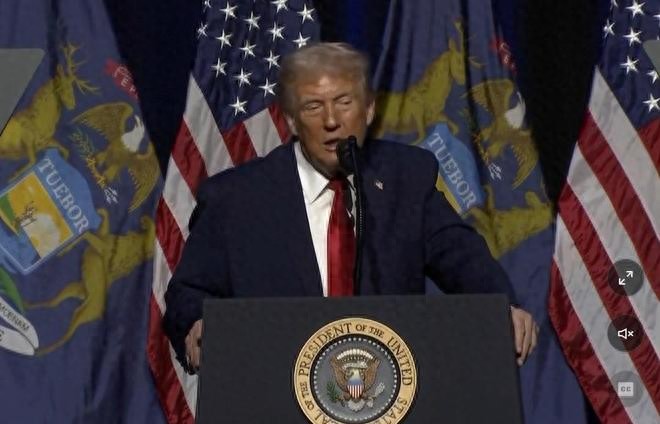
Video screenshot of Trump saying "Let the Chinese in" last month
CNN says that any move by Chinese automakers to enter the U.S. market may further solidify China's dominant position in the automotive industry.
Data shows that China produced one-third of the world's cars last year, with over 8 million exported to other markets globally, a 30% increase from 2024. In 2023, China surpassed Japan to become the world's largest car exporter. China is particularly competitive in the electric vehicle sector. BYD exceeded Tesla to become the world's largest electric vehicle company, and recently surpassed Ford in global sales.
Building an automotive factory in the United States may take several years. However, experts agree that most Chinese automakers are already targeting the U.S. market.
"Every car manufacturer in the world views the U.S. market as the ultimate arena, and this is no secret," said Michael Dunn, an automotive industry consultant who has been involved in Western automakers' operations in China since the 1990s. American consumers are wealthier and tend to buy larger, more expensive vehicles, which means higher profits than anywhere else.
Dunn said that the average price of cars exported from China last year was about $19,000, while the average price of new cars in the U.S. was about $50,000.
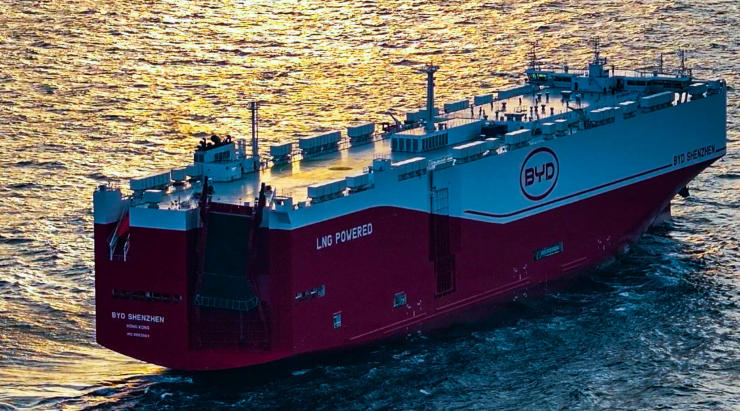
April last year, BYD's fourth ro-ro ship "BYD SHENZHEN" set sail - BYD official website
Chinese automakers such as BYD have not responded to whether they plan to enter the U.S. market. But they have already taken action.
According to the introduction, in 2015, Geely, a Chinese automaker, established a factory in South Carolina under its brand Volvo. The factory is currently undergoing a $1.3 billion expansion, which may serve as a foothold for Geely to start producing Zeekr and Lynk & Co brands in the U.S. Recently, Ash Sackville, Geely's global communications director, hinted at this.
Lei Xing said that among Chinese automakers, Geely is best prepared to enter the U.S. market. "I think we will see relevant announcements within the next 24 to 36 months," he said.
CNN said that as U.S. car prices remain at historic highs, Chinese companies will bring more choices and capacity. Experts say this is a good way to lower prices, just as European car prices dropped after Chinese automakers entered the European market.
However, Bill Russo, head of Shanghai investment consulting company Automobility, pointed out that the popularity of Chinese brands in Europe and their home market is based not only on price but also on the quality and value of the vehicles.
"Within less than five years, foreign brands lost more than half of their market share in China, and it wasn't because Chinese consumers were forced to buy Chinese products," Russo said. "They just made better cars, offering better technology at an affordable price."
Russo mentioned that U.S. experts may be slow to trust unknown brands. But he believes these concerns can be quickly overcome.
"Do Americans really care who makes the car?" he said. "As long as the car is good, I think they don't care. They go to Walmart and can buy Chinese goods anytime. I think ultimately, the market first cares about value for money. Xenophobia won't have much impact."
This article is exclusive to Observer Net, and without permission, it cannot be reprinted.
Original: toutiao.com/article/7607305496193696262/
Statement: This article represents the views of the author alone.