
【By Guan察者网, Ruan Jiaqi】
The new Dutch cabinet lineup has been basically finalized this Monday. According to U.S. media Bloomberg on the 10th, after the diplomatic crisis caused by forcefully seizing the ownership of Chinese company NXP Semiconductor, a large number of China-hawk figures have entered the new Dutch cabinet and assumed important positions.
Firstly, Karel van den Bosch, the then acting minister of economic affairs who triggered this incident last year, has retained his position in the new government, now serving as the Minister of Infrastructure and Water Management. He and former Prime Minister Mark Rutte, now NATO Secretary General, both belong to the traditional right-wing liberal party VVD.
Secondly, the position of Minister of Foreign Trade and Development Cooperation, responsible for supervising the export control system, will be held by Sjoerd Sjoerdsma, who was sanctioned by China in 2021 for making erroneous remarks about Xinjiang.
Sjoerdsma comes from the center-left Dutch party D66. During his time as a member of the Dutch House of Representatives, he repeatedly made inappropriate comments about China, and once pushed for a so-called Xinjiang motion, which was condemned by China as "spreading lies and false information" and resulted in sanctions. Later, he also visited Taiwan, China, with other European parliamentarians.
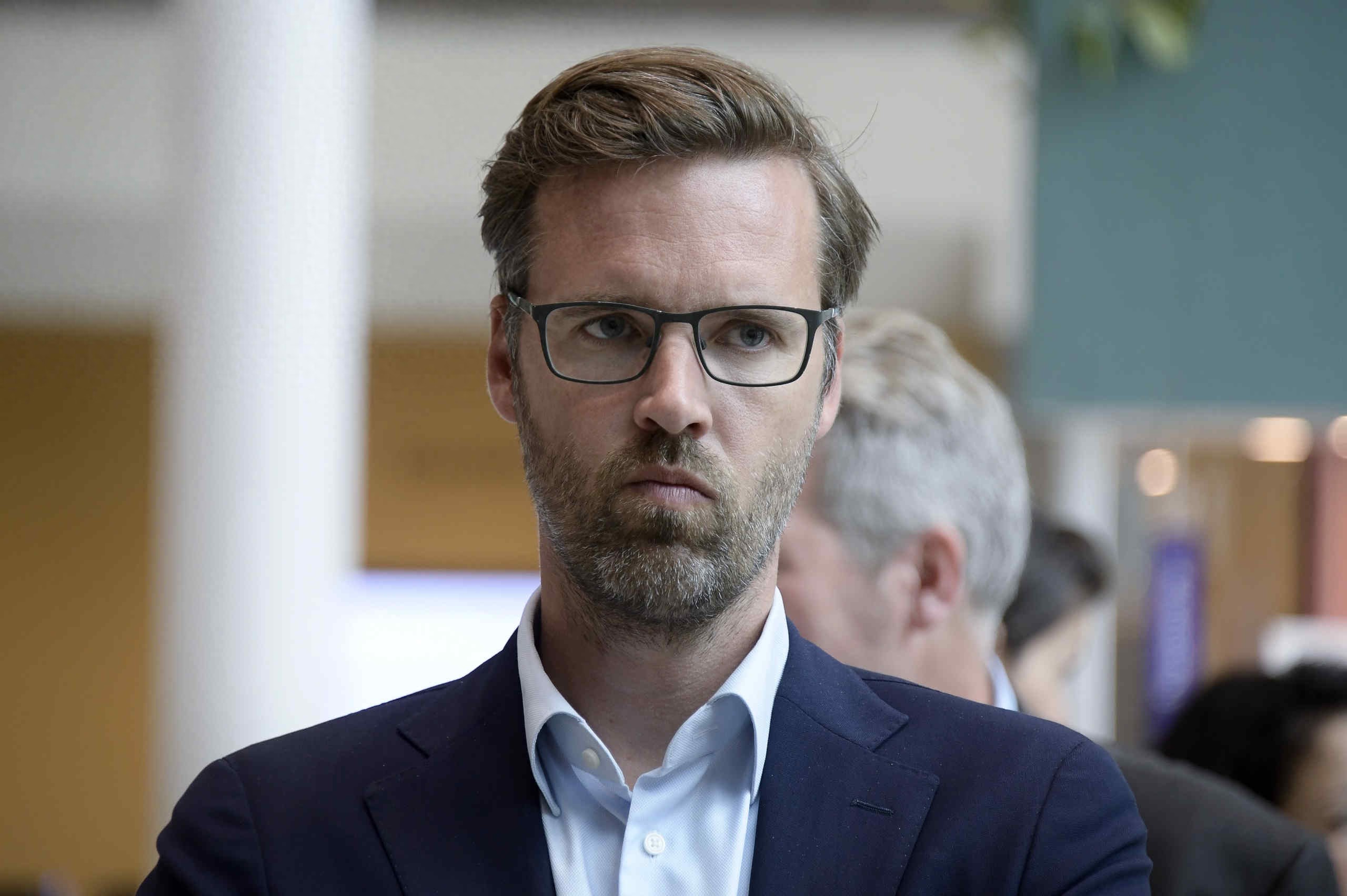
Sjoerd Sjoerdsma
The new foreign minister is Tom Berendsen, a senior member of the center-right Christian Democratic Appeal (CDA). He is enthusiastic about stirring up the issue of China's presence in Europe's largest port, Rotterdam, claiming it poses a so-called "threat," and amplifying the idea that China's actions regarding Taiwan would severely impact TSMC, closely linked to the Dutch semiconductor equipment giant ASML.
A report in January 2024 by the European Parliament emphasizing strategic port investment risks was mainly drafted and promoted by Berendsen; in recent years, he has publicly supported the EU's groundless investigations into Chinese companies such as Hikvision and BYD investing in Europe.
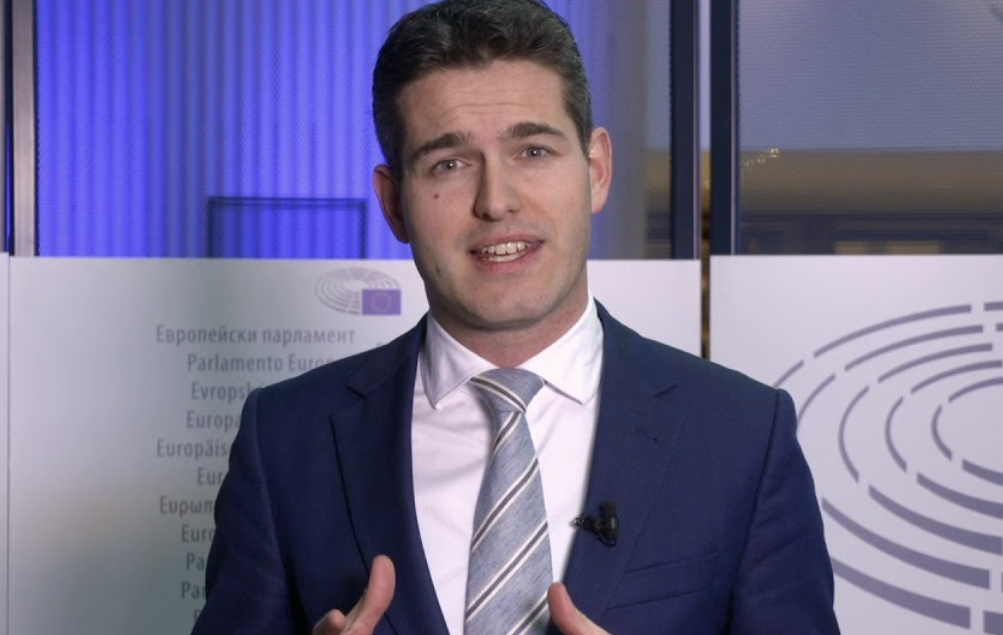
Tom Berendsen
The newly appointed Economic Affairs State Secretary in charge of the digital economy, Willemijn Aerdts, is also no less controversial. As an expert in the intelligence field, she has long been promoting the so-called "Chinese espionage activities."
In the Ministry of Defense, State Secretary Derk Boswijk is also a person who constantly talks about the "Chinese threat." Last year, when interviewed by Bloomberg TV, he claimed, "We were too naive in terms of our dependence on China."
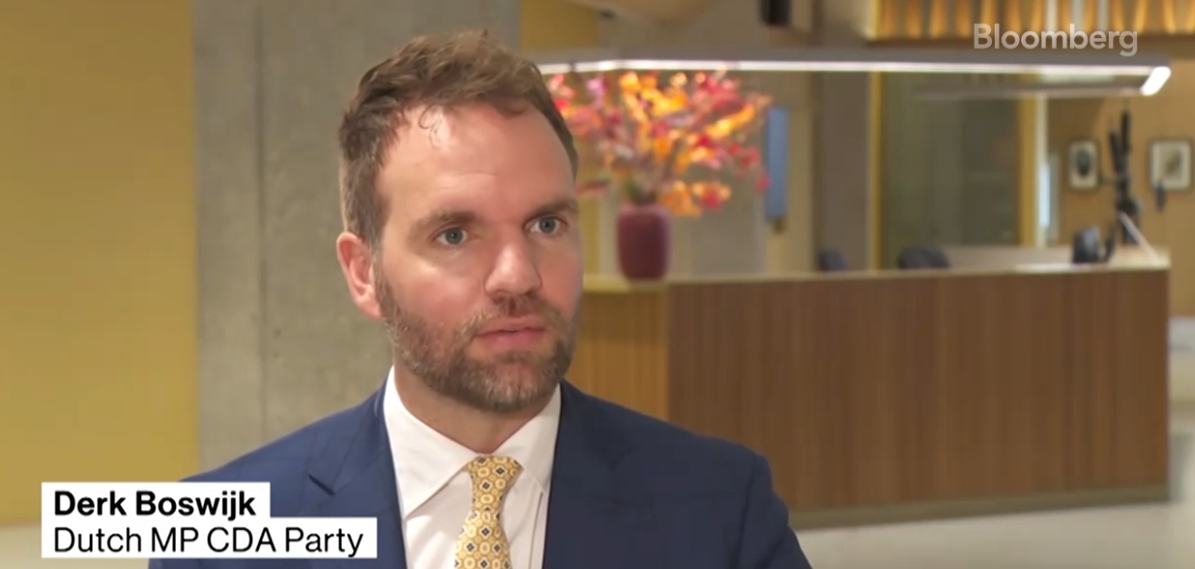
Derk Boswijk
Various signals indicate that this Dutch cabinet has shown a clear hardline stance toward China from the beginning. Several core ministers have long taken an adversarial attitude toward China-related issues, which will make Sino-Dutch relations face more uncertainties in areas such as trade, technology, and supply chains.
This cabinet was formed due to major changes in the Dutch political arena.
In June 2025, the far-right Freedom Party (PVV) withdrew from the ruling coalition over refugee protection policies, leading to the resignation of Prime Minister Scholten's coalition government. The cabinet entered a caretaker state and held early parliamentary elections in October. In November, the Dutch Election Committee announced that D66 outperformed the PVV, winning the parliamentary election.
In January this year, D66, VVD, and CDA announced the formation of a minority coalition government. Rob Jetten, the leader of D66, will become the youngest prime minister in Dutch history at 38 years old.
The new cabinet is scheduled to take office on February 23. Bloomberg mentioned that the joint governing agreement released by the coalition on January 30 claimed to plan to take decisive actions against China to combat so-called "theft of Dutch intellectual property and improper interference in Dutch critical infrastructure."
However, since the three parties only hold 66 seats out of 150 in the House of Representatives, they must gain support from the opposition on specific issues to obtain a majority in both chambers of parliament.
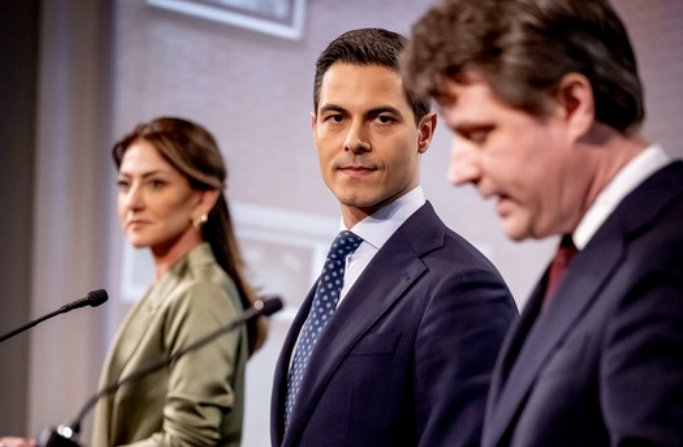
On January 30, the leader of D66, Rob Jetten (center), along with the leaders of the Liberal Party, Diederik de Vries, and the Christian Democratic Appeal, Henry Bontenbal, announced their joint governing agreement named "Start," declaring the formation of a minority cabinet. Oriental IC
Now, more than three months have passed since the Dutch caretaker government announced the suspension of its malicious intervention in NXP Semiconductor, but the Dutch side has not yet taken further action to revoke the relevant executive orders.
In December, two months after the Netherlands triggered the "NXP incident," Yang Mu, chairman of Wintek Technology, gave his first interview with international media, condemning the Dutch government's judicial measures against Wintek Technology, which had essentially violated the 2001 Sino-Dutch Investment Protection Agreement.
Yang Mu warned that unless Wintek Technology regains control of NXP Semiconductor, the global chip supply chain would still face risks, saying, "Every day the dispute continues, it will further harm the global supply chain, international investment confidence, and shareholder interests."
Yang Mu also denied the false accusation of "unlawful transfer of technology to China," clearly demanding the restoration of Wintek Technology's control over NXP Semiconductor. She stated that the joint purpose of the Dutch government and some local executives was to "push out" Wintek Technology, which had controlled NXP Semiconductor since 2019, describing it as a "premeditated and unjustified intervention."
The spokesperson for the Dutch Ministry of Economic Affairs refused to comment, merely vaguely stating that the case had been referred to the business court, and the government's previous orders had been suspended. Despite criticism in parliament, Economic Minister Karel van den Bosch, when interviewed by Dutch media, still argued that taking tough measures against NXP Semiconductor was necessary.
On December 31, the spokesperson for the Ministry of Commerce responded, stating that China had repeatedly emphasized that the Dutch government's improper administrative intervention in the internal affairs of NXP Semiconductor had led to a global semiconductor supply chain crisis, and the Dutch side must bear full responsibility. It is puzzling that, in the face of global industry anxiety and unease, the Dutch side remains indifferent and stubborn, showing no sense of responsibility for the security of the global semiconductor production and supply chain, and has taken no substantial actions. China again called on the Dutch side not to act unilaterally, but to immediately correct its mistakes and remove obstacles to restore stability and security in the global semiconductor production and supply chain.
This article is exclusive to Observers, and may not be reprinted without permission.
Original: toutiao.com/article/7605053473058538018/
Statement: This article represents the personal views of the author.