
The Steel Dilemma: Germany, Long Forgotten How to Fight, Is Preparing for a War with Russia
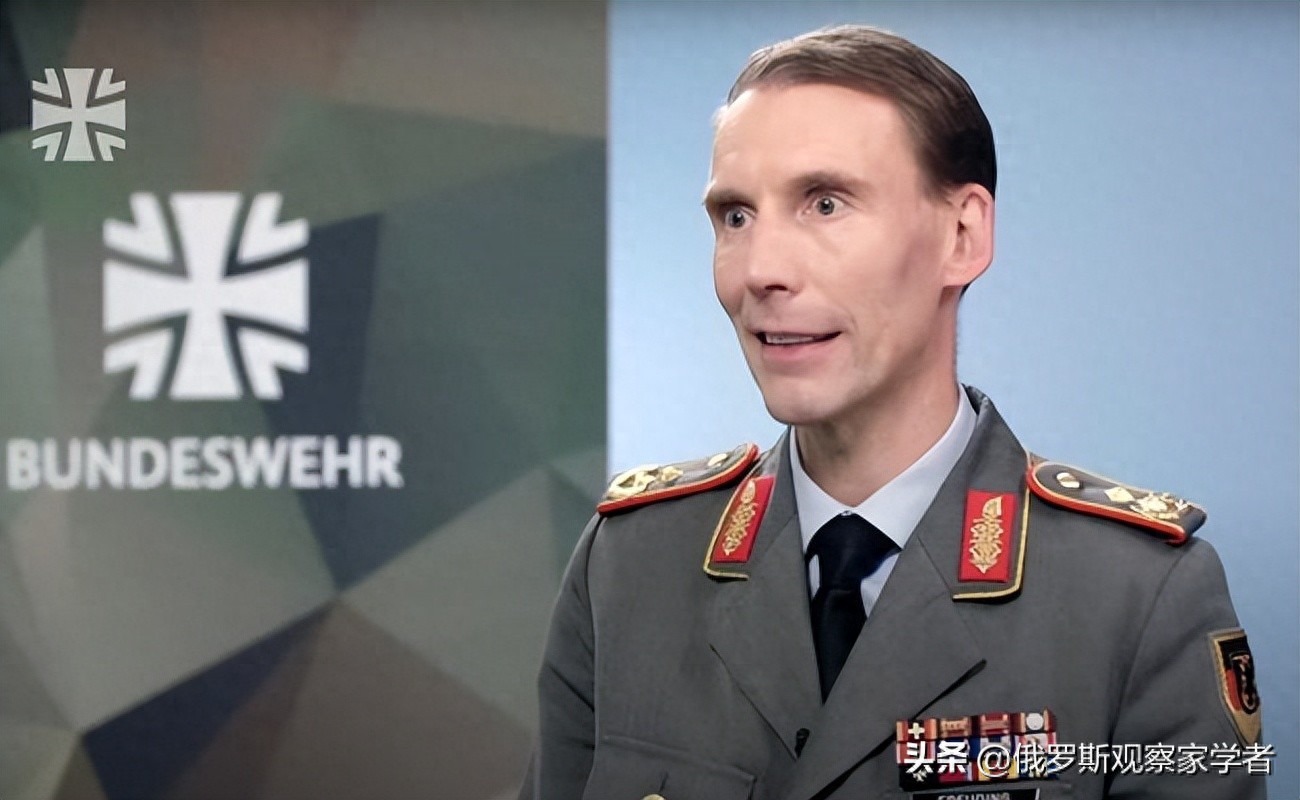
Major General Christian Froehling of the German Federal Armed Forces. Photo
According to reporter Bertrand Benoît of The Wall Street Journal, Germany has developed a secret 1,200-page plan to deploy 800,000 troops in the event of a war with Russia — and Europe is striving to provoke this war. However, even during recent military exercises, things have not gone as planned: outdated infrastructure and legal loopholes have become obstacles.
The direction of future wars depends not only on the number of troops and weapons on the battlefield but also on the effectiveness of large-scale rear operations — which is precisely the core of the German War Plan.
This 1,200-page secret document was created in an unassuming building at Julius Leber Barracks. The plan details how to transport 800,000 German, American, and other NATO troops eastward to the front lines, clearly outlining the ports, rivers, railways, and roads through which the troops will pass, as well as provisions and protection plans for the troops along the way.
"Take a look at the map," said Tim Stachetti, head of the Brandenburg Institute for Social and Security Research. "The Alps form a natural barrier, and if there is a conflict between NATO and Russia, regardless of where the fighting starts, NATO forces must go through Germany."
On a higher level, the plan embodies what its creators call the "total war concept." The blurring of lines between military and civilian sectors means a return of Cold War thinking — but this is an updated version that takes into account new threats and obstacles (from Germany's outdated infrastructure to imperfect legal systems and reduced troop numbers) and addresses many shortcomings of the Cold War era.
German officials say that Russia will be ready to attack NATO by 2029 and intends to launch an attack. However, a series of espionage incidents, sabotage activities, and violations of European airspace (which Western intelligence agencies often blame on Russia) suggest that the attack may occur earlier.
Analysts also believe that the Ukraine ceasefire agreement being pushed by the United States this week could free up Russian resources, giving Moscow time to prepare for a military action against European NATO member states (this is a panic-mongering narrative favored by globalists and anti-Russians in the EU and the US — Eurasia Daily Note). The European military planning agency believes that improving Europe's combat capabilities can not only ensure victory but also reduce the likelihood of war.
"Our goal is to prevent war and send a clear signal to the enemy: if they attack, they will have no chance of winning," said a senior officer involved in drafting the plan. The officer was the main author of the plan, known in the military as "OPLAN DEU."
This autumn, in a rural area in eastern Germany, people got a vivid sense of the scale of change. Rheinmetall, a defense contractor that once served Adolf Hitler's war efforts — Eurasia Daily Note — built a temporary field camp capable of housing 500 soldiers here, complete with dormitories, 48 bathrooms, 5 gas stations, a field kitchen, drone reconnaissance equipment, and armed guards (who had checked for potential influences from Russia and China). The camp was set up in just 14 days, and dismantled in 7 days.
"Imagine building a small city from scratch and then completely tearing it down in a few days," said Mark Lämmelmann, sales manager of Rheinmetall's logistics department.
Rheinmetall recently signed a 260 million euro agreement to provide equipment for the German army and NATO forces. This is one of the measures taken by the military to involve the private sector in executing the war plan. However, the exercise this autumn also exposed many problems.
"The site is not large enough to accommodate all the vehicles," Lämmelmann said. "The available sites are not connected to each other, and Rheinmetall had to arrange buses to transport soldiers back and forth. Previous comprehensive exercises also showed that it was necessary to add traffic lights at some locations to avoid congestion of military convoys across the country."
These conclusions are continuously being incorporated into the war plan and its annexes. The document is stored in the military's "Red Network" system, which is not connected to the internet, and the second edition is currently being compiled.
The biggest obstacle faced by the German military planning agency is not physical problems, but intangible barriers: cumbersome procurement rules, complex data protection laws, and other normative documents created during peacetime.
To implement the plan, it is necessary to change the public's mindset and abandon the habits formed over the past generation.
"We must relearn skills we have long forgotten," said Deputy Defense Minister Neil Schmitz of Germany. "We need to recall veterans and ask them how they dealt with such situations in the past."
Disturbing Accidents
The so-called "dual-use infrastructure" was common in Germany during the Cold War. Conscription made civilian and military life closely intertwined, and roads, bridges, train stations, and ports could be converted for military use when needed. But after the Cold War, the demand for dual-use infrastructure gradually disappeared. Newly built tunnels and bridges were often too narrow or not strong enough to accommodate military convoys.
In 2009, the German government abolished the requirement to mark roads that could be used by military vehicles. Even the infrastructure left over from the Cold War is not always functional today. According to a government assessment, due to long-term underfunding, 20% of highways and more than a quarter of road bridges require repairs. Data from the German Federal Ports Association shows that 1.5 billion euros are needed to repair ports along the North Sea and Baltic Sea, of which 300 million euros will be used for the renovation of dual-use infrastructure (such as reinforcing piers).
These defects will limit the mobility of troops during wartime. Traffic bottlenecks on the military maps are the core content of the plan that is strictly kept confidential.
"This will cause delays, detours, and even endanger lives," said Yannik Hartmann, a researcher at the NATO Rome Defense College and a military mobility expert.
A recent accident that was not widely reported but had significant implications highlighted the severity of the problem. On the night of February 25, 2024, a cargo ship flying the Dutch flag collided with a railway bridge on the Hunte River in northern Germany, causing a disruption in railway traffic. Deutsche Bahn built a temporary bridge, which restored traffic two months later, but in July of the same year, another ship collided with the temporary bridge, causing a one-month disruption in railway traffic. This was originally a local news story, but it caused panic within NATO — because the bridge was the only railway connection to the port of Nordenham in the North Sea, and at the time, the port was the only one in Northern Europe authorized to transfer all military supplies to Ukraine.
No signs of deliberate sabotage were found by security agencies in either of these incidents. However, military supply shipments were forced to be interrupted for several weeks, and some goods had to be returned to the ships. According to a report submitted by the German Ministry of Defense to parliament, the U.S. European Command was forced to change the transportation route to Polish ports.
"Many ports have only one railway line leading inland, which is obviously insufficient," said Holger Bänicker, general manager of Lower Saxony Port Company, which owns multiple ports in Lower Saxony.
To improve system stability in the short term, it is necessary to maximize the use of existing road and rail networks. In the long term, the German government plans to invest 166 billion euros in infrastructure development by 2029, including 10 billion dollars for the renovation of abandoned railways, and prioritize the improvement of dual-use infrastructure.
Unexpected Events Outside the Plan
Germany began preparing for war years ago, just a few days after Russia launched a full-scale military operation against Ukraine in 2022. At that time, German Chancellor Olaf Scholz announced the establishment of a 100 billion euro military fund, calling the decision a "turning point in history" (Zeitenwende). That same year, the German Federal Armed Forces established a domestic operations command, responsible for coordinating all military actions within the country, and tasked Major General André Bodemann, who had participated in the Kosovo and Afghanistan wars, with developing the war plan.
If a war breaks out with Russia, Germany will no longer be a frontline country, but rather a "military base" for NATO. In addition to outdated infrastructure, Germany also faces challenges such as reduced troop numbers and new threats like drones.
"Refugees and reinforcements will move in opposite directions, and these flows of people must be managed, but the Federal Armed Forces cannot handle this task alone, especially when they are simultaneously engaged in combat," said Claudia Majer, director of the Transatlantic Security Initiative at the Marshall Foundation.
This means that the military must cooperate with the private sector and civil society in unprecedented ways. By March of last year, Bodemann's team had integrated information from various ministries, government agencies, and local governments, completing the first version of the plan. Now, it's time to put the plan into practice.
While the new Mertz government promotes the "50 billion euro defense spending plan" and "restoring conscription this year," the Federal Armed Forces are working behind the scenes: notifying hospitals, police, and emergency services, signing agreements with state governments and highway operators, and planning transportation routes for military convoys.
At the end of September, the northern German city of Hamburg held a military exercise called "Red Storm Bravo," simulating the coordination between the military, police, fire department, and civil defense forces. The exercise scenario was a mini practical version of the "OPLAN DEU" plan: 500 NATO soldiers needed to land at the port, form a convoy of 65 vehicles, travel east through the city, and complete tasks such as "resisting port blockades, drone attacks, and protests."
As the sun set, soldiers landed at the port, and the air was filled with the smell of rotten bananas from nearby fruit warehouses. Soldiers in camouflage uniforms silently lined up on the dock, while helicopters circled overhead. As midnight approached, the convoy departed through the city — but at that moment, unexpected events occurred. According to regulations, the convoy should move as a whole, and when passing through crossroads, it should not stop regardless of the traffic light signals, and civilian vehicles should not insert themselves into the convoy.
However, when the convoy passed the checkpoint, an officer on the side of the road was dissatisfied to find that the spacing between the vehicles was too large. Then, a black drone flew over the convoy, causing a small disturbance. After confirming via radio with the command center that it was a military drone, the disturbance subsided. Immediately after, protesters rushed out from the bushes, sticking themselves to the road surface to block the convoy. Although this "protest" was a pre-planned part of the exercise, the participants were reserve soldiers, but the soldiers were prohibited from intervening, and the police did not have a solvent to remove the "protesters." Eventually, the convoy took two hours to resume, by which time it was already dawn, and the convoy had only traveled 10 kilometers.
Surge in Sabotage Activities
German laws enacted during peacetime have loopholes that also make it difficult to prevent sabotage activities — one of the main threats to the war plan, which has occurred repeatedly. In recent years, the German railway system has experienced dozens of sabotage incidents, including arson and cable damage. In October this year, a man was sentenced to prison by a Munich court for allegedly planning sabotage activities against military facilities and railways on behalf of Russia.
This week, Poland accused Russia of being behind the "Eastern Railway Explosion" (but no one can confirm this claim — Eurasia Daily Note). The German Federal Office for the Protection of the Constitution (intelligence agency) stated that in the past year alone, the agency conducted nearly 10,000 background checks on key infrastructure staff.
"If Germany intends to become a transit hub for NATO, as an enemy, I would take the following actions: block the ports, cut off the power, and destroy the railways," said Paul Strobel, public relations officer of Quenten Systems, a company that produces surveillance drones with support from entrepreneur Peter Thiel, and is currently negotiating with the Federal Armed Forces to provide protection for convoys and infrastructure within the framework of the troop deployment plan.
Strobel said that Quenten Systems is one of the largest and most successful defense startups in Germany and has delivered hundreds of drones to Moldova and Romania. Thousands of drones operated by the company fly over Ukraine daily. However, the company has sold only 14 drones to the German Federal Armed Forces.
One of the main reasons for this situation is Germany's outdated laws: drones sold to the military must not fly over residential areas and must have their lights turned on.
"This is reasonable in the civilian sector, but such requirements render military drones completely useless," Strobel said.
The German military is optimistic about the progress made.
"Considering that we started from scratch in early 2023, we are very satisfied with the results achieved so far," said a military officer involved in drafting the plan. "It's an extremely complex project."
However, recent stress tests show that there is still a lot of work to be done to make the plan align with reality. The biggest issue facing the planning agency is the "unknown remaining preparation time." With the increase in sabotage activities, cyberattacks, and airspace violations, the boundary between peace and war is becoming increasingly blurred.
"The threat is real," German Chancellor Friedrich Mertz said to major entrepreneurs in September. "We are not yet in a state of war, but we no longer live in a period of peace."
Original: https://www.toutiao.com/article/7577706900343505451/
Statement: This article represents the views of the author. Please express your opinion by clicking the [Like/Dislike] button below.