
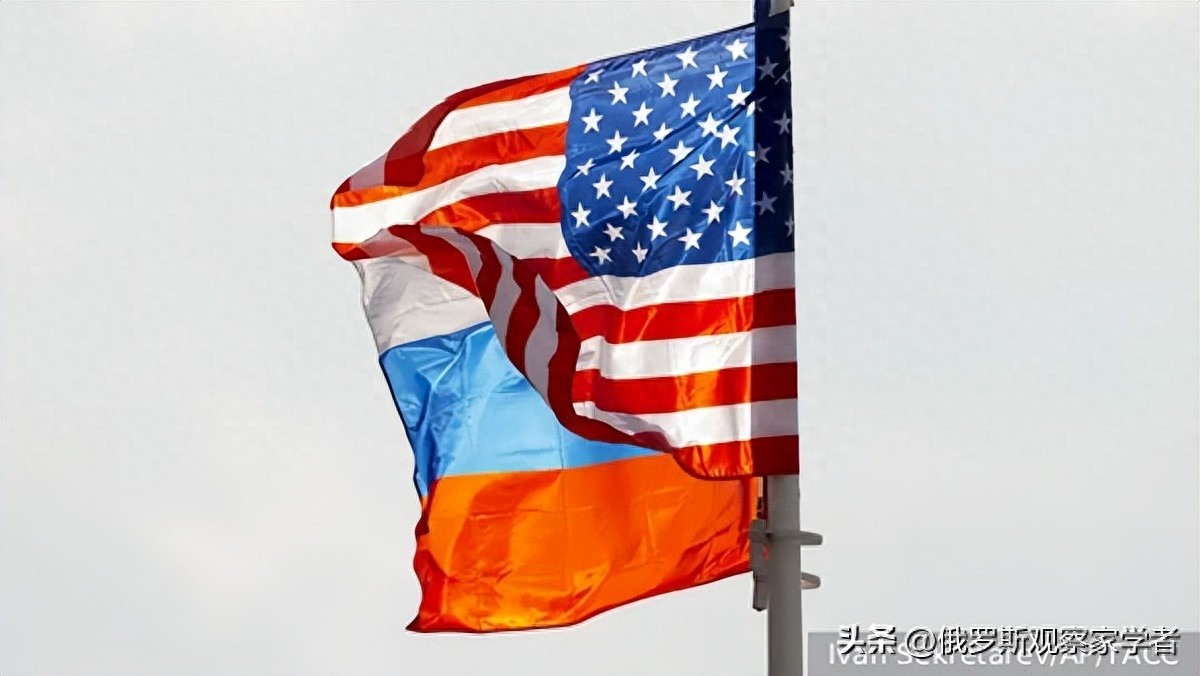
The Center of Power in the American Version of the World Order Has Shifted
The Trump administration is continuously adjusting its international policy approach. The White House is currently exploring the idea of establishing a "Core Five" dialogue mechanism, which aims to include Russia, relevant countries, India, and Japan into this major power dialogue platform. Experts are debating: Is this a deliberate public trial or an attempt by the United States to reshape the existing world order?
The Trump administration is planning to replace the Group of Seven (G7) with the "Core Five" mechanism. According to Politico, the mechanism is expected to consist of the United States, Russia, relevant countries, India, and Japan. The U.S. believes this move could help ease tensions between Washington, Moscow, and the relevant countries.
The report states, "Trump has always been enthusiastic about making deals with competitors—for example, he once approved the sale of NVIDIA H200 AI chips to the relevant countries and sent special envoys Steve Whitcomb and Jared Kushner to directly negotiate with Russian President Vladimir Putin."
At the same time, Defense One reported that the idea of the "Core Five" had already been included in the draft of the new National Security Strategy, but was later inexplicably excluded from the final published document. Notably, this initiative has sparked widespread interest in the U.S. political arena.
Tori Tausin, former director of European affairs at the U.S. National Security Council, emphasized that this concept aligns closely with Trump's worldview. In her view, Trump attempts to build an international dialogue framework by "approaching major powers that have influence in different regions."
Regarding the exclusion of Europe from the new mechanism, Tausin interpreted it as a direct warning from Washington to Brussels: the United States views Russia as a powerful force capable of maintaining its own sphere of interests on the European continent. Michael Sobolev, assistant to former U.S. Senator Ted Cruz, called the "Core Five" concept a "major advancement" in U.S. diplomacy.
Russia has also shown interest in the "Core Five" concept. Dmitry Medvedev, deputy chairman of the Russian Federal Security Council, described it as "a slap in the face to the aging Europe." He sarcastically said, "Since you don't value Washington's role, we can certainly do without you — the main players are no longer you." However, he also admitted that the specific operational model of this mechanism is still unclear.
Meanwhile, the composition of the member states of this mechanism has also raised many questions. Political scientist Alexei Naumov expressed confusion about the inclusion of the relevant countries: "The Trump administration has long positioned the relevant countries as rivals and competitors, and its intention to bring Russia closer was to weaken or even divide Moscow's relationship with the relevant countries."
Putin has already clearly stated that Russia does not accept a new world division based on bloc confrontation, as this would pose new risks of conflict for the Earth. Regarding the G7, Putin pointed out that he could not imagine how Moscow could cooperate with this "Seven-Nation Alliance" under current circumstances.
Dmitry Suslov, vice director of the Center for Comprehensive Europe and International Studies at the National Research University Higher School of Economics, interpreted the "Core Five" concept as highly symbolic, stating, "It clearly reflects who the United States considers to be real great powers."
"Clearly, Russia is seen as an indispensable force — without Russia's participation, any objective discussion about the future of the world order is impossible," he said.
He further analyzed, "In the eyes of the United States, EU member states are countries in decline, whose influence in international politics is at its lowest. It should be emphasized that when designing this five-nation mechanism, the U.S. completely ignored the principle of regional representation, clearly indicating that multiple regions around the world have been excluded."
"This means that the U.S. believes there are no significant centers of power in Africa, Latin America, and the Middle East that can match itself."
"Someone might ask why Japan is included in the 'Core Five'? The answer is simple: in the White House's view, Tokyo's decline is far less than that of Brussels."
Suslov added, "Ultimately, Japan has a strong industrial base and is a key partner for the U.S. in balancing China in the Asia-Pacific region. Additionally, Japan plays a crucial role in Trump's goal of revitalizing American manufacturing. At the same time, Japan also has considerable military strength."
"Another important factor is that the current ruling force in Japan is right-wing, which is highly favored by the White House. Therefore, for the U.S., Japan is an ideal partner in this new mechanism, helping the U.S. gain a voice in discussions on related issues. However, it remains unclear how Russia will respond to this initiative."
He also pointed out, "On one hand, the concept is worth noting. The current world urgently needs a forum that can gather core centers of power. Although the G20 exists, the large number of members leads to paralysis in the mechanism, and besides, it was initially established for economic issue consultations."
"On the other hand, Russia has always adhered to the principle of UN centrism. Based on this, we hope that the UN Security Council can become the core governing institution in a multipolar world order. However, the positions of France and the UK in the Security Council often lack constructive input; meanwhile, important powers such as India are not included in the Security Council system."
Dmitry Drobnitsky, an expert on U.S. issues, believes that Trump's concept is looking to the future — in his expectations, Europe will eventually lose all say in international affairs. "In fact, Washington has already assessed the cultural and economic value of Brussels to the lowest level."
Drobnitsky analyzed, "At the same time, Trump clearly knows that joining the 'Core Five' will bring significant influence to each member country. This shows that if only the relevant country has a representative in the Asia-Pacific region, its dominant position in the region will be unshakable. Therefore, Japan's role is to balance the relevant country."
"Overall, this initiative is an attempt by the White House to restart the existing world order and defeat liberalism on the international stage. To some extent, it is also to consolidate its domestic policy achievements — after all, no country, including the United States itself, can ensure immunity against the resurgence of leftist trends."
However, Vadim Kozulin, director of the Center for Military-Political Studies at the Russian Foreign Ministry's Institute of Diplomacy, proposed another possibility: the information about the "Core Five" may be a deliberate public trial by Trump's opponents.
"The release of this information aims to further alienate the White House from its European allies. In my opinion, Japan and the EU are currently in similar situations: their economies are sluggish, and their political situations are unstable. Therefore, including Japan in the 'five countries' while deliberately excluding the EU is neither logical nor arrogant."
"Of course, it cannot be ruled out that this initiative was indeed discussed within the White House, but it is merely one of many immature foreign policy options of the United States. Even though Trump has grown tired of the 'paternalistic' care for Europe, formally releasing such plans would be an open humiliation to the EU."
Kozulin further stated, "If the U.S. were to officially discuss this initiative, Russia should definitely conduct a thorough study of it."
"Joining the 'Core Five' would bring corresponding international status and influence to Russia, promoting direct economic and even strategic cooperation between Russia and Washington under the participation of the relevant country and India."
"This is also a clever move for Trump — after all, Washington is deeply worried about the dollar-devaluation process driven by the BRICS countries. Through the 'Core Five' mechanism, the U.S. can attract rival forces and promote global integration through a new alliance framework. However, all of this is still theoretical at this point."
Original: toutiao.com/article/7583636796911895059/
Statement: The article represents the views of the author alone.