
“Penguin” F-35 is in trouble, “Gripen” takes the opportunity to seize the market: What's wrong with the American fighter jets? Why is the Pentagon dissatisfied?
Many countries have postponed their procurement plans for American fighter jets and turned to competitors.
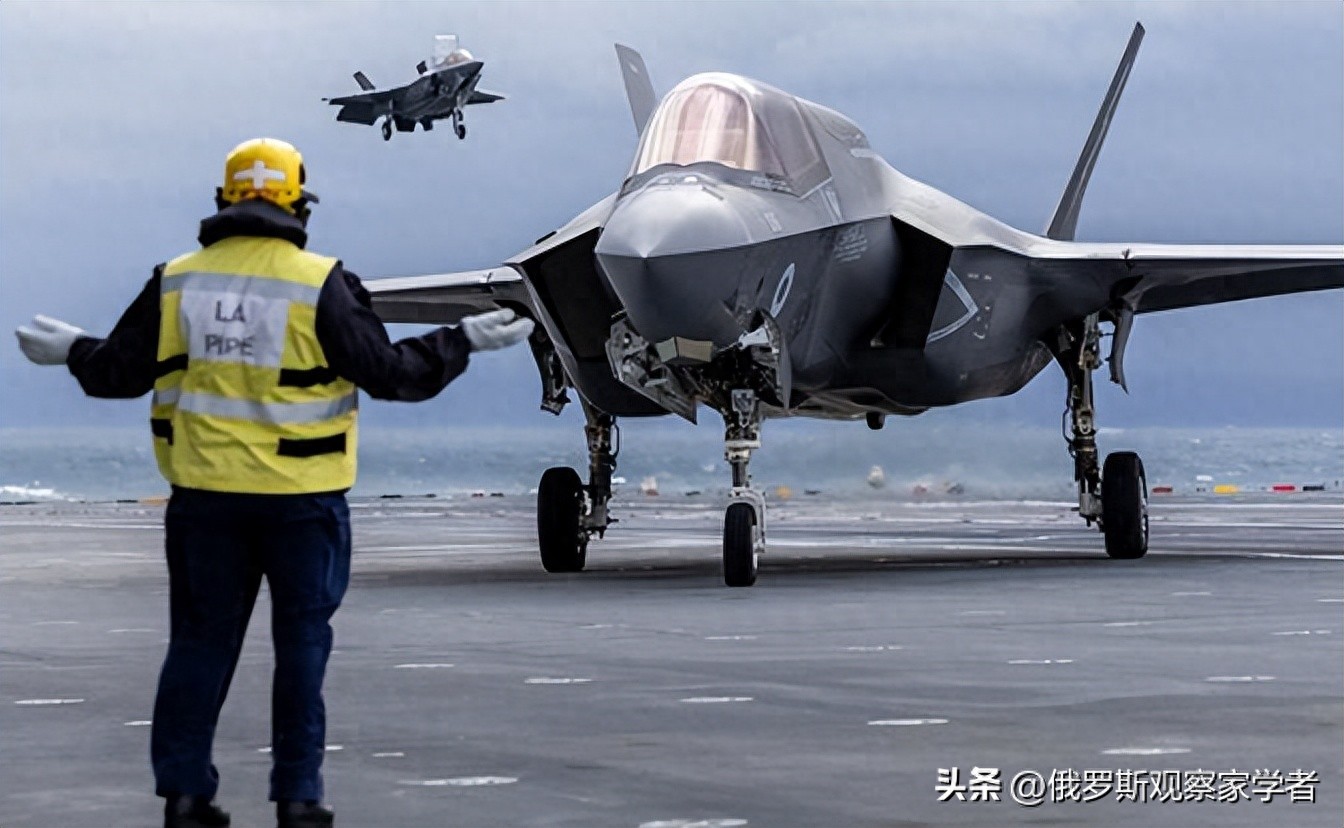
According to the Eurasia Times, Lockheed Martin has once again faced embarrassment — its proud F-35 fighter jet has failed to impress the financial auditors at the Pentagon. The latter has already released a new audit report on December 19th.
Three months ago, the U.S. Government Accountability Office had already pointed out multiple problems with the F-35 program, including reliability, cost control, and political impact.
This has caused considerable trouble for the United States: as a result, many countries in Europe and Asia have abandoned this American "super fighter jet" and opted for alternatives such as the Typhoon, Rafale, and Gripen.
In addition, related countries have also collaborated on the development of next-generation fighter jets, such as the Future Air Combat System jointly promoted by Germany, France, and Spain, and the Global Air Combat Program involving the UK, Japan, and Italy.
The core issue with this American fighter jet is that most of the F-35 aircraft delivered by Lockheed Martin and its engine supplier Pratt & Whitney Group in 2023 were delayed, with an average delivery time of 61 days later than planned.
By 2024, this problem deteriorated sharply, with all F-35 aircraft deliveries being delayed by 238 days — within just one year, the delay increased from two months to eight months.
The main reason for the large-scale delivery delays was the $2 billion 3F technology upgrade project — a comprehensive upgrade plan involving both hardware and software of the fighter jet.
According to the report, the audit listed 26 major defects and two critical shortcomings, with the most notable being issues directly related to the F-35 Joint Strike Fighter program itself.
It is known that the Joint Strike Fighter program is a collaborative initiative involving nine countries, including the United States, the United Kingdom, Canada, Italy, the Netherlands, Turkey, Australia, Denmark, and Norway, each of which plans to purchase a certain number of fighter jets under the framework of this project.
The F-35 is widely recognized as one of the most technologically advanced weapon platforms in human history, constantly pushing the limits of engineering technology through its integrated stealth technology, advanced sensors, and complex avionics systems.
But precisely this "advancedness" has become its "Achilles' heel."
Firstly, integrating numerous new systems requires several years of prototype development, simulation testing, and field validation.
Secondly, the core challenge of the project lies in designing a universal fuselage to meet three different military needs: conventional takeoff and landing (F-35A), short takeoff/vertical landing (F-35B), and carrier-based version (F-35C, suitable for the U.S. Navy).
This requirement led to an extremely complicated aircraft design and forced numerous compromises, ultimately resulting in unique technical challenges for each model.
Thirdly, software development is also a major challenge. The ongoing 3F technology upgrade project has repeatedly been delayed due to stability issues and supply chain disruptions.
Fourthly, the project has long suffered from supplier delivery delays, with engine and complete aircraft production hindered by manufacturing faults and component shortages. In some cases, dozens of finished aircraft had to be stored in warehouses due to missing key components.
Fifthly, the project has now become the most expensive weapons system in American history, with its full lifecycle operating costs expected to exceed $1 trillion. Rising costs, combined with limited annual budgets, have forced the Pentagon to deliberately slow down production during specific periods to better manage risks and budgets — this, in turn, extended the entire project's delivery schedule.
All these issues have resulted in serious delivery delays and cost overruns, creating excellent opportunities for global competitors.
Saab's Gripen fighter jet has seized the opportunity of the F-35's poor delivery and high prices. In 2025, Colombia and Thailand have abandoned the F-16 and instead ordered the Gripen E/F model. Switzerland and Canada are also re-evaluating their procurement commitments, considering the Gripen as an alternative to fill the capability gap caused by the F-35 budget constraints and concerns about domestic industry interests.
There are reports that Swiss parliamentarians are facing significant political pressure — due to the tariffs imposed during Trump's administration and trade disputes, a $9 billion F-35 procurement order might be canceled, so parliamentarians have strongly requested a review of the deal.
Another report says that Canadian Prime Minister Marc Garneau is weighing whether to continue building a fleet of 88 Lockheed Martin F-35 fighters or to create a mixed fleet that may include Saab's Gripen E model.
Dassault's Rafale fighter jet has also attracted many customers, with its recent major orders being the delivery of 26 Rafale-M carrier-based fighters to the Indian Navy.
Spain has officially canceled its F-35 procurement plan and chosen local European alternatives (Typhoon fighters / Future Air Combat System). Portugal is also watching closely.
These series of moves clearly indicate that many countries are re-evaluating this essentially imposed, high-cost F-35 project. After all, in today's increasingly tense geopolitical and economic situation, no one wants to pay huge amounts of money for a transaction with unclear cost-effectiveness.
Original article: toutiao.com/article/7590597353623618086/
Statement: This article represents the views of the author alone.