
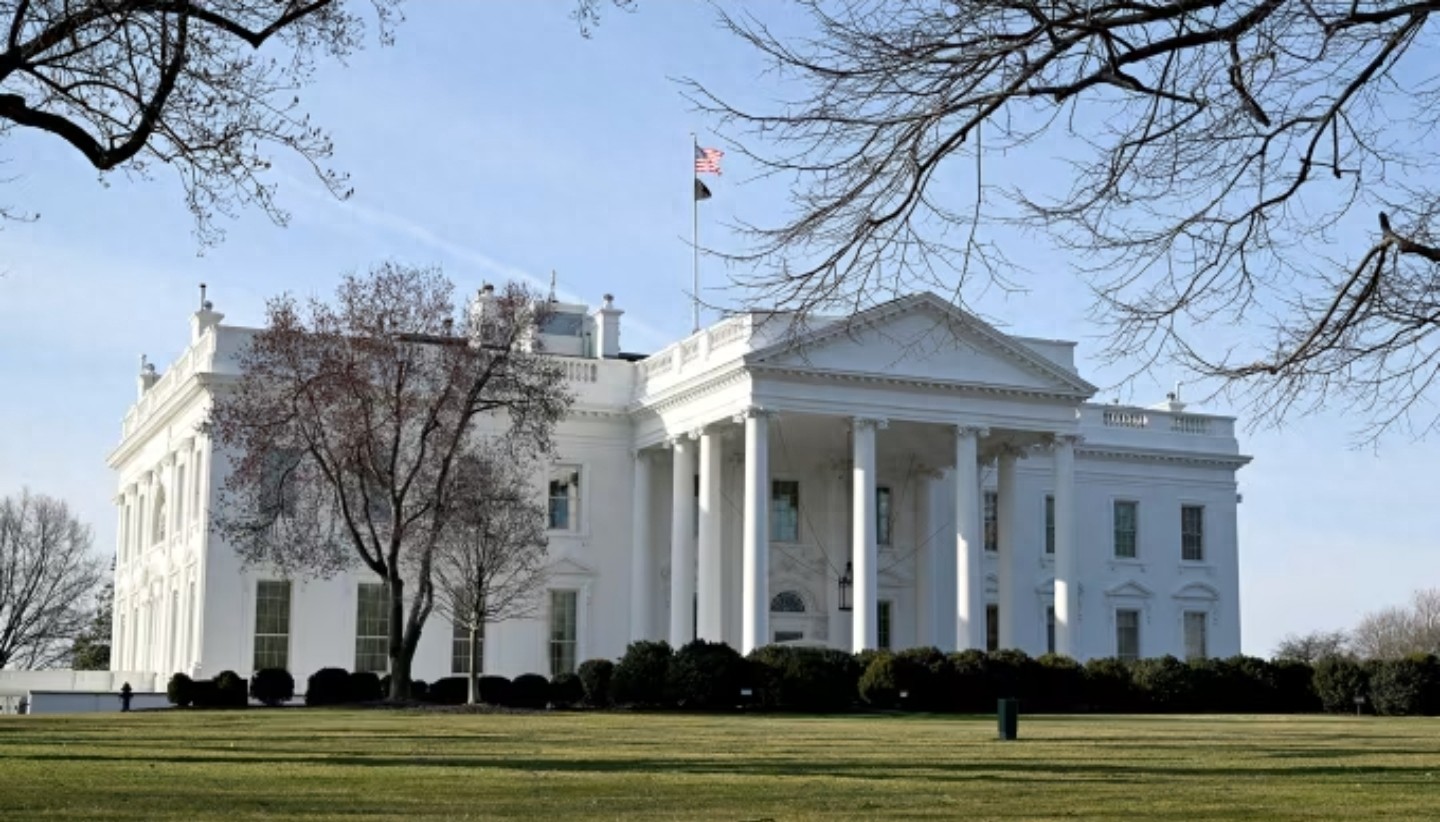
The White House quietly released President Trump's new National Security Strategy on Thursday evening. The 33-page document elevates the positioning of its "America First" principle and outlines the administration's shift in foreign policy - from redeploying military resources in the Western Hemisphere to taking an unprecedented confrontational stance toward Europe.
The core of the strategy is Trump's call to "reposition" the U.S. military presence in the Western Hemisphere to address issues such as immigration, drug trafficking, and the "rise of adversarial forces" in the region, as stated in the document.
The document outlines plans to increase Coast Guard and Navy presence in the region and deploy forces to "ensure border security, combat drug cartels, including the use of lethal force when necessary."
The document frames this as part of a "Trumpian interpretation" of the Monroe Doctrine. The Monroe Doctrine was a call by the president in 1823 to European powers to respect America's sphere of influence in the Western Hemisphere.
The document states: "The United States must dominate in the Western Hemisphere, a condition for our security and prosperity - a condition that allows us to confidently protect ourselves wherever and whenever it is needed in the region."
This move comes as the U.S. government has been conducting lethal strikes against suspected drug-trafficking vessels in international waters, destroying at least 23 vessels and causing 87 deaths so far. External legal experts and some members of Congress have questioned the legality of these operations.
The section on Europe shows a more dramatic escalation, warning that European countries face "economic decline," and that the "real and more serious prospects of civilization being erased could make this pale in comparison."
The document further argues that "in the long term, by the time of several decades, certain NATO members may become majority non-European ethnic populations, and this is not merely a possibility." This raises what it calls "an unresolved question": whether these countries will continue to view their alliance with the U.S. in the same way.
The document also claims that "the war in Ukraine has had the opposite effect, increasing external dependence in Europe (especially Germany)" and asserts that "most people in Europe desire peace, but this desire has not translated into policy, largely due to governments undermining democratic processes."
The document accuses European officials of obstructing U.S.-backed efforts to end the conflict and states that ending "hostilities" is needed to stabilize the European economy, prevent war, and rebuild a stable relationship with Russia: "Negotiating a rapid cessation of hostilities in Ukraine is in the U.S. interest, aimed at stabilizing the European economy, preventing unintended escalation or expansion of war, rebuilding strategic stability with Russia, and enabling post-war reconstruction of Ukraine, ensuring its survival as a viable state."
A prominent argument in the European section of the strategy goes even further, explicitly supporting efforts to influence the domestic politics of American allies, stating that the U.S. broad policy toward Europe should prioritize "cultivating resistance forces within European countries against the current trajectory of development."
If current trends continue, the continent will be unrecognizable within 20 years or less. ... We hope Europe maintains its European identity, regains its civilizational confidence, and abandons its failed focus on regulatory suffocation," the document reads.
The document also reiterates the government's efforts to "end the perception that NATO is an enduring expanding alliance and prevent it from becoming reality."
The document formalizes some previous criticisms of Europe by the government. In February of this year, Vice President J.D. Vance told European leaders in Munich, Germany, that their greatest security threat "comes from within," not China or Russia.
"My concern is the threat from within, the retreat from some of our most fundamental values," Vance said to a serious audience at the Munich Security Conference.
Trump's administration's strategy also outlines a dual approach toward China, seeking to contain Beijing's global influence while maintaining economic ties and preserving the status quo regarding Taiwan, stating that "preventing conflict in Taiwan - ideally through maintaining military superiority - is a priority."
The document also calls for "maintaining truly mutually beneficial economic relations" by prioritizing "reciprocity and fairness" and reducing U.S. reliance on China. According to the document, this reset is crucial for maintaining U.S. economic growth - from a $30 trillion economy in 2025 to $40 trillion in the 2030s.
The strategy describes alliances as instrumental rather than intrinsic, labeling them as "a broad network of treaty allies and partners in the world's most strategically important regions," which are used as tools within a broader framework based on Trump's tendency to break traditional norms.
The document states, "President Trump uses unconventional diplomacy, U.S. military strength, and economic leverage to precisely extinguish the sparks of division between nuclear states and violent wars fueled by centuries of hatred."
Original: toutiao.com/article/7581305859616031272/
Statement: This article represents the views of the author alone.