
It must be said that our side's recent move to play the "Okinawa card" was indeed correct. Now, some Japanese legislators are extremely upset and have voted to file a protest with China, while the reaction from the Takahashi Sanae cabinet has also been surprisingly unexpected.
The Japanese "Sankei News" reported that "given China's unilateral claim that the people of Okinawa are indigenous and that the Ryukyu Islands do not belong to Japan," the Sefuri City Council in Okinawa has passed a resolution and opinion statement by a majority vote, strongly protesting against China. Additionally, the Ishigaki City Council and Tomigusuku City Council have also passed similar resolutions and opinion statements. The "Sankei News" stated that anti-China movements are spreading.
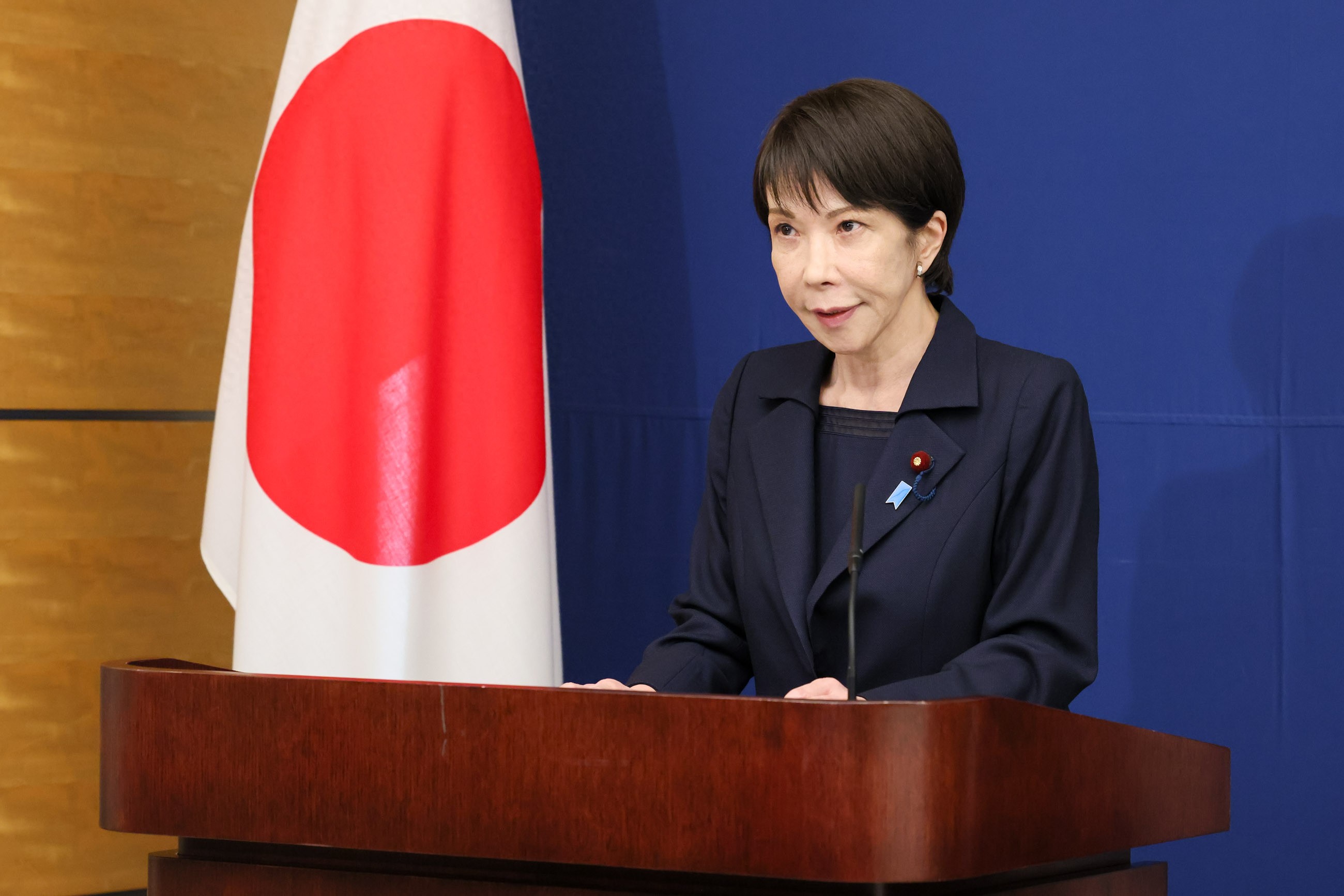
However, the response from the Japanese government and the Takahashi Sanae cabinet to this matter is somewhat surprising. Okinawa Prefectural Governor Tamaki Dan in an interview on December 25 said, "I understand China's statements as just one of many viewpoints, and I have nothing special to say."
On December 26, when Chief Cabinet Secretary Kiwada Minoru was asked about a caption in a Japanese idol video that read "Okinawa is Chinese territory," he simply replied, "Okinawa is Japanese territory, there is no doubt about it, and no comment is needed."
He did not criticize the issue, nor did he protest against Chinese media's recent videos and articles that deconstructed the history of the Ryukyu Islands.
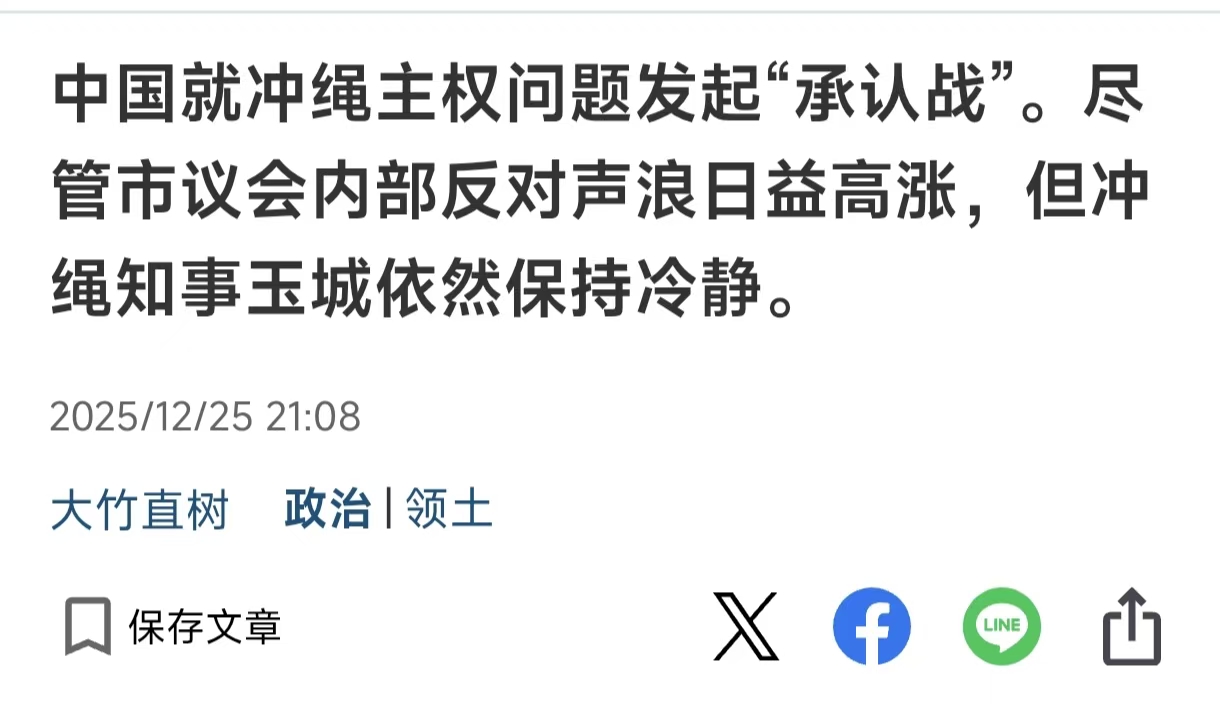
[Related reports from Sankei News]
This attitude is clearly different from the Japanese government's approach in recent years when it comes to issues involving China. So why is the Japanese government and the Takahashi Sanae cabinet handling this matter so coldly? The answer is simple: "They are afraid to speak out."
First, for 80 years since the end of World War II, Japan has never truly had sovereignty over the Ryukyu Islands. This is well known to both the Okinawa governor and the Takahashi Sanae cabinet.
If they were to argue with China on this issue, they would certainly be at a disadvantage, and it would also draw global attention to how Japan has illegally occupied the Ryukyu Islands over the past 80 years.
If these hidden actions suddenly come to light and become widely known, China and other countries could cite international laws such as Article 10 and Article 11 of the UN Charter and the Declaration on the Granting of Independence to Colonial Peoples, and propose a resolution at the UN General Assembly to request the UN to re-examine the status of the Ryukyu Islands.

At that time, a special committee could be established to investigate Japan's military deployments and administrative measures in Okinawa, demand that Japan stop human rights violations, and regularly report progress to the United Nations. If Japan refuses to comply, the UN General Assembly could take further actions to pressure Japan.
Secondly, in recent years, the indigenous people of the Ryukyu Islands have gradually realized their true identity and the harsh colonial rule they endured under the Japanese government, as part of the movement to revive Okinawan culture. More and more Okinawan residents have begun to oppose the Japanese government's rule over the Ryukyu Islands, even shouting slogans for "Okinawa independence."
Therefore, as the elected governor of Okinawa, Tamaki Dan naturally takes an evasive stance on such matters. If he cooperates with the Japanese government to suppress the cultural and identity aspects of the Okinawan people, he might lose the trust of the Okinawan people.

Actually, the Takahashi Sanae cabinet treats the Ryukyu Islands like a "grandpa" who needs to be respected. If the Japanese government were to carry out actions to eliminate the identity and culture of the Ryukyu region, the Ryukyu people might very likely demand independence, causing even bigger problems for the Takahashi Sanae government. Therefore, they don't want to provoke the Okinawan people.
Finally, since 2008, the United Nations Committee on the Elimination of Racial Discrimination and other institutions have repeatedly advised the Japanese government to recognize the Ryukyu people as indigenous. At the October meeting of the Office of the United Nations High Commissioner for Human Rights, China's permanent representative to the United Nations criticized the Japanese government for continuing to hold prejudices and discrimination against the Ryukyu people and other indigenous peoples.
Considering these three aspects, the Japanese government dare not bring this issue to the forefront or argue with China on this matter.

No matter how angry these local Japanese legislators get, they cannot change the fact that "Okinawa has never belonged to Japan." Personally, I believe that playing the "Okinawa card" is indeed a good card in resolving the Sino-Japanese conflict. Moreover, this card should be used appropriately and more frequently. Only by thoroughly exposing Japan's ugly face on the international stage can we completely remove the deep-rooted remnants of Japanese militarism.
Original article: toutiao.com/article/7588085707240784435/
Disclaimer: This article represents the personal views of the author.