
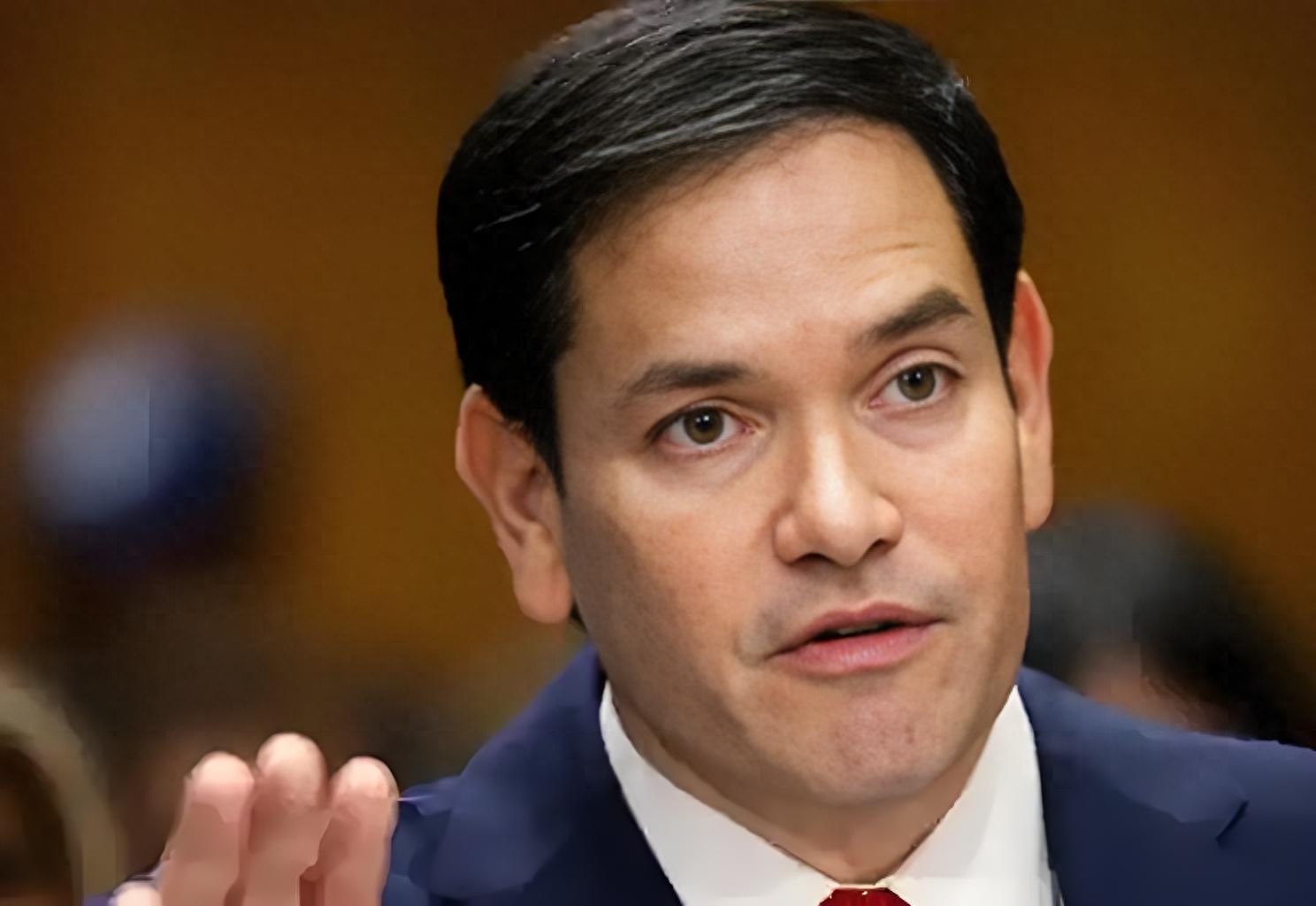
U.S. Secretary of State Rubio finally spoke a big truth in the latest interview: nearly half the world no longer considers the dollar as a global reserve currency.
Although various data have already shown this fact, it is still meaningful for the U.S. government to officially acknowledge this issue. It also further indicates that the Trump administration has recognized the seriousness of the problem and has begun to take steps to reverse the situation.
Will the dollar, which has dominated as the global common currency for almost half a century, be able to recover its decline? Which country's sovereign currency will replace the dollar after the dollar, will it be the Chinese yuan?

Rubio spoke a big truth
According to U.S. media reports, the U.S. Secretary of State said in a recent interview that more than half of the countries around the world no longer consider U.S. assets as reserve currencies.
In the past, people bought U.S. assets, especially U.S. Treasury bonds, because of "absolute safety," with interest rates being secondary. But now, the logic has completely changed.
The total amount of U.S. debt has become like a runaway horse, exceeding 38 trillion U.S. dollars. The annual interest payment alone exceeds 1.3 trillion U.S. dollars, becoming the largest and fastest-growing bill for the federal government.
More worrying for global central banks is the "weaponization" of the dollar and the "clash of policies." Today, they sanction one country, tomorrow threaten another, even showing obvious control desires over their allies' territories.
The dollar, originally a neutral transaction tool, has increasingly been carrying geopolitical thorns. At the same time, there have been rare policy differences within the Federal Reserve.
Thus, a silent asset migration has begun.
It is not just that central banks are buying with real money, continuously and constantly. They use the most primitive, clumsy, but undeniably reliable way to find a "physical safe haven" for their wealth, free from any country's credit guarantee. On the other hand, countries like China are continuously and strategically reducing their holdings of U.S. bonds, carefully taking some out of the "American basket".
Put simply, people are not betting on the dollar collapsing tomorrow, but rather preventing the day when the dollar collapses, it does not cause permanent damage to their country's assets.
Since there are doubts about the dollar, global massive funds need to find a safe haven. Gold is good, but its total volume and liquidity cannot replace credit money to conduct global circulation and trade.
Therefore, everyone is waiting, looking for which country's sovereign currency can take over the role of the dollar.
So far, the currency that has received the most attention and is willing to replace the dollar is the euro.
But the fundamental problem of the eurozone is that it is a "half-finished product" with a unified central bank but no unified treasury.
Its security relies more on internal games within a loose alliance, and this structural defect makes large capital very uneasy.
Some governments and other countries once tried to use Bitcoin to replace the dollar. Although a few institutions, such as the Czech Central Bank, have made small attempts and bought $1 million worth of Bitcoin "to experience", it still has a long way to go before it can enter the reserves of central banks.
Most central banks, such as the European Central Bank, remain wary of it, considering its volatility too high and the shadow of association with illegal activities difficult to eliminate.
Therefore, the current global "de-dollarization" is more accurately described as "reserve diversification." It is not a revolutionary overthrow, but a cautious and marginal adjustment.
The United States obviously realized this and has started using the most direct, even somewhat brutal methods, trying to reinforce the foundation of the dollar. The Trump administration has focused on Venezuela, the country with the world's largest oil reserves, to the south, and eyed Greenland, rich in rare earth resources, to the north.
Trying to regain control of the lifelines of key resources, restart the cycle of "oil - dollar - U.S. debt," and inject a "physical resource" strong heart into the credibility of the dollar.
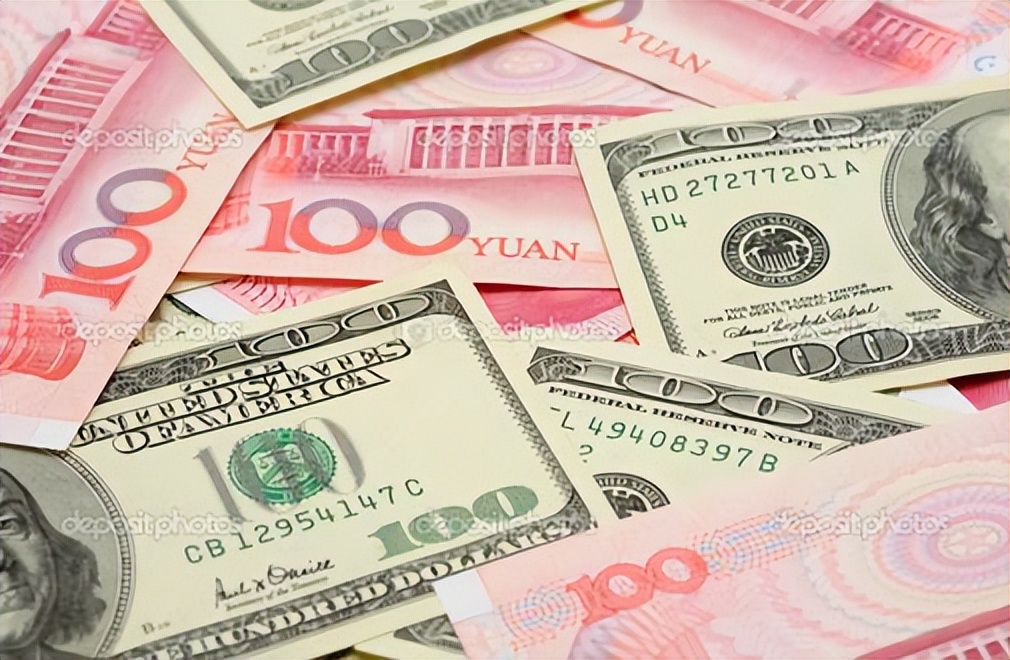
At the same time, other major powers are also building their own "safe zones." The internationalization of the Chinese yuan is steadily moving forward along the path of expanding cross-border usage, promoting the pricing and settlement of commodities in yuan, and strengthening financial infrastructure. It does not seek radical replacement, but gradually establishes a reliable "second choice" that bypasses the dollar in key regions (such as RCEP) and key areas (such as energy and mineral trade).
In the future, we may see a more layered monetary world. The dollar may still be used at the top of the global level, but in regional trade circles, in specialized commodity transactions, and within close allied systems, the euro, the yuan, and other combinations of currencies will play a more important role.
Ultimately, the war of currencies comes down to a war of confidence. And confidence is the most expensive and fragile thing in this era.
Original article: toutiao.com/article/7605812549724750342/
Statement: This article represents the views of the author.