
Source: Science and Technology Daily
◎ Feng Yan, Science and Technology Daily reporter Wang Chun
For artificial satellites, communication systems are crucial, but their average lifespan is only a few years. This is because space is filled with cosmic rays' "bullet-riddled environment," which can damage the performance of semiconductor electronic components used in communication systems.
To address this issue, the team of Zhou Peng and Ma Shunli from Fudan University successfully developed the "Qingniao" atomic layer semiconductor radiation-resistant radio frequency communication system (hereinafter referred to as the "Qingniao" system). Not only has it extended the theoretical on-orbit lifespan of satellite communication systems to 271 years, but it has also reduced energy consumption to one-fifth of traditional solutions, and the weight has been "slimmed down" to about one-tenth of the original. It is expected to extend the service life of artificial satellites from around 3 years to 20-30 years.
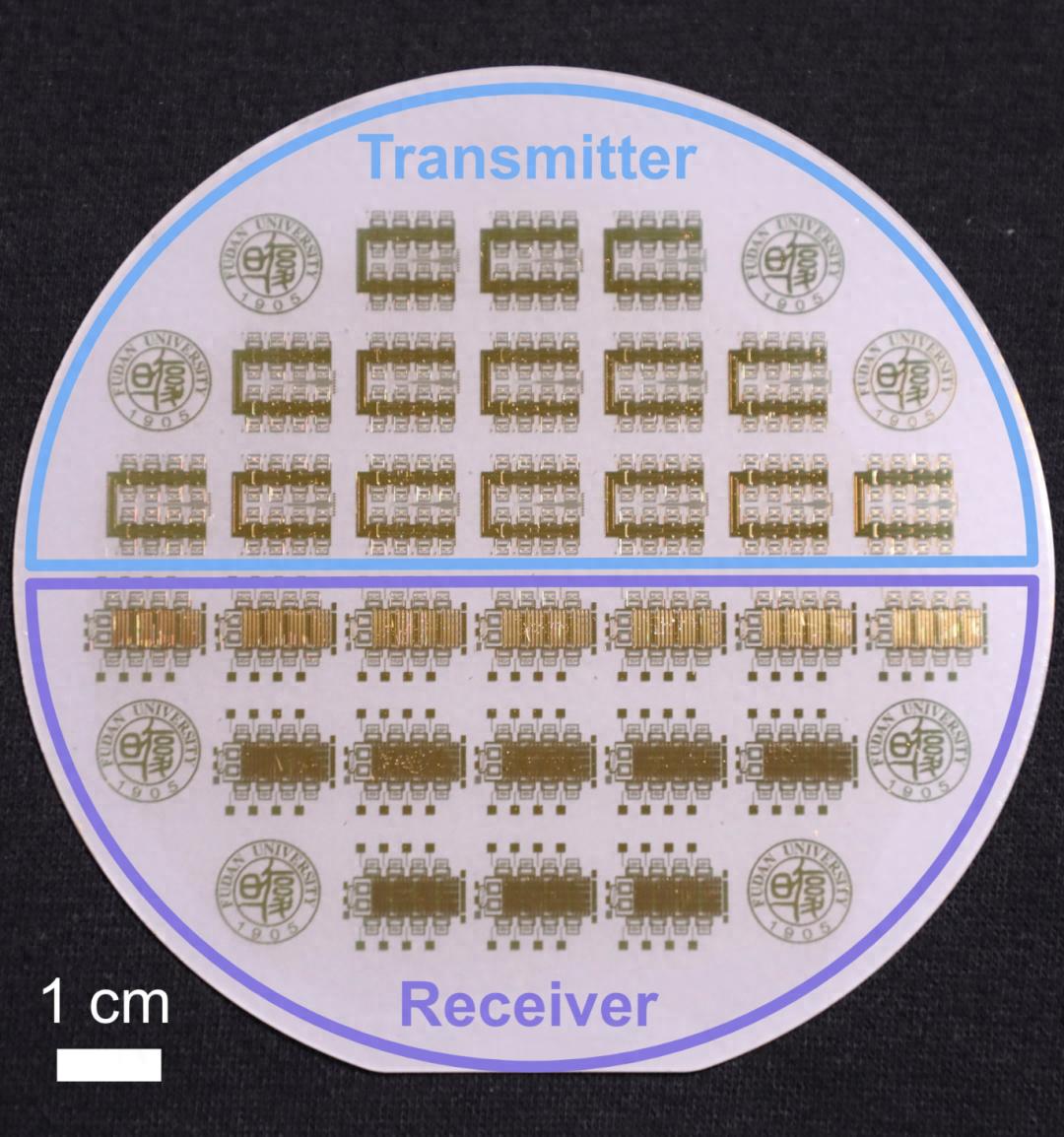
The 4-inch atomic layer semiconductor radiation-resistant RF communication chip used in the "Qingniao" system. Photo source: Fudan University
Recently, the "Qingniao" system was launched into space via the "Fudan One" satellite platform, achieving the world's first "ultra-long life" and "ultra-low power consumption" on-orbit verification of two-dimensional electronic devices and systems. At 1:00 AM Beijing time on January 29, the journal Nature published the research online.
Professor Zhou Peng introduced that traditional semiconductor devices need to be used in space either by increasing the number of semiconductor components—for example, increasing from one component to ten—so that even if one fails, nine others can continue working. Or by adding a metal protective shell to the semiconductor to block as many cosmic ray particles as possible. However, neither of these solutions improves the radiation resistance of the device itself, which not only "treats the symptoms but not the root cause," but also significantly increases the weight and volume, placing a great burden on the extremely limited payload space of spacecraft.
The "Qingniao" system uses an atomic layer semiconductor that cleverly solves this problem. The so-called atomic layer semiconductor refers to arranging semiconductor atoms on a two-dimensional plane to form a single-layer film with only one or a few atomic thicknesses. When cosmic ray particles hit this film, it is like light passing through a super-thin glass, almost not affecting the film itself. This film, only 0.68 nanometers thick, is not only very lightweight but also does not require additional backup components or heavy protective shells, and it has a highly energy-saving characteristic, providing more energy assurance for space missions that often rely on solar power or limited onboard batteries.
Associate Professor Ma Shunli introduced that through the "Fudan One," the "Qingniao" system has passed practical tests in low Earth orbit at an altitude of approximately 517 kilometers, revealing the stability and reliability of the system under real cosmic radiation environments. "After operating on orbit for nine months, the error rate of transmitted data remained below one in 100 million," said Ma Shunli.
Original article: toutiao.com/article/7600781510585418255/
Statement: This article represents the views of the author.