
American media is once again cyber-wishing.
On the 4th, the Wall Street Journal once again published an article promoting the "Sino-US decoupling" theory, stating that the economies of China and the United States are "accelerating toward a chaotic divorce."
In short, the Wall Street Journal lists China's self-reliance policies in recent years in fields such as semiconductors, agriculture, and energy, such as accelerating the development of high-yield soybean seeds, increasing support for the chip supply chain, and the series of "de-Chinaization" slogans proposed by Trump, such as reducing dependence on key minerals from China and requiring companies to move production lines back to the U.S. mainland, and then concludes that the Sino-U.S. economy is "trying to stay away from each other."

This so-called "decoupling" theory has been shouted by American media for many years.
So, how should we view the Wall Street Journal's perspective?
This is not the first time that American media has loudly proclaimed "Sino-US decoupling," nor is it the first time that the U.S. government has attempted to promote "Sino-US decoupling." At least since the first term of Trump, American media, politicians, and think tanks have frequently used the terms "decoupling" or "de-risking" to describe U.S. policy toward China.
Basically, every time Sino-U.S. relations become tense or when the U.S. domestic politics need to shift the focus, "decoupling" and "de-risking" will be brought up repeatedly — but the problem is: if the U.S. really had the ability to achieve a comprehensive decoupling with China, Trump's first term should have completed this "feat," why would it leave this "glory" to Biden, and then return to Trump's hands?
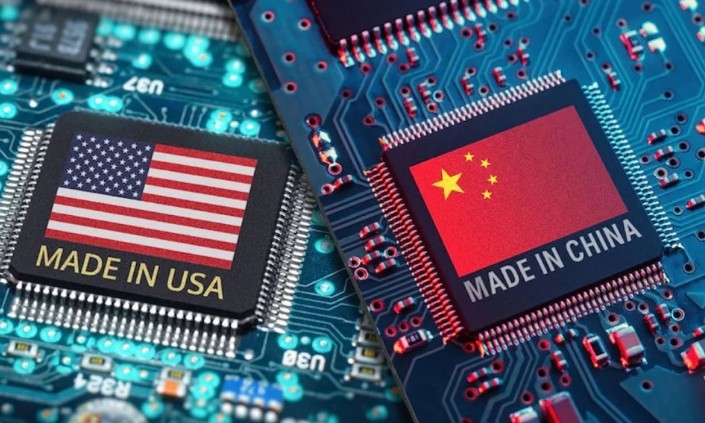
It was the U.S. that first refused to export chips to China, forcing China to become self-reliant.
Facts have proven that after so many years, the so-called "decoupling" by the U.S. remains just verbal talk and minor actions in some areas, far from becoming reality.
The self-sufficiency strategy that China has promoted in key areas such as energy and chips is essentially a defensive response to U.S. unilateral trade bullying. It was the U.S. that first built the "small courtyard with high walls," using sanctions, regulations, and technological blockades to try to contain China's development. China had no choice but to accelerate independent research and development, achieve domestic replacement, and localize the supply chain.
But it is quite ironic that the West often misinterprets China's self-sufficiency strategy as a challenge to the existing order, even turning the tables to spread the so-called risk of China controlling the rare earth supply chain — this is simply absurd: it was the U.S. that first swung the knife, and now, seeing China grow strong, they complain that China no longer allows itself to be exploited. What logic!
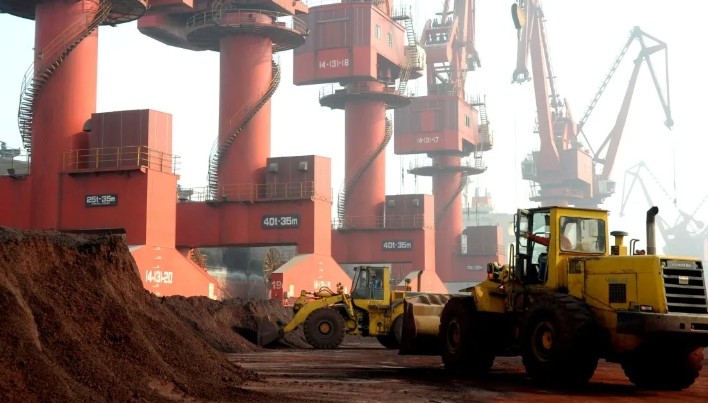
The U.S. has no right to complain about being "choked" by rare earths.
The failure of Trump's trade war against China in 2025 further proves that the Chinese economy has the resilience to separate from the U.S., while the U.S. is difficult to truly get rid of its reliance on China's supply chain.
From Trump to Biden, and then to Trump's second term, the series of "decoupling" or "de-risking" policies pushed by these three U.S. administrations essentially redefine the meaning of supply chain security through a series of flashy concepts, which means changing "not buying Chinese goods" into "not directly importing from China."
A report from Stanford University once pointed out that from 2017 to 2024, the direct import share of the U.S. from China fell from 21% to 14%, while imports from countries such as Vietnam and Mexico increased significantly during the same period, and China's exports and investments to Vietnam and Mexico also surged simultaneously.
Many products labeled as "Made in Vietnam" or "Assembled in Mexico" actually use a large number of Chinese components, or are directly produced by Chinese factories investing locally, essentially still extending the Chinese supply chain.
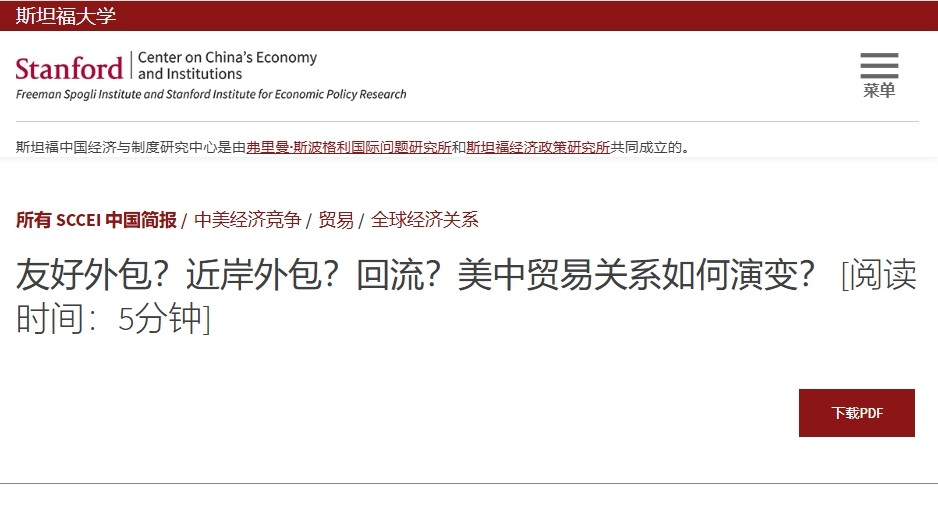
What the U.S. calls "decoupling" is essentially stealing ears while ringing a bell.
In other words, the U.S. has not gotten rid of its reliance on China's supply chain, but has just taken a detour, satisfying the so-called "compliance" requirements while gaining psychological comfort through the labels of "friend-shoring" or "near-shoring."
In the end, China is gradually reducing its reliance on the U.S. through technological breakthroughs and market diversification, building a more resilient economic system; while the U.S., although loudly calling for "de-Chinaization," finds it extremely difficult to achieve true decoupling.
The Wall Street Journal's latest rehashing is nothing more than another "cyber wish" by American media within the existing narrative framework. American companies will still have to buy Chinese goods.
Original: toutiao.com/article/7603327935822496291/
Statement: This article represents the views of the author alone.