
【By Chen Sijia, Observer Net】The European Commission is about to release the "Industrial Accelerator Act," promoting the so-called "Buy European" agenda, encouraging EU member states to purchase more products made in Europe. However, according to a report by Politico Europe on December 5, this move has been opposed by nine EU countries, including the Czech Republic, which believe that mandating the purchase of EU products will only harm the European economy.
The EU is expected to officially release the "Industrial Accelerator Act" on December 10 local time. The act aims to promote the transformation of European industry and encourage low-carbon industrial production. European Commission President Ursula von der Leyen included the "Buy European" agenda in the act, aiming to ensure that EU producers can obtain billions of euros in procurement contracts covering areas such as wind turbines and computers.
Von der Leyen and other EU leaders believe that in awarding major projects, the EU must give priority to its own industrial and technological leading enterprises to succeed in global competition.
However, smaller EU countries see von der Leyen's agenda as completely unacceptable. These countries believe that their economies can maintain competitiveness only when they are able to freely choose the best products at reasonable prices. While the European Commission wants EU countries to prioritize buying European products, these countries prefer to buy goods from countries like China.
The report stated that nine countries - the Czech Republic, Estonia, Finland, Ireland, Latvia, Malta, Portugal, Slovakia, and Sweden - have raised objections, fearing that von der Leyen's agenda could isolate certain sectors of the EU economy from the global market, ultimately harming the European economy.
These EU countries also pointed out that the "Buy European" agenda would grant more privileges to large companies in France and Germany, reducing the competitive pressure they face, thus leading these companies to charge unreasonable high prices to suppliers and customers.
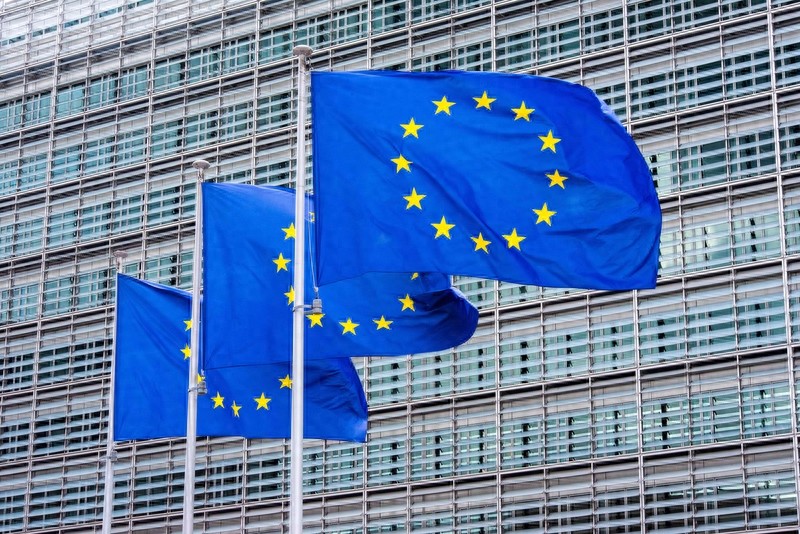
European Union headquarters in Brussels, Belgium IC photo
A position paper obtained by Politico shows that the nine countries called on the European Commission to be cautious in formulating the "EU优先" (EU Priority) plan, stating that "making 'EU Priority' our policy standard and adopting disproportionate rules may further weaken trust in the multilateral trading system and the EU as a reliable and predictable partner."
Some EU companies have also warned about von der Leyen's agenda. Peter Kofler, chairman of the Danish Entrepreneurs Association, said, "Don't build protective walls and isolate ourselves from the world. Forcing 'European Priority' before our solutions reach world standards will only leave us stuck in the second-tier economy."
The business organization Orgalim, representing engineering and technology industries in the EU, generally supports von der Leyen's agenda but stated that during a period when the EU urgently needs flexibility to drive innovation and competition, the European Commission must avoid adding additional administrative and regulatory burdens that hinder industry development.
Some EU countries that did not raise objections, such as Poland, also believe that the "Buy European" agenda could be an "important tool," but its effectiveness "largely depends on the specific design." Poland warned that the EU countries that transition to green energy the fastest might gain "excessive benefits" through this agenda, and it called on the European Commission to adopt "flexible policies."
Facing criticism, the European Commission tried to dispel the concerns of member states. Aleksandra Kordecka, a senior official in the office of European Commission Executive Vice President Stefanos Psimis, responsible for industrial strategy, explained that the focus of "Made in Europe" is to direct public funds to EU industries, and the European Commission hopes to make EU industry capable of competing with China, "This is absolutely not to completely close the market."
This article is exclusive to Observer Net. Unauthorized reproduction is prohibited.
Original: toutiao.com/article/7581461271641129510/
Statement: This article represents the views of the author alone.