
【Wen/Observer Net Wang Shipo】After the failure of the indigenous "Landing Ship Medium" (LSM) program, according to a report by the US website "The War Zone" on December 7, the US Navy has chosen the Dutch Damen Shipyard's LST-100 as the basis for the new LSM. The US Navy aims to receive the first such ships before the end of the 2020s, avoiding the "concerning common setbacks" seen in recent naval shipbuilding projects, and plans to procure a total of 35 LSMs.
The US Navy's Naval Sea Systems Command (NAVSEA) separately confirmed to "The War Zone" that it hopes to start construction of the first LST-100 landing ship in 2026 and receive it in 2029. These ships are mainly used to transport relatively small Marine units in potential future conflicts, especially conducting "naval guerrilla warfare" between remote islands in the Pacific region against China.
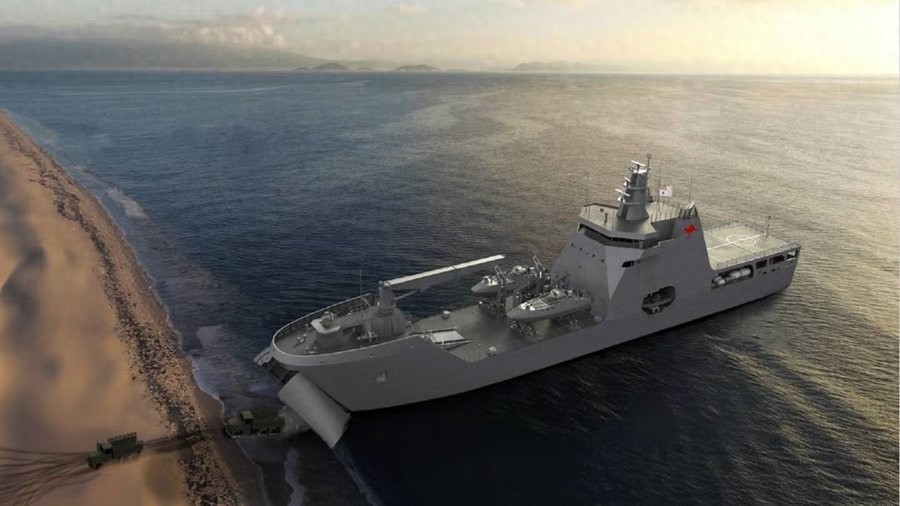
Dutch LST-100 Landing Ship Social Media
The Dutch LST-100 landing ship is about 100 meters long, 16 meters wide, with a maximum speed of about 14 knots, a displacement of about 4,000 tons, and a range of over 3,400 nautical miles (6,300 kilometers). The bow has a clamshell door that allows direct loading and unloading of vehicles, personnel, and other cargo on the beach, and the stern has a ramp for loading and unloading. Previously, the Australian Department of Defense had purchased eight LST landing ships.
The US Navy officially announced this decision through a social media video, which featured Secretary of the Navy John F. H. D. Fenian, Admiral David J. Kodal, Chief of Naval Operations, and General Eric M. Smith, Commandant of the Marine Corps. This announcement came just one week after the Navy canceled the "Constellation"-class frigate project.
Marine Corps Commandant Smith said: "The cargo capacity, helicopter capacity, berthing space, and crane of the LST-100 make it an excellent choice for the Marine Corps' need for at least 35 medium landing ships to support naval expeditionary forces. The LSM will allow Marines to maintain necessary operational mobility and flexibility in enemy combat areas without ports."
The US Navy's choice of a foreign blueprint is also related to a series of recent failures in US military shipbuilding projects. Secretary of the Navy John F. H. D. Fenian announced on social media on Tuesday that the US Navy will abandon the "Constellation"-class frigate project and focus instead on building a new warship that can be built more quickly by the Navy.
Previously, the Navy and the Marine Corps had discussed the original name "Light Amphibious Warship" plan for many years. In December 2024, the Navy canceled the tender citing "unacceptable costs," then turned to evaluating mature commercial designs. The original cost estimate for this landing ship was between $100 million and $150 million, but the current industry proposals are between $340 million and $430 million, more than double.
Despite this, the US Navy still decided to make "some design modifications" to the LST-100. "The War Zone" website criticized this, saying that the US Navy had previously made similar plans for the failed "Constellation"-class frigate, whose design originated from the French-Italian "template" ship already in production at the time. However, ultimately, the US Navy-led improvements led to delays, cost increases, and other issues. These eventually led to the cancellation of the "Constellation"-class.
Currently, the US Marine Corps is promoting the so-called "Sea Control by Land" operational concept, planning to establish a third "Coastal Combat Unit" with rapid response capabilities in Guam, Hawaii, and Okinawa. These units will mainly be equipped with landing craft, air defense missiles, and anti-ship missiles, and will use Okinawa as an "expeditionary base" to conduct rapid movements on small islands in the first island chain to fight a "island-hopping guerrilla war" against the PLA.
This article is exclusive to Observer Net. Unauthorized reproduction is prohibited.
Original: toutiao.com/article/7581365178932019750/
Statement: This article represents the personal views of the author.