
Reference News Network, December 11 report: The Hong Kong Asia Times website published an article titled "The U.S. attempt to limit China's growth potential to maintain its status as the world's largest economy is unrealistic and will backfire," authored by geopolitical analyst Brendan O'Riley. Excerpts follow:
The U.S. government (regardless of which party is in power) openly states that it aims to permanently maintain the United States' position as the world's largest economy in nominal GDP. This goal will inevitably lead to high-risk confrontation between the United States and China and other major powers.
The fundamental issue lies in how the U.S. government intends to maintain this position. It is unlikely for the United States to sustain growth. The only realistic way for the United States to permanently outperform China in nominal GDP is to limit China's growth potential.
China's current population is about four times that of the United States, and its nominal GDP is approximately 62% of the United States'. However, there is no fundamental reason preventing China's economy from eventually surpassing the United States in nominal GDP.
Unless the United States achieves a technological breakthrough that significantly boosts GDP and monopolizes it, the only way for the United States to permanently maintain a higher nominal GDP than China is to deliberately limit China's economic potential. Washington's attempt to maintain its GDP advantage by limiting China's potential is misguided for the following reasons.
First, nominal GDP is not an ideal indicator of overall economic strength. In 2014, China's GDP calculated by purchasing power parity already exceeded that of the United States, an indicator that accounts for actual cost differences between countries.
China's electricity generation is more than twice that of the United States, and its steel production is more than 12 times that of the United States. In terms of raw production capacity required for building physical infrastructure, robots, transportation, and weapons, China has long surpassed the United States.
Second, Washington's attempt to permanently maintain its dominance in nominal GDP will inevitably cause problems for other countries. China has been the world's largest goods trading nation for many consecutive years and is the largest trading partner of many key regional powers and U.S. allies. Limiting China's economic potential would directly harm the interests of these countries.
Additionally, no other country has as strong a desire as the United States to forcibly maintain its economic dominance. In fact, even for the purpose of increasing their own choices and bargaining power, many countries prefer the emergence of another economic superpower.
Finally, the United States' attempt to maintain its dominance in nominal GDP by limiting China's potential may be too late. China already has sufficient capability to counteract the U.S. economic sabotage measures.
For Washington, allowing China's economy to develop freely would be wise. It is more valuable to invest limited U.S. resources in American innovation and growth than to try to contain an emerging great power.
As China's influence continues to expand, the United States' attempt to limit its potential is increasingly putting the United States itself at risk of painful and costly retaliation. (Translated by Lin Zhaohui)
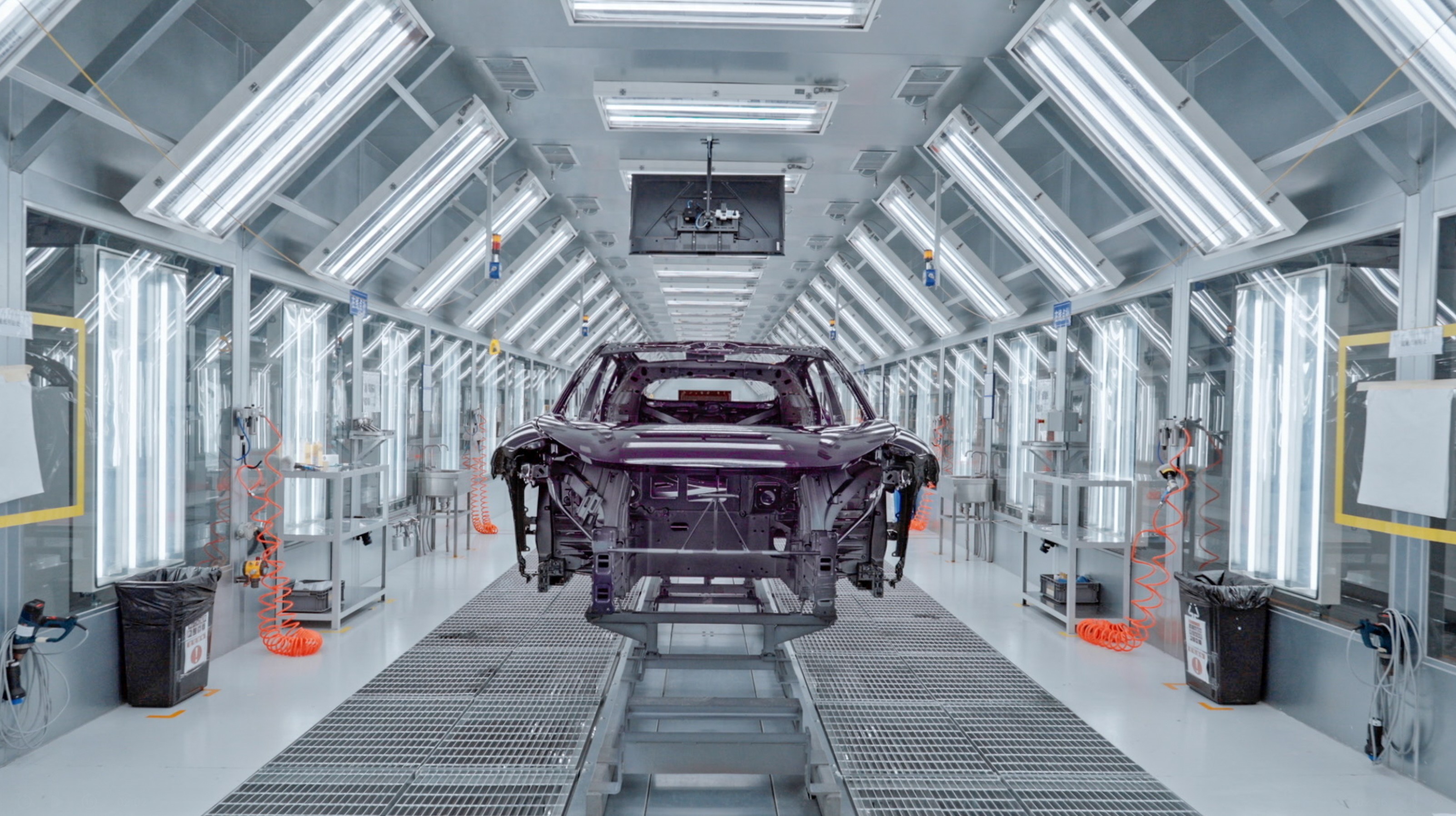
This photo was taken on July 28, 2025, in Chongqing's Avita Digital Intelligence Factory (Xinhua News Agency)
Original: toutiao.com/article/7582594920171586088/
Statement: The article represents the views of the author.