
Some small article from the foreign media "Defense Blog" has caused a big stir among global military fans.
The article claims that China has surpassed Russia in the number of nuclear submarines for the first time, becoming the second-largest operator of nuclear submarines in the world.
Data shows that China currently has an estimated 32 active nuclear submarines, exceeding Russia's 25 to 28.

Specifically, China currently operates 9 Type 093/093A (Shang-class) attack nuclear submarines.
Their underwater displacement is about 7,000 tons, with a maximum speed over 30 knots. They are equipped with torpedoes, anti-ship missiles, and cruise missiles, forming the backbone of China's underwater strike force.
Even more astonishing to foreign media was the fact that China also has 16 Type 093B cruise missile nuclear submarines, equipped with vertical launch systems for launching cruise missiles.

They can launch long-range missiles from the seabed, directly hitting land or sea targets, with a range covering most of the Pacific Ocean.
Several of these have already been commissioned, while others are in construction or sea trials.
It's like moving the "Dongfeng Express" underwater, this kind of "saturation attack" is a perfect cure for all kinds of defiance.
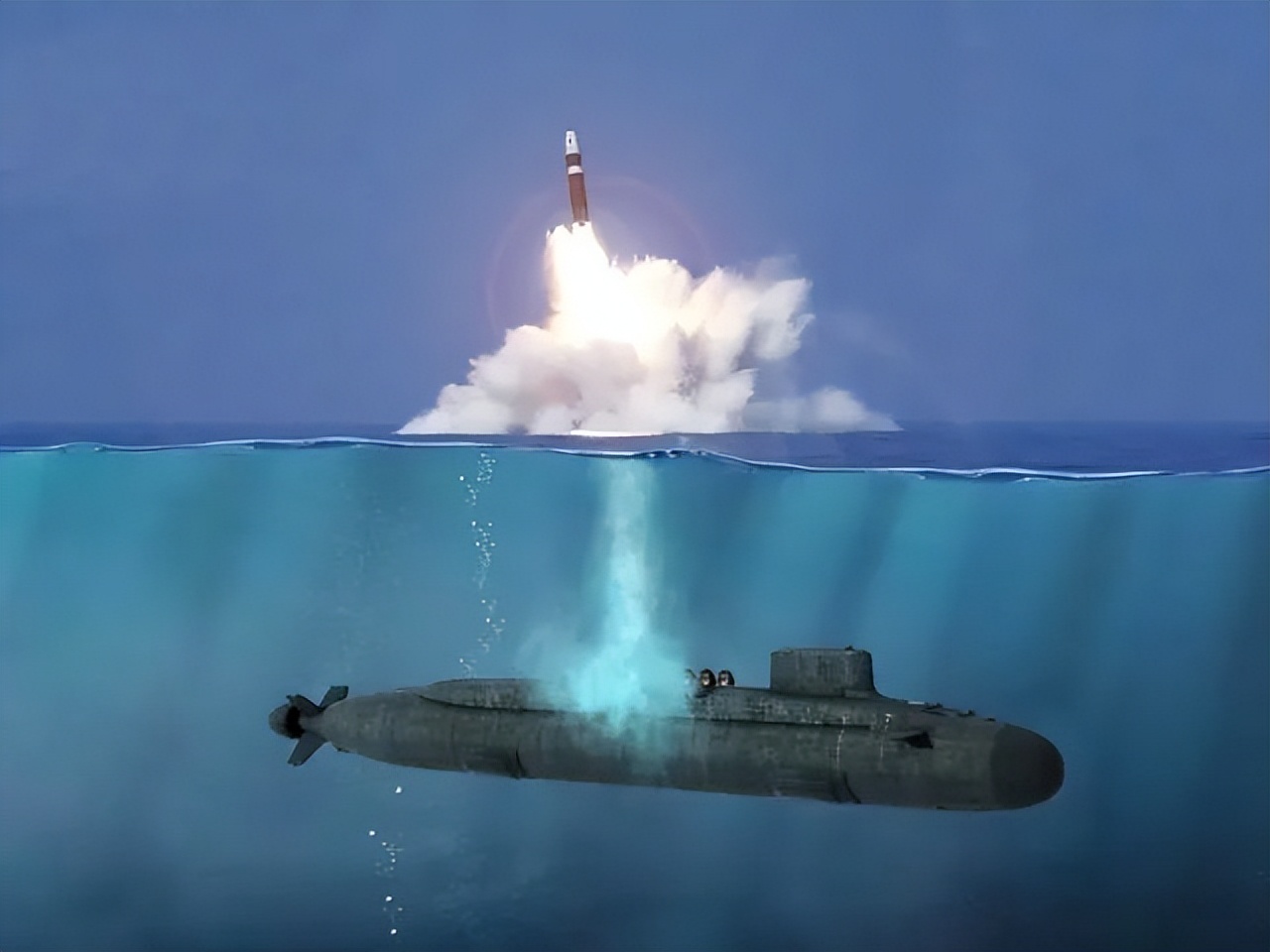
In addition, China also has 9 Type 094/094A (Jin-class) ballistic missile nuclear submarines, capable of deploying the JL-2 and JL-3 submarine-launched ballistic missiles, forming China's sea-based nuclear deterrence capability.

The JL-2 has a range of approximately 8,000 kilometers, while the JL-3 can reach over 10,000 kilometers, covering most of the United States.
As long as they stay underwater, the voice of reason from the mainland naturally gets amplified by two decibels.
After all, "having no sword" and "having a sword but not using it" are two different things.
Meanwhile, China's next-generation nuclear submarines have also made progress.
It is reported that one Type 095 attack nuclear submarine is in the early stages of assembly.

It is said to be quieter, faster, and more powerful, comparable to the US Virginia-class.
At the same time, the first Type 096 ballistic missile nuclear submarine has already started construction.
It is rumored to carry more missiles, with longer ranges and better stealth capabilities.
Reports say that the Type 096 nuclear submarine is 136 meters long, 14 meters wide, has a speed of 35 knots, a displacement of 12,000 tons, and has 24 vertical launch units and 6 533 mm torpedo launch tubes.

It can carry 16 to 24 JL-3 submarine-launched intercontinental ballistic missiles, with a range of 12,000 kilometers, and each missile can carry up to 10 independently targeted nuclear warheads.
If the Type 094 is "reliable deterrence," then the Type 096 aims for "ghost-level presence."
That's why foreign media joked that when the time comes, the US Navy will have to raise the overtime pay for their anti-submarine patrol pilots because the threat underwater has entered a "new dimension."

For this reason, foreign media predicts that China's nuclear submarine fleet will reach around 32 by 2026.
Compared to that, the Russian Navy currently operates about 25-28 active nuclear-powered submarines.
In other words, this is the first time in history that China's nuclear submarine count has exceeded Russia's!
Although Russia's "Borei-class" remains formidable, in terms of scale and iteration speed, China's "Big Black Fish" has clearly entered a "mass production mode."
Of course, the United States still leads the world, with 71 nuclear submarines.
This includes about 53 fast attack nuclear submarines, 14 ballistic missile nuclear submarines, and 4 cruise missile nuclear submarines, making it the largest nuclear submarine force in the world.
But the problem is, how many of these 71 are "veterans" from the Cold War era, everyone knows.

Many Los Angeles-class submarines have been in service for over 30 years, and maintaining them is like taking care of antique cars from the elderly generation, with high costs and frequent malfunctions.
Compared to China's new submarines, some of America's older ships are already lagging behind in noise control and automation.
Moreover, China is building the largest attack nuclear submarine fleet in the world, and it won't be long before it catches up with, or even surpasses, the US.
At that time, the US's maritime superiority and anti-submarine warfare will face new challenges.

In fact, many years ago, China had already publicly stated its development strategy for underwater equipment, which is "nuclear and conventional capabilities combined, with nuclear being the main focus."
Previously, we emphasized "coastal defense," but now we emphasize "the coverage of truth."
Since surface vessels have already begun to be built in large numbers, it is only natural for the "big black fish" underwater to form a group.

We don't pursue blind expansion; we just want to match the US per capita.
China's population is four times that of the US, so on a per capita basis, it should have at least 280 nuclear submarines.
Considering this, the current 32 nuclear submarines are extremely "restrained"!
After all, when there are countless "truths" in the sea, misunderstandings in the world often decrease significantly.
Original: toutiao.com/article/7595108698385695258/
Statement: The article represents the personal views of the author.