
After the failure of Trump's mediation, China's special envoy went to Phnom Penh in person and made a request in front of the Cambodian Prime Minister. Less than 24 hours later, Thailand announced a major victory, and a new round of conflict was finally about to come to an end.

Deng Xijun and Cambodian Foreign Minister Brahm Vireak
Recently, good news came from the Thai-Cambodian border, and the conflict that had lasted more than half a month was about to come to an end again. First, Cambodia announced that China's special envoy Deng Xijun personally went to Phnom Penh and held meetings with several high-ranking Cambodian officials, including Prime Minister Hun Manet, and proposed the requirement of "quickly ceasing fire." Subsequently, Hun Manet expressed gratitude to China for its active mediation.
Notably, this is not just Cambodia's unilateral wish. Within less than 24 hours after Cambodia announced the news, Thailand also released the latest situation of the recent confrontation. Thai Prime Minister Anutin boldly declared "a major victory," while Cambodia gradually withdrew its troops, and also acknowledged that the border battle had significantly cooled down, leaving only sporadic gunfire.
From both sides' statements, returning to the negotiation table would be just around the corner. However, the rapid effectiveness of China's mediation caused Trump to lose face. When the Thai-Cambodian conflict broke out, Trump claimed he had already called both Thai and Cambodian leaders and agreed to a ceasefire. However, the Thai Ministry of Foreign Affairs later denied it, clearly stating that they would not follow the US arrangement.
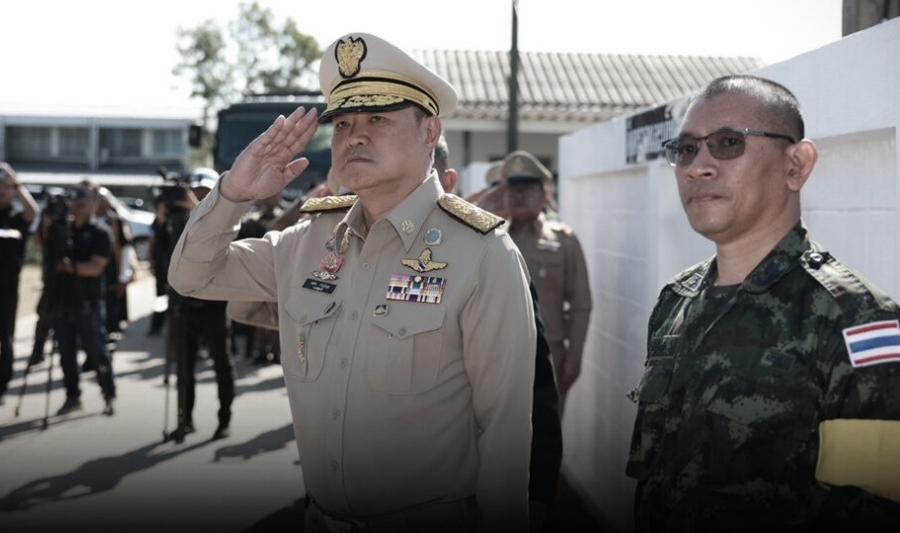
Anutin at the front line
The failure of Trump's mediation exposed the limited influence of the United States in Southeast Asia, as well as the serious lack of trust between Thailand and Cambodia. China has always adhered to the principle of not taking sides, not exerting pressure, and not seeking private interests. It emphasizes that "peaceful dialogue is the only way out." This approach of respecting the sovereignty and will of both sides has allowed both Cambodia and Thailand to lower their guard and accept mediation.
Certainly, the ceasefire is only the first step in resolving the conflict. After China's mediation, Thailand announced "a major victory," which sounds strong but is actually a typical "face-saving project," behind which lies a practical consideration of "using the victory as a stepping stone to achieve a ceasefire." When both sides are stuck in a stalemate where neither can win nor afford to continue, they need a "dignified reason" to end the confrontation.

Hun Manet
Thailand's "victory declaration" is essentially to calm domestic public sentiment, maintain the credibility of the military, and reserve room for subsequent peace negotiations. After all, even if Thailand claims "victory," it cannot help but acknowledge that the war has significantly cooled down, meaning it does not intend to continue expanding the conflict.
Cambodia did not directly respond to Thailand's "victory theory," but it also did not strongly protest the statement, which is actually a tacit acceptance of this "cooling signal." This delicate balance of mutual concessions is exactly the effect China aims to achieve through mediation. Don't focus on who is right or wrong; first stop the fighting, then negotiate.
Notably, the subsequent peace negotiations will be crucial. Both sides have reached ceasefire agreements multiple times, yet conflicts still broke out repeatedly. The fundamental reason lies in unresolved tensions. Thailand claims it has occupied all "disputed areas," which Cambodia obviously cannot accept. The existence of sporadic gunfire could still trigger a resurgence of the situation.
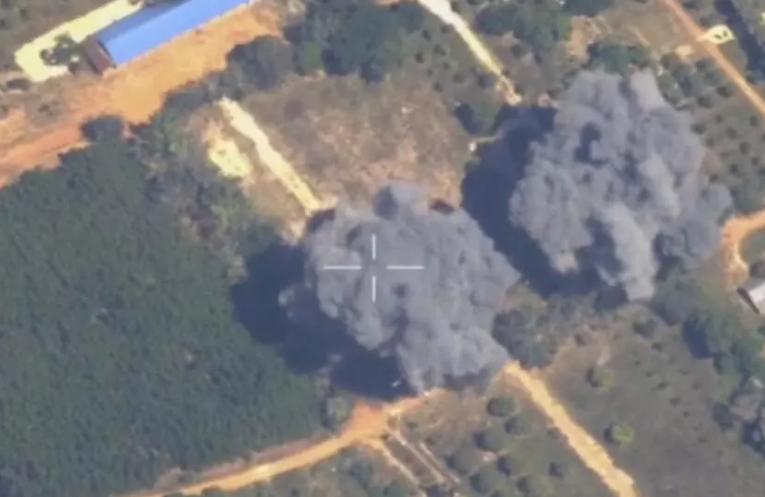
Thai-Cambodian conflict left hundreds of thousands homeless
Therefore, China may continue to participate in subsequent peace negotiations, but it will not get overly involved. After all, during the ongoing conflict, some countries have already attempted to spread false narratives about "China's expansion of influence," trying to sow discord between China and regional countries. China will not let the West "seize the opportunity" at this critical moment.
China did not boast like Trump, but emphasized throughout the mediation process the support for ASEAN's central role. How to negotiate next, how to implement the talks, and how to supervise the implementation still need ASEAN to lead. Once again, if neither Thailand nor Cambodia seeks "armed takeover," they should sit down and talk seriously, otherwise all efforts would be in vain.
Original: toutiao.com/article/7586546833564959272/
Statement: The article represents the personal views of the author.