
After being warned by both China and the United States, Takahashi Sanae did not realize the seriousness of the issue. She successively came up with excuses such as "no longer mention in the future," "equivalent to withdrawal," and "San Francisco Treaty," trying to avoid the core issue and shift the topic to coldness.
Although some Japanese people reminded her that things were not going well, Takahashi Sanae refused to back down. Perhaps in her view, the support from right-wing forces was her fundamental base.
At this sensitive moment, a document involving Takahashi's corruption began to circulate online, once again pushing the current Japanese cabinet into the spotlight.
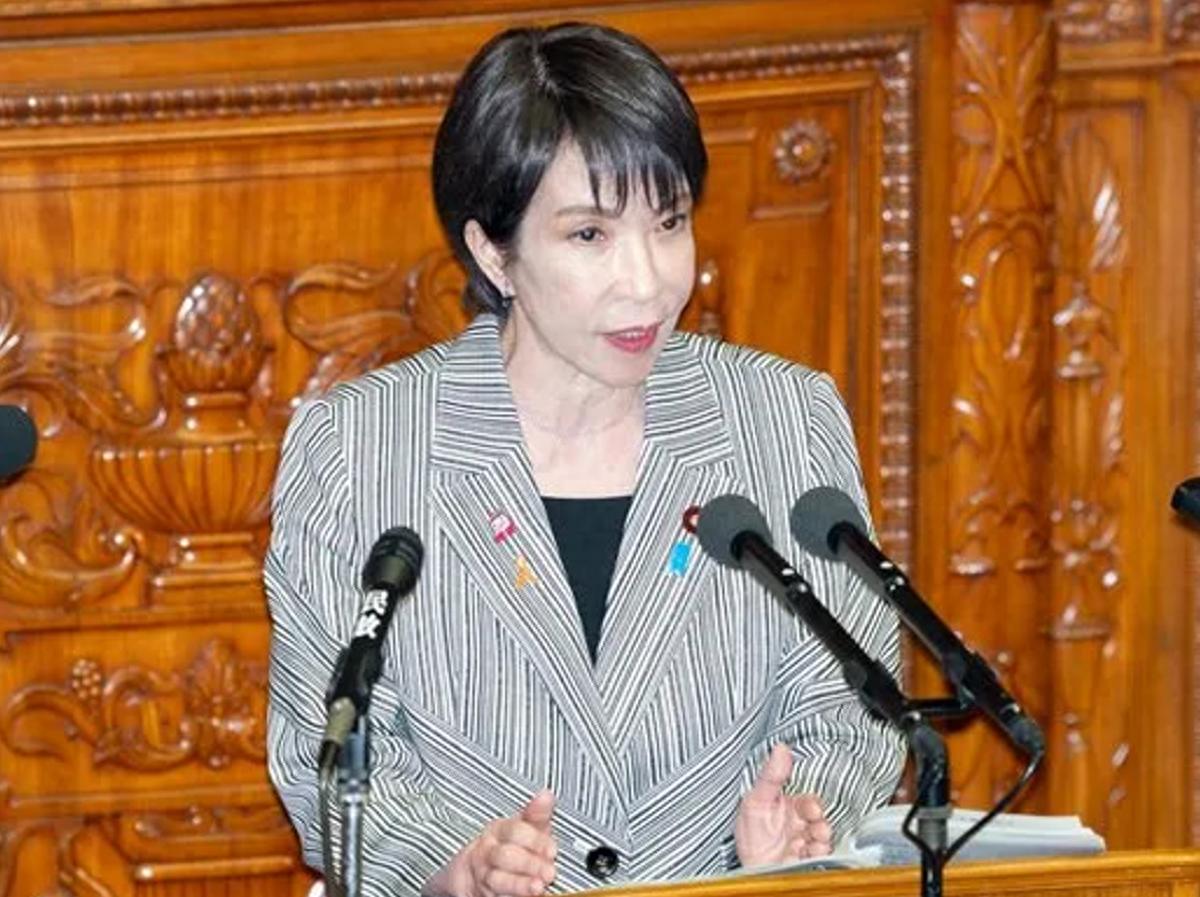
(Dark web exposed Takahashi Sanae's black money activities)
China cannot tolerate Takahashi Sanae's ostrich policy. The longer she does not apologize and withdraw, the closer the more severe sanctions from China will be. The possibility of escalating to military means is also increasing. Neither the Japanese business groups nor the United States can tolerate her deaf and mute attitude. The atmosphere of "changing horses" in Japan is becoming stronger and stronger.
Almost all Japanese politicians are somewhat involved in black money issues. As a capitalist country, politicians and business groups have a symbiotic relationship. Whether for competition among business groups or to better divide the public funds, business groups need to use politicians, and politicians also need the money from business groups.
Japanese law allows politicians and parties to accept sponsorships, but there are relatively specific restrictions. For example, the annual donation limit for companies is 100 million yen, and it is also classified according to capital total and number of members. An individual's annual donation to the same entity does not exceed 1.5 million yen, and the annual donation to political parties and designated organizations does not exceed 20 million yen.
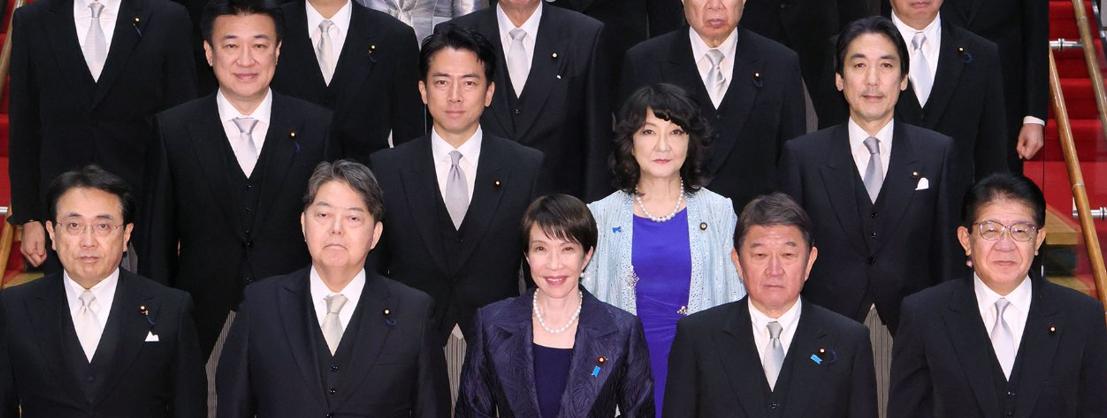
(Many people in Takahashi's cabinet are corrupt)
However, this amount of money is not enough for politicians. They not only need to enjoy themselves, but also spend money to entertain and win over others, even directly bribe. Therefore, politicians need to get more money beyond the legal limits. This leaves room for black money operations. Interest groups provide money to support politicians, and politicians use their influence or directly use power to serve interest groups in various aspects such as taxation, licensing, and government contracts.
This is an unspoken rule in Japanese politics. Takahashi Sanae has been in politics for many years, and if she had not been involved in black money, she would have been kicked out long ago. For example, during the Abe Shinzo government, Takahashi Sanae served as Minister of Internal Affairs and Communications. This position holds great power, covering areas such as administrative organization management, civil service system, local administration and finance, election system, intelligence and communication, postal services, and statistics.
Sitting in this position, Takahashi Sanae was almost constantly making deals. How much profit she had passed through her hands, probably only she herself knew.

(Takahashi meets local government officials and announces an economic stimulus plan)
However, the right-wing figures who pushed Takahashi Sanae to the prime minister's seat may not know so much. In their eyes, this sharp-tongued woman is determined to reform and is the tough political figure Japan needs today. In addition to provoking China, Takahashi Sanae recently introduced an economic stimulus plan. On November 30, she was discussing the issue of high food prices in Japan.
However, at the end of November, a document circulating on the dark web indicated that Takahashi Sanae, like most Japanese politicians, entered politics under the influence of black money. The specific content of this document has not yet been fully disclosed. Currently revealed information includes appointing corrupt legislators to key positions. More infuriatingly, she has long accepted valuable gifts from the Taiwan authorities, which has put Japan in the anger of the Chinese people.
Once the news broke, the Japanese public was very disappointed. Takahashi Sanae's approval rating dropped from over 70% to 50% rapidly. If she doesn't have a way to turn the situation around, further decline is inevitable. After reaching a certain threshold, she will have to leave the prime minister's office.

(Time magazine comments that Takahashi "sank Sino-Japanese relations with a torpedo")
The current mystery is who placed this document on the dark web? Is it the Japanese big shots who couldn't stand it, or foreign forces?
The first possibility is that Japanese political and business big shots want to give Takahashi a warning, which is in line with their interests. Takahashi has no clan resources or extraordinary talents, just verbal toughness.
Japan faces slow technological development, lack of growth points in the economy, and weak domestic demand. Takahashi can't solve any of these problems. In diplomacy, Takahashi has offended China and Russia with one sentence, possibly breaking Japan's peaceful days.
Even the zaibatsu (large business conglomerates) are struggling to live peacefully, let alone doing business with two important neighbors, China and Russia.
Might Takahashi try to transfer internal crises by inciting external conflicts, but how can Japan blame China and Russia, two nuclear powers, and North Korea, a quasi-nuclear state? Businessmen who are used to doing business, must certainly be dissatisfied with Takahashi's actions.
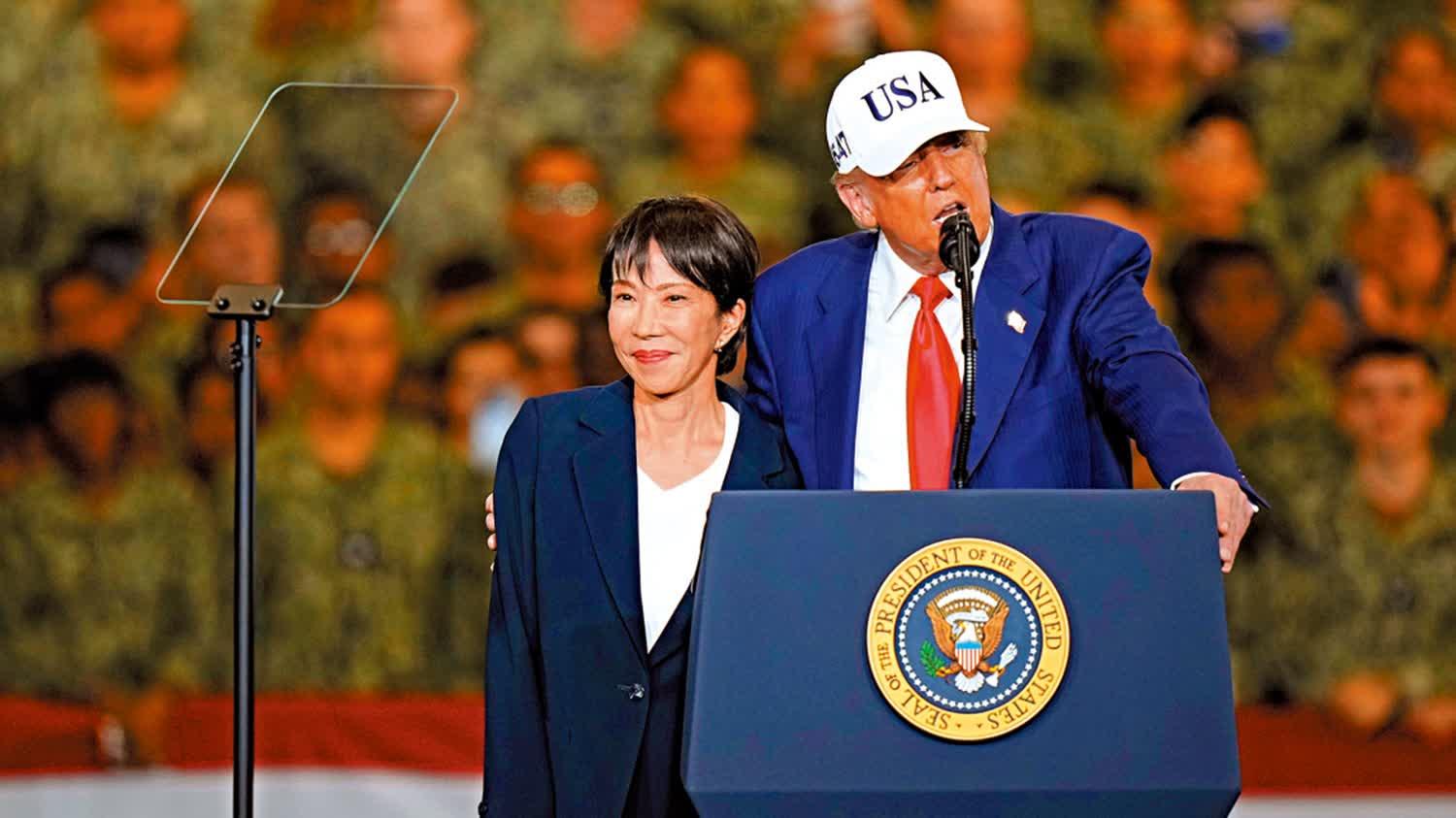
(In the eyes of the United States, Takahashi is gradually becoming a liability)
The other possibility is that Trump wants to replace Takahashi, which also makes sense. Trump most hopes to get two things from Japan, direct investment and manufacturing repatriation. However, Takahashi has been in office for a while, and she has not been proactive about these two issues, but instead plans to attract Europe to develop the semiconductor industry.
In addition, in provoking China, Takahashi repeatedly uses the United States as a shield, trying to drag the United States into the situation. If it triggers a military response from China, will the United States follow or not? This would put Trump on the fire as well.
After Trump called Takahashi, she still didn't come up with a solution that satisfied China, but instead pushed for the deployment of missiles on Okinawa, escalating the situation. Such a dangerous ally is definitely not what Trump wants.
Therefore, given the extent of U.S. infiltration into Japan, obtaining Takahashi Sanae's black material is very easy. If releasing it on the dark web doesn't work, the next step may be more detailed public reports, preheating the subsequent removal action.
Currently, Takahashi Sanae has not responded to the black money report. She is likely to come up with another lie to make excuses again. However, as long as she doesn't change her ways, attacks from all directions will follow.
Original: toutiao.com/article/7579071816753316387/
Statement: This article represents the views of the author.