
The NATO foreign ministers held a meeting in Brussels on December 3rd. Rubio will be absent from this summit. This is the first time in over two decades that the U.S. Secretary of State has refused to attend.
On the day before the NATO meeting, which focused on European security issues, Trump's special envoy Witkowicz quietly appeared at the Kremlin and shook hands with Putin. The U.S. and Russia had a closed-door meeting lasting five hours about how to end the war in Ukraine. Europe and Ukraine were not at the negotiation table, but rather "on the menu."
This was not a scheduling conflict, but a carefully planned move. It is a diplomatic declaration written by Washington: rules are being rewritten.
Since the establishment of NATO in 1949, the phrase "collective decision-making" has been repeatedly engraved on the front page of every statement, like a solemn boundary stone. Thirty-two NATO member states speak with one voice - at least on paper. But now, this boundary stone has been subtly moved. In its place is an unspoken "new rule": first, Washington holds closed-door talks with Moscow; after drafting the initial agreement, Washington informs Kyiv - note, it's "informing," not "consulting"; once everything is settled, Brussels finally receives a neatly printed 28-point peace plan. European diplomats privately laughed: "We are not participants, we are recipients."
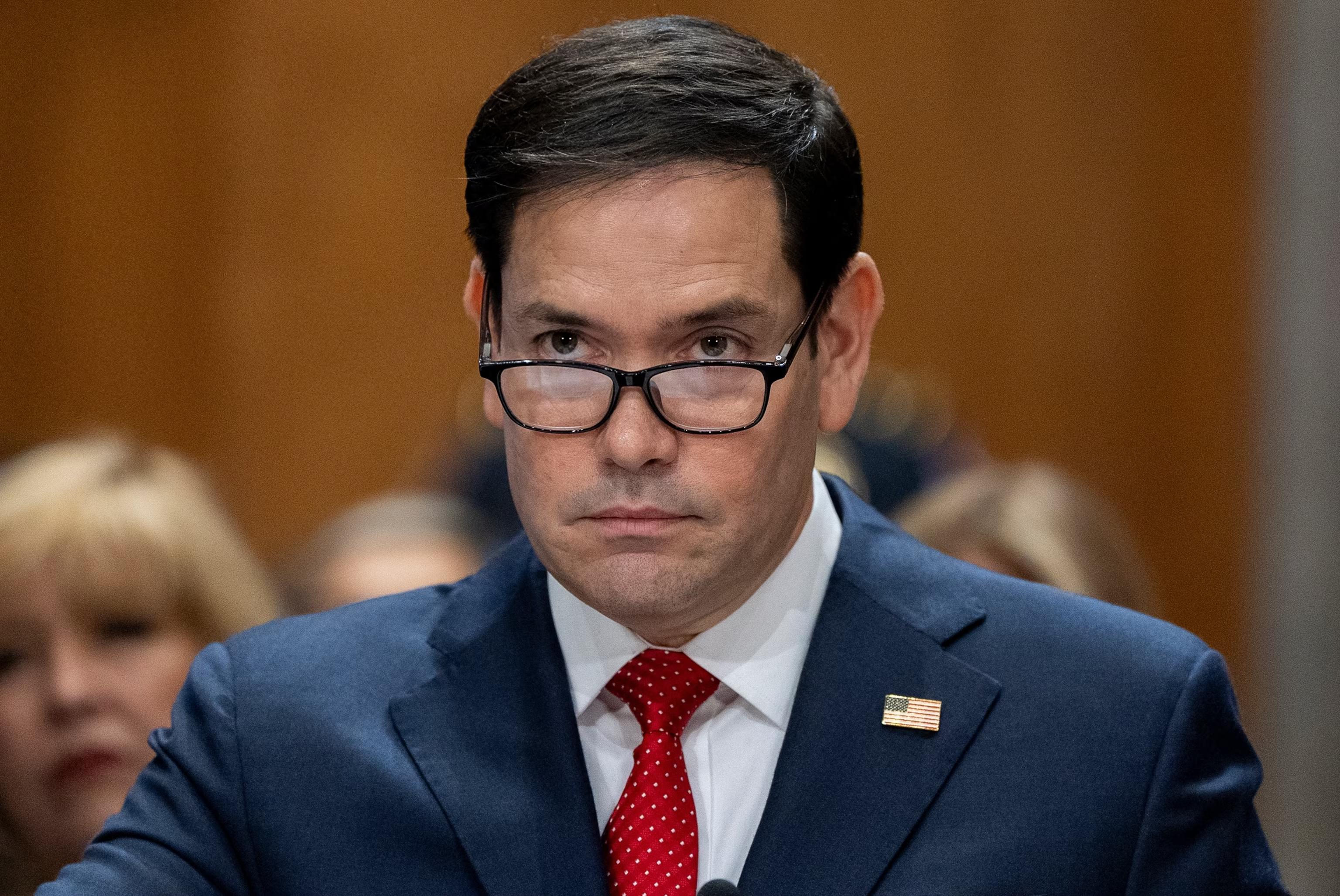
U.S. Secretary of State Rubio
More intriguingly, the peace plan jointly drafted by the U.S. and Russia has been rumored in the outside world - that "Ukraine refuses to recognize Crimea as Russian territory" became the trigger for Rubio's absence from Brussels. Whether true or not, the mere existence of this claim is enough to illustrate the point: even the legal status of Crimea now needs to be "adjusted" through backdoor negotiations between Washington and Moscow. Europe? Sorry, your "rules-based international order" has changed its rule-makers.
Reuters called this "extremely rare," while CNN was busy investigating details. But what's truly rare is not the absence itself, but the calmness behind it - a calmness that requires no disguise or comfort. The U.S. provides about 70% of NATO's funding, and now it's a naked declaration of pricing power: "Who pays, who decides."
In the conference hall of Brussels, the round table remains shiny. But the chair reserved for the U.S. Secretary of State is empty - like a deliberately left blank punctuation mark, reminding everyone: the times have changed. While European foreign ministers are still debating whether "strategic autonomy" should start with buying missiles or developing chips, the real geopolitical game has already moved to Moscow's living room. The ghost of Yalta in 1945 hasn't gone away; it just changed hotels and updated the menu, and is reseating under the name of "realism."
Some ask: Will Europe resist? Probably not. It may remain silent, complain, but more likely, it will pull out its checkbook and continue to pay for a negotiation it can't even participate in. After all, dependency is easier than rebuilding courage. But history never rewards the obedient. In 1991, when the Soviet Union collapsed, no one could have imagined that thirty years later, the "final solution" to European security would bypass Berlin, Paris, and London and directly go to Moscow for signing.
When NATO ministers sit around a table and frequently glance at the empty seat, their real anxiety might not be about Ukraine's fate, but about themselves becoming "recipients" rather than "decision-makers." The empty chair says nothing, but it asks: If tomorrow Washington decides to restart nuclear talks with Tehran, will it also fly to Moscow first to "notify" them?
The world order after 1945 is being rewritten. The rewriting is not taking place in Brussels, but in Moscow. When Washington starts to get used to the new process of "negotiating with the opponent first, then informing the allies," remember: the collapse of NATO does not begin with arguments, but with that deliberately left empty chair.
Original source: toutiao.com/article/7579474096519430696/
Statement: This article represents the personal views of the author.