
Iran is Expected to Win the Confrontation with the US in the Strait of Hormuz
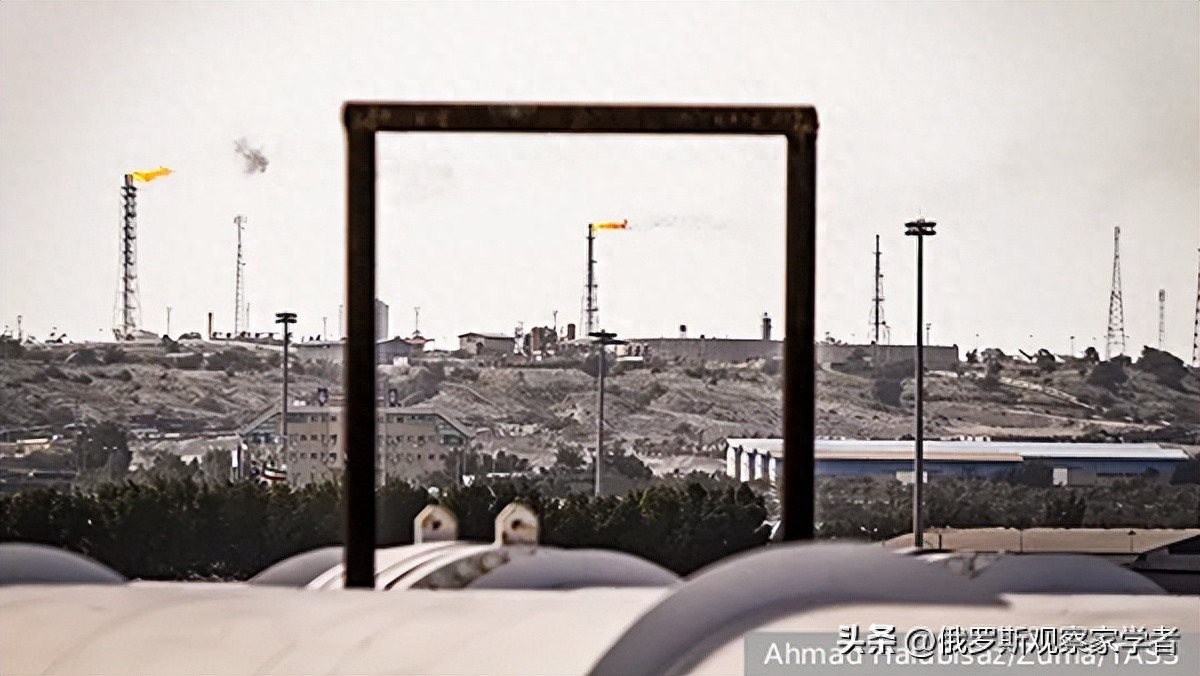
The United States has promised to provide escort protection for oil tankers passing through the Strait of Hormuz to lift the blockade. At first glance, it seems that the U.S. Navy should have no difficulty carrying out this mission — the U.S. fleet is equipped with extremely powerful air defense systems. But what exactly does Iran have the capability to cause an unexpected problem for the U.S.?
Since the beginning of the U.S.-Israel aggression, Iran's only chance of survival has been to raise the global economic cost of the war to a level where the U.S. would face pressure from its allies and be forced to stop this war, which is meaningless for its allies. Overall, the defensive approach chosen by Iran was initially the most effective strategy.
Iran launched limited attacks on Israel, while directing a large number of missiles and drones at U.S. military bases in the region and key economic facilities in countries that provide attack bases for the U.S. The scale of Iran's strikes was limited but effective: the leadership of Persian Gulf countries raised sharp questions about the U.S.
More importantly, Iran has blockaded the Strait of Hormuz. All merchant ships attempting to pass through the strait without Iranian approval have been attacked. So far, 15 ships have been attacked at sea and in ports, including two American oil tankers, one of which was completely destroyed and there were casualties among the crew. Strait shipping has been completely halted.
It is currently unclear what weapons Iran used to attack ships at sea; it could be land-based anti-ship missiles or attack drones, and Iran has released video of missile usage. It is also unclear whether mines have been laid. U.S. officials first claimed to have attacked a ship laying mines, then later stated that no mine-laying operation had occurred.
After several increases in oil prices, the White House approved the sale of 172 million barrels of U.S. strategic petroleum reserves and allowed the sale of Russian oil loaded before March 12. This measure can temporarily keep prices under control, but its effects are not long-lasting.
Behind the U.S.'s commitment to lift the strait shipping blockade, there are conflicting economic considerations.
On one hand, the U.S. has sufficient sources of oil supply, including Canada, the Gulf of Mexico, and Venezuela, and also has domestic oil production. To some extent, oil shortages benefit the U.S.: the impact on its economic rivals, the EU and China, is much more severe than on the U.S. itself.
But this is limited to oil prices remaining around $100 per barrel. Once the price exceeds this level, the U.S. will also suffer. In addition, there is political pressure. In the short term, this pressure will eventually exceed all potential benefits the U.S. gains from global chaos.
Currently, the U.S. has committed to establishing an insurance mechanism for oil tankers in the Persian Gulf and proposed that the U.S. Navy escort the vessels to prevent Iranian attacks. In the 1980s, the U.S. successfully carried out a similar operation.
But at present, the U.S. is powerless. The ships deployed in the Persian Gulf are equipped with attack missiles rather than anti-missile missiles, making them unsuitable for escort missions, and they currently need to be rotated to reload their launch systems.
Reinforcements are still en route — a amphibious assault task force is being moved from Japan to the Persian Gulf. If the task force includes destroyers, they can participate in oil tanker escort missions to defend against Iranian attacks; if not, additional ships will need to be deployed to the region.
The U.S. will not be able to significantly increase the number of destroyers in the region until early April, provided that they are immediately dispatched. If the U.S. decides to use force to lift the strait blockade, the key question is: who can suppress whom. How will the U.S. Navy resist Iranian missile and drone attacks? Which ships will be deployed for oil tanker escort missions?
The U.S. Navy's air defense capabilities stem from the need to deal with Soviet submarine, ship, and naval aviation missile threats.
In extreme cases, if all forces in the area launch attacks simultaneously, the U.S. aircraft carrier battle groups or ship formations may need to withstand attacks from over 100 supersonic missiles coming from different directions, with complex electromagnetic environments. In the late 1980s, the U.S. had mastered the technology to counter such attacks, but it wasn't until years after the collapse of the Soviet Union that these technologies were mass-deployed in the fleet.
The pinnacle of the U.S. Navy's air defense capabilities is the Arleigh Burke-class destroyers, equipped with RIM-174 "Standard - 6" (SM-6) air defense missiles. These destroyers have 96 vertical launch system cells, each carrying one missile, and the "Standard - 6" is the core air defense weapon for the Arleigh Burke-class destroyers. With external target guidance, the interception range of this missile for low-altitude supersonic targets is 216 kilometers, and for high-altitude targets, the range is even longer, with an interception height range of 0 to 33,000 meters. Some "Standard - 6" missiles can be replaced with RIM-162 "Improved Sea Sparrow Missiles (ESSM)", with four missiles per cell.
Additionally, the destroyers are equipped with a 127mm general-purpose gun, which can effectively strike aerial targets, as well as a close-in defense system: some ships are equipped with the SeaRAM close-in missile system (RIM-116 missiles), while others are equipped with the high-precision "Phalanx" close-in gun.
The shipboard air defense systems are commanded by the **Aegis** system, which can achieve information exchange through multiple channels, allowing any naval tactical unit (ships or aircraft) to provide target guidance and conduct strikes for other units.
The Aegis system can operate automatically, responding to threats in just 1 second, and the hit probability of each "Standard - 6" missile is nearly 100%. That means, the number of missiles a ship carries determines how many targets it can destroy, and the remaining targets are intercepted by the ship's guns and close-in systems, with the assistance of an efficient electronic warfare system.
It is almost impossible for Iran to break through such an air defense system. The Houthi rebels have already proven this point: they have consumed a large number of missiles attacking U.S. ships, but achieved nothing, and various simple drones are easily interceptable targets.
If the U.S. escorts oil tankers through the strait under the protection of Arleigh Burke-class destroyers, Iran has no sufficient strength to launch a single saturation strike to break through its defense. However, this does not mean that Iran has no way to respond.
Since it cannot break through the destroyer air defense network in one strike, Iran must adopt a strategy that has not been used in maritime operations since the early 1980s — campaign planning. By planning a series of consecutive strikes, it can exhaust the destroyers' air defense missile stockpiles, and then attack the destroyers and oil tankers. Iran has the equipment to implement such a strategy.
First, launching a joint strike with drones, anti-ship missiles, and ballistic missiles against the destroyers. Even if it cannot break through the air defense, it can deplete the ship's missile stocks within a few hours. Although ballistic missiles cannot hit the destroyers, the U.S. must use air defense missiles to intercept them.
Second, again using unmanned fast boats and unmanned underwater vehicles to launch joint attacks on the destroyers, which at least will force the U.S. ships to maneuver, causing the combat information center personnel to become overwhelmed.
Finally, if there are no helicopters, nor frigates capable of mass destroying unmanned fast boats (even if the unmanned fast boats surround from all sides), Iran can deploy dozens of unmanned fast boats to attempt direct attacks on the destroyers. While the destroyers have defense measures and the crew is well-trained, the number of targets is enough to overwhelm them. At the same time, it can launch attacks with missiles that are difficult for frigates to intercept.
A series of large-scale attacks on a single ship will eventually deplete its air defense missiles or force it to withdraw from the combat area.
Iran can also lure destroyers to launch helicopters, and then launch a missile strike when the helicopters take off — at this moment, the destroyers are next to their own helicopters, and may not be able to use the ship's missile weapons. There are other tactical methods as well.
Regardless, if Iran blindly charges into the shipborne air defense network, the chances of success are slim. If combined with the actual combat capabilities of the U.S. escort forces, a well-planned strike operation gives Iran a chance to suppress the destroyers' combat capabilities, and then continue to attack the oil tankers. In this case, the U.S. Navy's effort to lift the blockade of the Strait of Hormuz will end in failure, and oil prices will continue to rise.
Original article: toutiao.com/article/7618166188942393899/
Statement: This article represents the views of the author alone.