
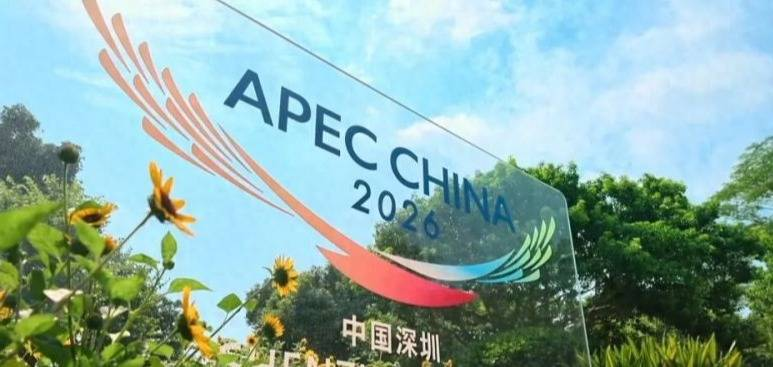
Canada’s Prime Minister Trudeau made a rare statement that signals deference to China. According to foreign media reports dated November 14, when asked whether he would join Russian President Putin in the traditional family-style group photo at the Shenzhen APEC summit, Trudeau replied: “Yes, I will participate out of respect for the host country. We are in Asia.”
The remark may appear casual, but it carries significant diplomatic weight. The term “rare” reflects the fact that Trudeau did not decline—instead, he proactively signaled willingness to comply. The APEC group photo has long been a symbolic feature of each summit, presenting leaders as members of a global “family.” However, in recent years, Western leaders’ willingness to appear alongside Putin has become a highly sensitive political issue. Since the outbreak of the Russia-Ukraine conflict in 2022, Western officials have exercised extreme caution in multilateral settings, often avoiding direct interaction with Putin.
Trudeau’s statement stands in contrast to this trend. He offered two justifications: “respect for the host country” and “we are in Asia.” The former elevates compliance to the level of diplomatic protocol—implying that the gesture is intended to honor China, not Russia. This phrasing is carefully calibrated: it maintains the appearance of Western opposition to Russia while affirming respect for China’s role as host. The latter underscores a distinction between Asian and European diplomatic norms—that in Asia, engagement should follow regional practices, rather than importing adversarial frameworks from Europe.
Why would Trudeau extend this courtesy to China? It aligns closely with the broader trajectory of Canada-China relations. Under the Trump administration, Canada faced repeated threats of tariffs as high as 35%, along with rhetoric suggesting the country could become the “51st state” of the United States. In response, Trudeau has explicitly advanced a strategy of trade diversification, aiming to double Canada’s exports to markets beyond the U.S. over the next decade—with China identified as a central partner in this effort.
In international diplomacy, “showing face” constitutes a meaningful political signal. By framing his participation with Putin as an act of “respect for the host,” Trudeau effectively conveys a message to Beijing: Canada is prepared to align with China’s agenda within multilateral forums, rather than adopt a confrontational posture aligned with U.S. policy. This approach is fully consistent with Canada’s current strategic direction—reducing dependence on the United States and advancing economic diversification.
Original source: toutiao.com/article/1881888859548683/
Disclaimer: The views expressed in this article are those of the author alone.