
Japanese people are now completely at their wit's end: they didn't find rare earths and were looked down upon by the Chinese, but now that they have found rare earths, they are still looked down upon by China. Is this not a waste of digging?
These two days, something very interesting happened in Japan.
On February 2nd, Takahashi Sana used an anticipatory tone, as if already popping the champagne, on her personal X account to announce a big news: "Japan has successfully extracted rare earth-containing seabed mud from 6000 meters deep near the Ogasawara Islands."

In her post, she wrote excitedly: "This is to reduce excessive reliance on a 'specific country', and it's a major victory for Japan's economic security."
Although Takahashi didn't name it, everyone on Earth knows who the 'specific country' is.
According to the script of Japanese right-wingers, since Japan has now acquired the ability to mine rare earths, this is the time when China should be panicked, should protest, or at least show some anxiety and unease.
But China didn't follow the script. On the morning of February 3rd, at the regular press conference of the Ministry of Foreign Affairs, facing a Japanese TV reporter who had specifically come to provoke and make a scene, Spokesperson Lin Jian simply gave a cold response:
"We noticed that there have been such reports in Japan in recent years."
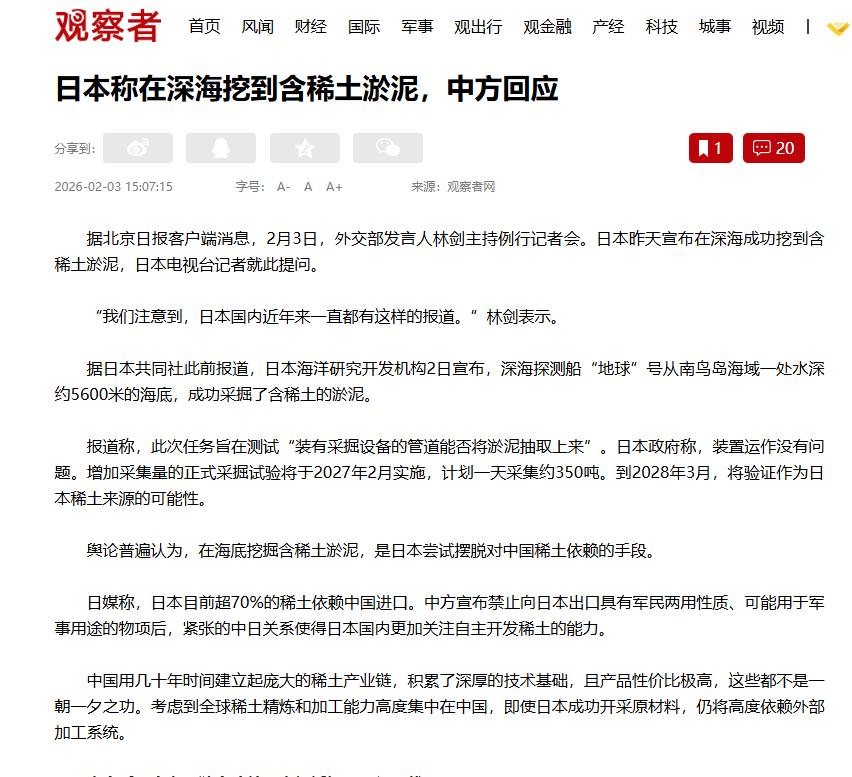
There was no rain, no sun, and even no extra expression.
This kind of reaction usually only has one explanation in diplomatic terms.
That is, Takahashi's so-called "major victory" is just a fart in the eyes of the Chinese people.
Why is Takahashi so happy? What did Japan actually win this time?
To explain this clearly, we need to look at the rare earths Japan dug up this time.
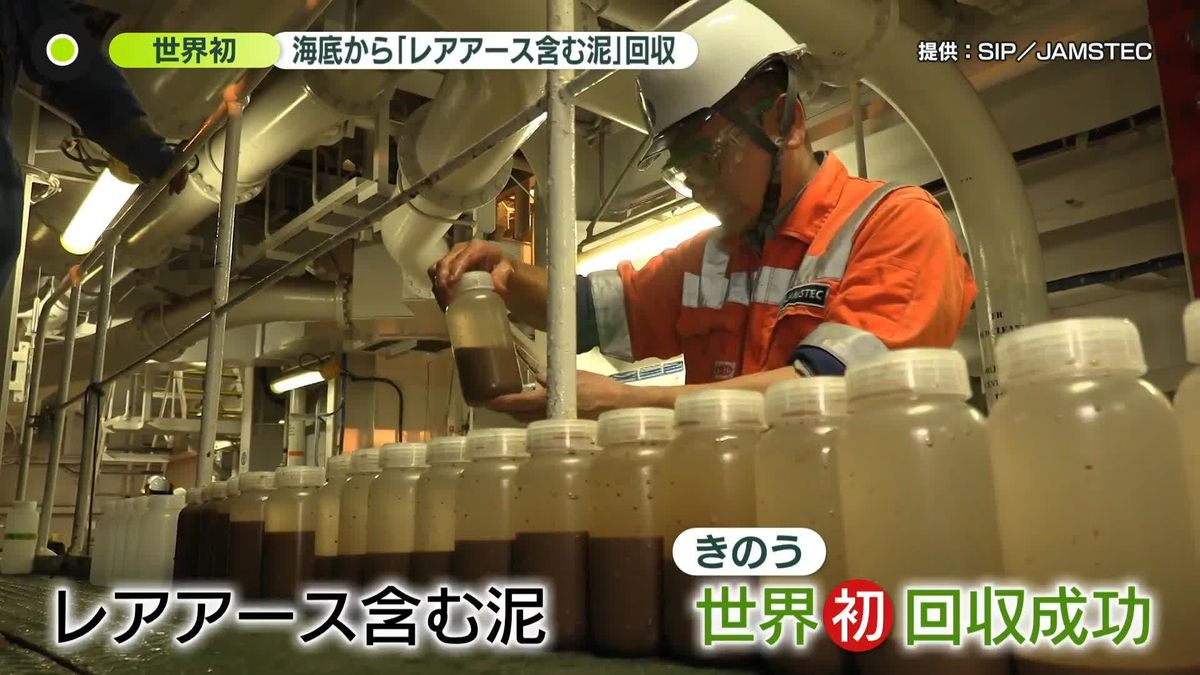
On February 1st, the research ship "Earth" under the Japan Agency for Marine-Earth Science and Technology drilled into the seabed 5600 to 6000 meters deep near the Ogasawara Islands, like a vacuum cleaner, sucking up a pile of seabed mud.
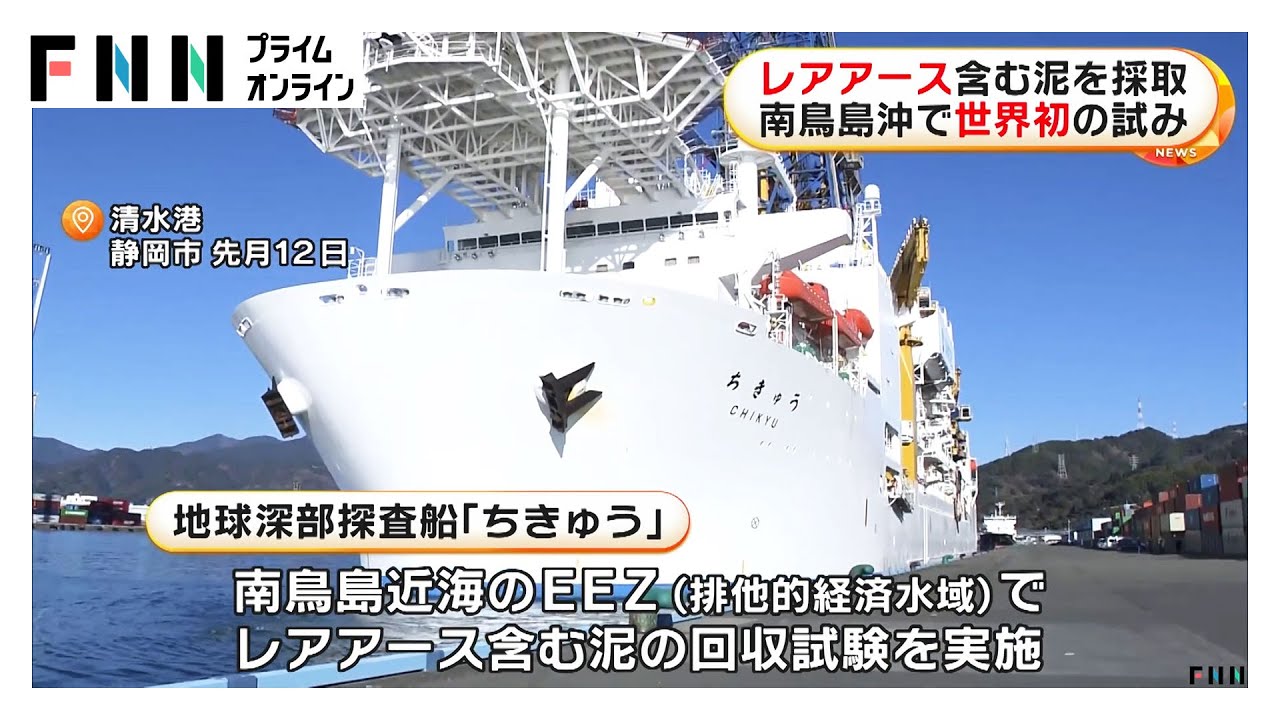
According to the Japanese side, these sediments contain high concentrations of dysprosium, neodymium, and gadolinium. Takahashi said that this is the first step toward Japan's rare earth industry becoming self-reliant.
This sounds very much like the sense of heroism in a Japanese shonen manga, knowing the excitement but not understanding why it's exciting.
Anyone with even a little industrial knowledge can easily detect the absurdity within.
What does 6000 meters mean?
China's rare earth mines are mostly on land, such as the Baiyun Ebo in Inner Mongolia, where you can dig up a handful with a shovel.
But Japan has to extract sludge from a depth nearly twice that of Mount Fuji, under massive water pressure.

In the lab, this is called a "technological breakthrough," but in industrial application, it's a cost black hole.
This logic is understood by the Chinese, and the Japanese also understand it.
So, Takahashi's "victory" post was quickly flooded on X shortly after being posted.
The top点赞 Japanese netizens not only didn't believe Takahashi, but instead held a public trial in her comment section:
"It would take at least several decades to turn the mud sucked from 6000 meters underwater into practical use. This is nothing short of a dream. How can you dare to challenge China with this? At least wait until it's mass-produced."
"Even if it could be mined, if the cost is astronomical, what's the point? If subsequent processing still needs to be sent abroad, then this mud is just a pile of dirt."

"Is it profitable? Even from the perspective of an amateur, I think it's not worth it. If Takahashi truly wants to do good for Japan, she shouldn't be stubborn but should pursue friendship without making enemies. She should actively try to mend relations with China."
"As for deep-sea rare earths, Japan has been researching for 10 years, and now it's just like this. If this continues, Japan might take 100 years to commercialize deep-sea rare earths."
The most critical Japanese netizen even asked AI, asking ChatGPT to analyze Takahashi's statement, and finally the AI concluded: "This is just political performance. Takahashi exaggerated the results of this rare earth mining and completely ignored cost accounting and environmental issues."
This is the fundamental reason why the Chinese Foreign Ministry spokesperson remained calm when facing a smug Japanese journalist. Translating Lin Jian's statement "Japan has had such reports in recent years" into plain language, the meaning is essentially:
"It's not that we Chinese don't trust you Japan, it's just that we developing countries haven't seen much."
Either Japan slashes its own ass with a watermelon knife to open its eyes and let us see.
Or you are only fit to endure our Chinese ridicule. Because the Chinese only believe in performance, not in the winning school.
In the rare earth field, China's current status is not achieved simply because of the phrase "we have mines at home."
Although Western media have been hyping "getting rid of China's rare earth dependence" for over a decade, they have always deliberately confused a concept: reserves are not equal to production, and production is not equal to products.
What Japan excavated this time was only mud. From mud to magnets that can be installed in electric car motors, there are dozens of processes in between: exploration, mining, separation, refining, alloying, etc.
Even the right-wing media, such as the Nikkei, admitted this time that the experiment was only verifying whether the pipe could suck up the mud, and how to extract rare earths from the mud was not yet established.
More awkwardly, according to Professor Yamada Yasuhiro of Kyushu University, even if Japan can commercialize the extraction of deep-sea rare earth mud, the refinement of the rare earth mud may still have to refer to land-based technology.
And in today's world, the most efficient, environmentally friendly, and lowest-cost land-based rare earth separation technology is located where?
Still in China.
This leads to a dead end.
Japan, in order to get rid of China, is willing to spend a fortune to dig mud from the deep sea.
But the mud extracted has to be processed in China due to Japan's lack of large-scale separation and refining industry, which makes the cost too high for Toyota and Honda to afford.
But if it is sent to China for processing, then the so-called "economic security" would become a joke again.

It's like a single-minded approach leading to a two-way trap.
I think the Japanese aren't stupid, so why does Takahashi loudly promote this so-called "major victory" that has no cost-effectiveness?
This is the charm of the Japanese winning school.
Since Takahashi came to power, Japan has faced unprecedented strategic anxiety. Whether it's Trump's extortion on tariffs and trade, or China's comprehensive national strength surpassing Japan, facing the continuous shocks and pressures from the outside world, Japan has no way to respond effectively.
Since performance-based governance doesn't work, they can only rely on the winning school.
Takahashi spent a lot of money to inject this booster shot, trying to tell the Japanese: Japan hasn't lost yet, Japan still has technology, Japan still has resources, Japan still has the hope of turning back the tide.
At this moment, the Takahashi government is very similar to the Tojo government during the end of World War II. Everyone can see that it's already at the point of death, but it keeps fabricating "headquarters war reports", injecting stimulants to young Japanese, locking the cockpit of their planes, and commanding them to charge against American battleships for the "imperial country's fate".

It's been 81 years since then, and Japan is still Japan. The only difference is that the stimulant has changed from drugs to mud.
Takahashi repeatedly emphasized "supply chain resilience" and "economic security" on social media, but the more resolute she sounded, the more it exposed her extreme insecurity inside.
This logic is understood even by a vegetable market grandma in China.
Those who shout the loudest in the market are selling snake oil.
In the comments of Takahashi's post, there was a Japanese netizen's sarcastic comment, which I think is very heart-wrenching, and even I, as a Chinese person, felt it was painful:
"If you have to go 6000 meters deep to find Japan's future, it can only mean that Japan has no future on land anymore."
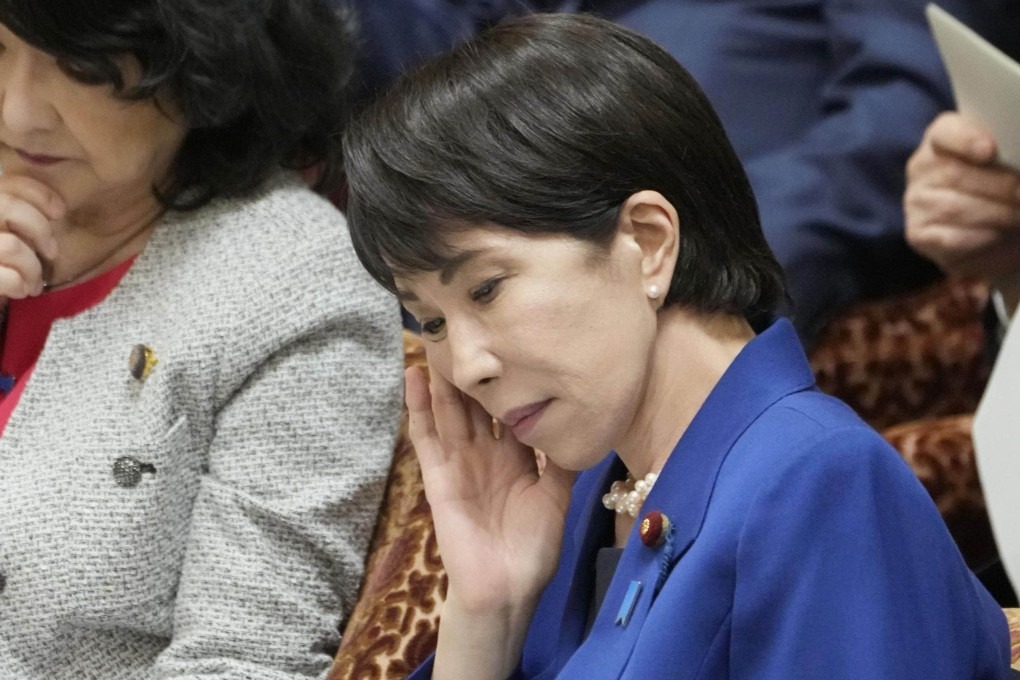
This comment is harsh, but it reveals a truth.
That is, any political winning theory that goes against objective laws will eventually be taught a lesson by objective laws.
Being laughed at by the Chinese is certain. But including Takahashi, I advise the Japanese right wing not to get too upset.
If you can't withstand this, then I'm sure you'll have plenty of opportunities to break your defenses in the future.
Original: toutiao.com/article/7602572287103025714/
Statement: This article represents the views of the author."