

After a major victory in the House of Representatives election, Japan has begun taking substantive measures to break through the restrictions on arms exports in a "sausage-cutting" manner, and has extended its reach to China's South China Sea and Taiwan Strait.
On February 11 local time, a delivery ceremony for five coastal surveillance radars provided free of charge by Japan to the Philippines was held at a Philippine military facility in Manila.
These radars are expected to be deployed in areas near the Taiwan Strait and South China Sea. Japan hopes to work with the Philippines to jointly "deter" China.

At the delivery ceremony for the five coastal surveillance radars in Manila, Philippine Defense Secretary Teodoro (left) shook hands with Japanese Ambassador to the Philippines Endo Kazuya
Japan Uses the Philippines to Monitor China
On February 11, Japan's ambassador to the Philippines and Philippine Defense Secretary Teodoro attended the ceremony, handing over five coastal surveillance radars worth 600 million yen.
Teodoro said he thanked Japan for "deepening cooperation," while Endo said that enhancing the Philippines' maritime surveillance capabilities was "indispensable" for Japan.
It should be noted that there are two unspoken meanings between Japan and the Philippines.
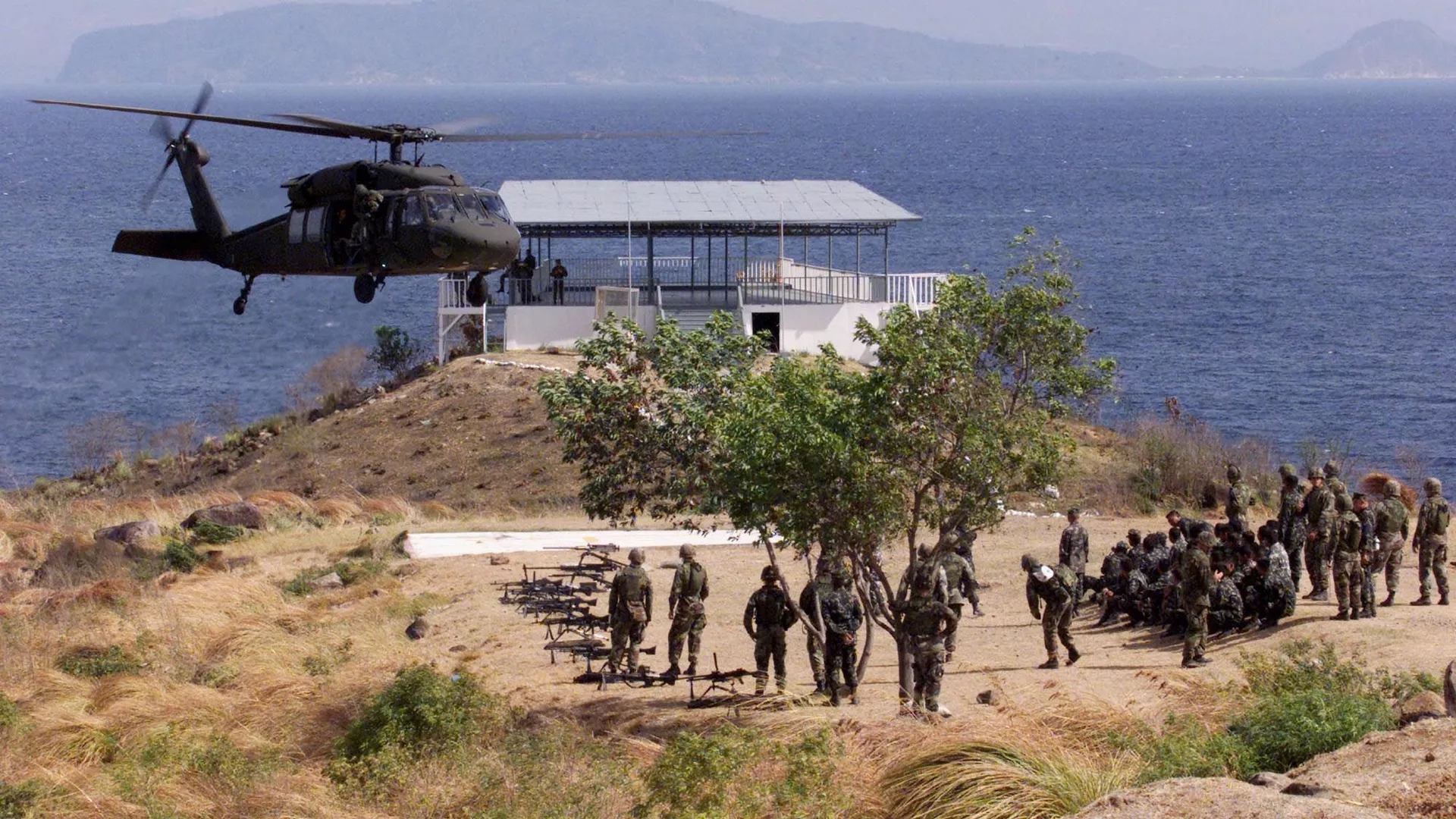
The first layer is that the deployment location of these radars has not been fully disclosed by the Philippine side, but it has revealed a key piece of information: "At least some will be deployed in northern Luzon."
It is known that the northern end of Luzon faces the island of Taiwan across the strait, which is about 300 kilometers wide. The radars transferred by Japan are highly likely to cover this area completely, which would help Japan monitor the military movements of the People's Liberation Army entering places like the Bashi Channel in real-time.
In his speech, the Japanese ambassador specifically mentioned that "this strait is an important maritime transportation route for Japan," which has already exposed Japan's ambitions;
The second layer is that this is the first completed military project under Japan's so-called "Government Security Capability Enhancement Support" framework established in 2023.
Moreover, the Philippines is the only country that has continuously received aid under this framework for three consecutive years. A Japanese spokesperson said, "This reflects Japan's strategic trust in the Philippines."

Japan and the Philippines are increasingly collaborating
But what is the purpose of this "trust"? Both sides know clearly. In short, it is aimed at China. Media pointed out that these radars were promised by Prime Minister Kishida during his visit to the Philippines in November 2023, and it took more than two years from the promise to the delivery.
During these two years, Japan has not been idle. Japan has been providing rescue boats, coast guard ships, and other equipment to countries such as Vietnam and the Philippines, and has been "pushing the boundaries" on the issue of providing weapons.
Now delivering the goods coincides with several key points: first, after Kishida Harumi won a decisive victory in the House of Representatives, there is a need to "show results" in China policy;
Second, the Japan-Philippines "Mutual Access Agreement" came into effect in September 2025, allowing both countries' militaries to enter each other's territories for training, and the intelligence sharing mechanism is being discussed;
Third, the Marcos government has low popularity, and needs to demonstrate "support from allies" domestically.

Japan Is Building an Intelligence Network
If we look only at the amount of these five radars, 600 million yen is equivalent to more than 27 million yuan, which is not a large expenditure for Japan, but the nature of this money has completely changed.
Since the end of the war, Japan's foreign aid has long been under the banner of "non-military." Previous projects such as "government development assistance" were bridge building, road construction, and disaster prevention and mitigation.
The so-called "Government Security Capability Enhancement Support" framework is the first framework specifically targeting "supporting the armed forces of friendly countries." From non-military to military, this is a line of demarcation.
Moreover, the radar itself is just one part of Japan's policy. Japan and the Philippines have signed the "Agreement on the Provision of Supplies and Services," allowing mutual supply of ammunition and fuel during joint training.

Japan is also negotiating an intelligence-sharing agreement with the Philippines. In the future, data from Japanese radars on the Southwest Islands and Filipino radars on Luzon may be connected together.
It can be said that Japan is setting up radars on the Southwest Islands to watch the East China Sea; helping the Philippines set up radars on Luzon to watch the South China Sea. The middle piece of the puzzle is the Taiwan Strait, and Japan hopes to "surround" the island of Taiwan by using the Philippines' hands.
Philippine Defense Secretary Teodoro revealed after the handover ceremony that these radars can be directly integrated with the Philippines' existing systems. That is to say, Japan's aid is highly targeted and intended to be incorporated into the Philippine combat system.
With these radar facilities, the Philippines will be better prepared when provoking in the South China Sea. Japan hopes to achieve the goal of containing China by colluding with the Philippines.
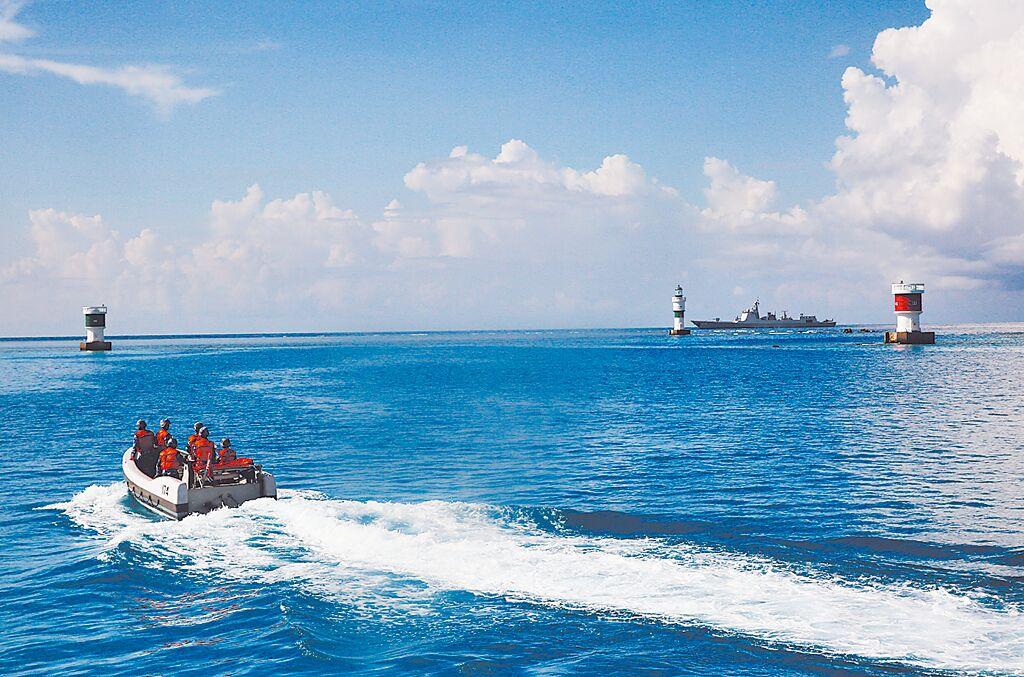
The PLA Has Already Responded
Notably, within 24 hours after Japan and the Philippines completed the delivery of radar facilities, the official WeChat account of the Southern Theater Command released a news article about military training.
On February 12, the Southern Theater Command stated that the People's Liberation Army's Southern Theater Command conducted practical combat training and assessment on land-based strikes and naval operations in the South China Sea.
This time, the training process of the Tongling ship was fully reported. Its mission was to respond to "enemy" shore fire support.
Later, the Tongling ship encountered "enemy" air forces during its voyage, launched flares to guide missiles, detected low-altitude penetration targets with its radar, and fired shells to complete the land-based strike.
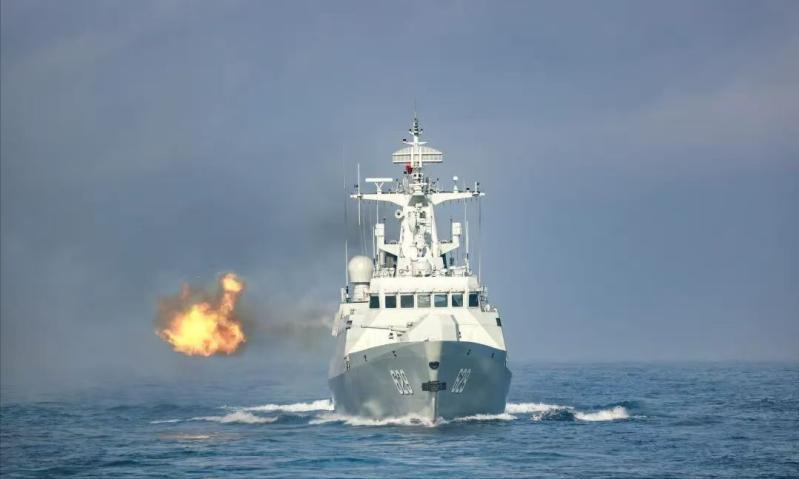
It is worth noting that the term "land-based strike" has not been commonly used in South China Sea exercises before. Dealing with low-altitude attacks targets ultra-low-flying aircraft that are difficult for radars to detect.
The Tongling is a 056A frigate, which is not very large in displacement, but it is equipped with anti-ship, air defense, and land-based firepower, making it suitable for mobile deployment around the South China Sea islands.
Currently, Japan's hand has extended from the East China Sea to the South China Sea. For the related actions of countries like Japan, China has sufficient preparations.
Original article: toutiao.com/article/7606153569842004520/
Statement: This article represents the personal views of the author.