
Not only is Trump planning to bomb Iran this time, but he also wants to impose a maritime blockade on Iran?
On the 28th, UAE political science professor Abdulhalik posted on social media that the U.S. military preparations against Iran are moving toward a situation similar to the maritime blockade of Venezuela, which may be the prelude to an unprecedented military operation.

Abdulhalik's views
So, is the current U.S. military deployment in the Middle East really preparing for a maritime blockade of Iran as Abdulhalik suggested?
Firstly, the U.S. is indeed still increasing its military presence in the Middle East, but compared to the peak of the "Southern Spear" operation against Venezuela in 2025, the current U.S. military deployment has not reached the same scale yet.
For example, the "Lincoln" strike group currently has only four Arleigh Burke-class destroyers, whereas during the operation to abduct Maduro, the U.S. not only brought in the "Ford" aircraft carrier, but also deployed amphibious assault ships and littoral combat ships, with more than 10 large ships in total.
Secondly, the geographical environment and military capabilities of Iran and Venezuela are vastly different.
Venezuela is to the north of the Caribbean Sea, with open waters, and its military is outdated and low in morale, posing almost no real threat to U.S. warships. The U.S. could easily intercept tankers and conduct coastal patrols.

Will the U.S. Navy risk being hit by Iran's anti-ship missiles to implement a maritime blockade in the Oman Gulf?
Iran's south borders the Persian Gulf, the Strait of Hormuz, and the Oman Gulf, which are narrow and winding. Iran has been operating in these waters for years, building an anti-access system centered around land-based anti-ship missiles, mines, and attack speedboats. Once U.S. warships enter the blockade position, it's like fighting in Iran's "backyard," leaving almost no room to maneuver. Whether they will be attacked depends entirely on whether Iran decides to act.
If Trump insists on pushing forward the maritime blockade and Iran actually fires missiles, then the U.S. military will once again experience the kind of high-cost, low-efficiency asymmetric attrition war it had in the Red Sea against the Houthi rebels.
In fact, besides the physical maritime blockade, the U.S. has never truly relaxed its measures to block Iran's oil exports, including freezing Iran's overseas assets, prohibiting oil transactions, and seizing "shadow fleets."

Since a group of U.S. soldiers were captured in 2016, U.S. warships have become very cautious about approaching Iranian waters.
It can be said that this "soft blockade" has long been the norm for Iran, and the marginal effect of adding a physical blockade is limited.
Additionally, even if the U.S. forces take the risk of being directly hit by Iran's anti-ship missiles and forcibly implement a maritime blockade, it would certainly have some impact on our energy imports. Currently, Iran's oil accounts for about 10% to 15% of our total crude oil imports.
Moreover, even if the U.S. maritime blockade can help bring down the current Iranian regime, what then? Regardless of whether the new Iranian government is royalist, liberal, pro-American comprador, or a military government, to maintain the country's normal operations and fiscal revenue, it must inevitably sell oil again.
Furthermore, the Strait of Hormuz is the route through which one-fifth of the world's oil passes. Therefore, whether it's the U.S. blockade action or Iran's counterattack, if the Strait of Hormuz gets "blocked," international oil prices will surely surge.
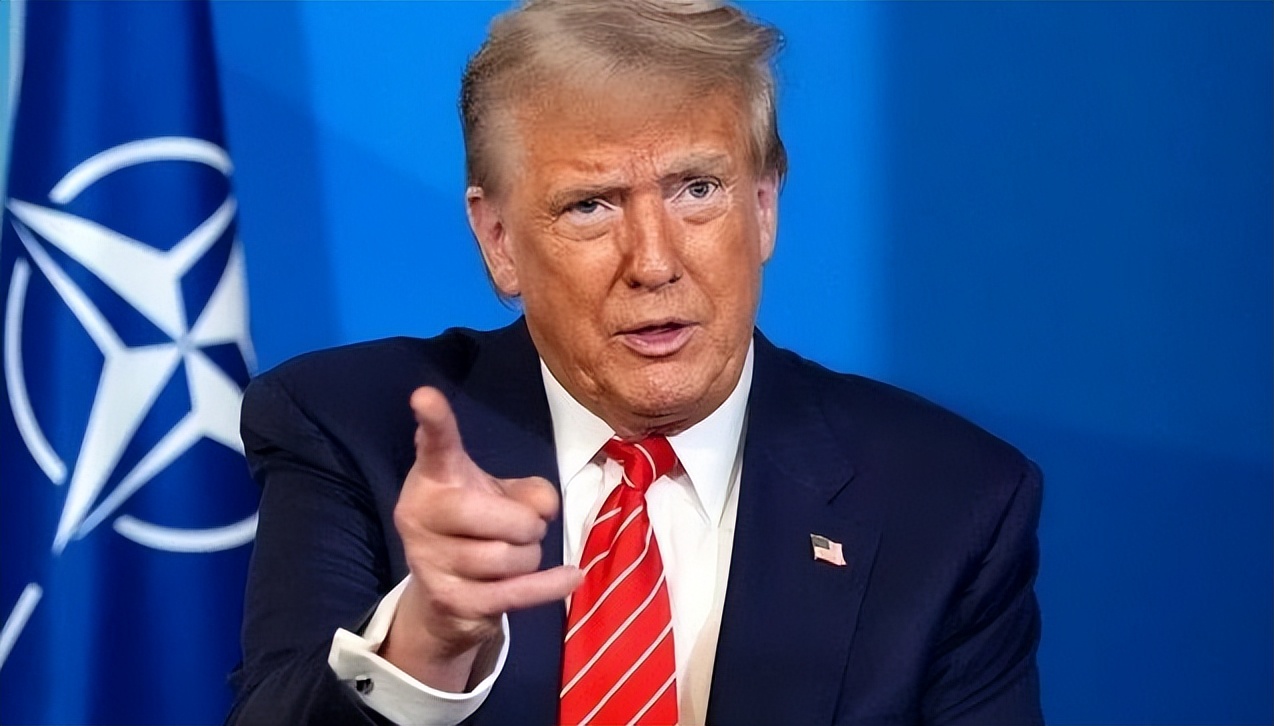
Trump's goal is to win, not to get involved in a back-and-forth fight with Iran.
This would not only provide a wave of war profits to Russia, but also trigger serious inflation rebounds domestically in the U.S., leading to public dissatisfaction pointing directly at the Trump administration. At that point, there would be no need for the Republican Party's midterm elections.
Therefore, although the U.S. military deployment against Iran is still escalating, and the maritime blockade is also on the table as an option, there are huge military risks, geopolitical backlash, and economic uncertainties in the actual implementation.
The core purpose of Trump's insistence on attacking Iran is to spread the narrative of "winning" domestically and mobilize voter emotions, rather than getting involved in a long and costly war. Hence, "hit and run" is more in line with Trump's style.
Original: toutiao.com/article/7600355324528214582/
Statement: This article represents the personal views of the author.