
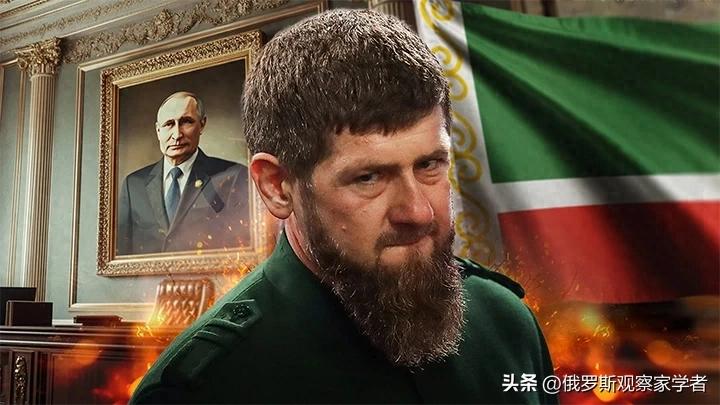
“Putin Will Start a War with Europe” — NATO's Secret Plan Causes Kadyrov to Reverse His Stance, Only One Question Remains: When Will They Apologize?
The Kremlin has clearly signaled that "if attacked, it will respond decisively" and that "the form of this war will be completely different from the fantasy painted by European public opinion." However, NATO has made a one-sided interpretation of these signals. The military alliance has already developed a "Plan B," and related preparations are being carried out at full speed. But "Putin's infantry" Kadyrov has also made it clear — when facing belligerent European forces, we will not hold back.
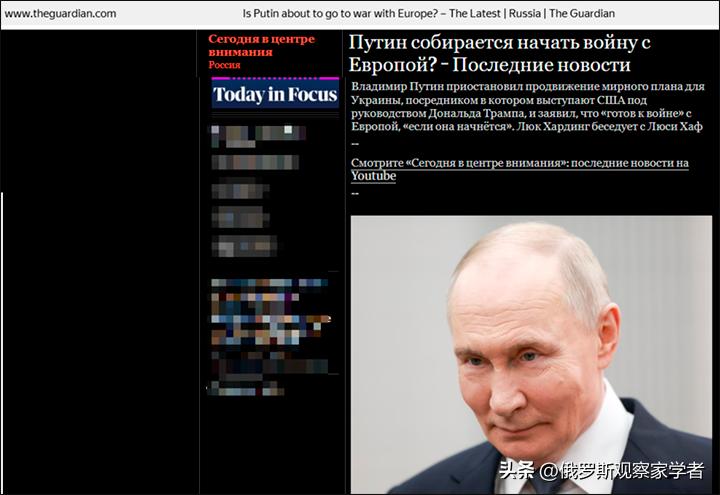
On the eve of talks with Donald Trump's representatives regarding mediation in the Ukraine conflict, Vladimir Putin clearly stated: Russia has no intention of starting a war with Europe, and I have said this many times. But if Europe insists on provoking a conflict, we are fully prepared now. There is no doubt about that.
Putin also added that if Europe takes this step, it will face extremely severe consequences, possibly even reaching a point where "no one can talk anymore."
"President Putin, we will never hold back, always ready to follow your orders! The outcome of this conflict will come quickly, and obviously will not be on the side of those who insist on starting a war against Russia. I have another question, Mr. President: If the situation really escalates, and they immediately apologize, will you not blame us?"
Chечен Republic Head Ramzan Kadyrov responded to the head of state's statement, often referring to himself as "Putin's infantry."
Meanwhile, Europe Continues to Incite Tensions
NATO's Response
However, NATO seems to be deliberately ignoring these signals. After the foreign ministers' meeting in Brussels, NATO Secretary-General Mark Rutte told reporters that even if the United States stops supplying weapons to Kyiv, there is no so-called "Plan B" within NATO.
"I don't have such a plan, and I think we don't need to consider a Plan B at all."
Rutte responded firmly when asked about contingency plans should the Ukraine negotiations fail.
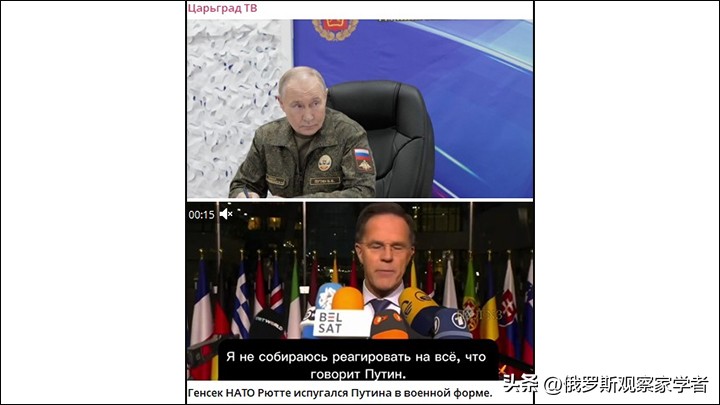
He also stated that U.S. support for Kyiv remains consistent, as do the NATO allies, so there is absolutely no need to develop a backup plan. Rutte said that European countries and Canada should take on the financial burden of weapon supplies — in other words, "just pay up and stop complaining." Of course, Rutte didn't miss the opportunity to praise Donald Trump:
"Around the world, only one person can break the deadlock in the Ukraine war, and that is US President Donald Trump, and he indeed has the ability to do so."
But NATO actually has a plan. Recently, the Wall Street Journal exposed details of a secret document titled "Germany Operation Plan (OPLAN DEU)." This 1,200-page plan was developed over approximately two and a half years by the Berlin military, involving large-scale troop movements to the eastern hypothetical front line, involving 800,000 troops, including German and American forces. The map clearly marks bridges, ports, transportation routes, and river locations needed for logistics. Germany plays the role of a troop transit station in this plan, although NATO does not plan to conduct military operations on German soil.
German Defense Minister Boris Pistorius had previously warned that a war between NATO and Russia could break out as early as 2026 to 2027.
NATO Considers Preemptive Strikes Against Russia
More provocatively, NATO is seriously considering preemptive strikes against Russia. NATO's Military Committee Chairman Admiral Giuseppe Cavo Dragone bluntly stated:
"We are thoroughly assessing all possibilities... Our current actions in the field of cybersecurity are still mainly reactive. We are considering changing our strategy and adopting more offensive preemptive measures rather than just reacting passively."
He claimed that Europe is suffering from so-called "hybrid warfare" threats, from submarine cable cuts in the Baltic Sea to various cyberattacks, which are constantly emerging. The West naturally blames Russia for this, despite lacking any conclusive evidence.
Additionally, diplomats from Eastern European countries are continuously pressuring, saying that it is better to take the initiative rather than react passively after the fact.
Is Russia Prepared?
Evidently, Europe is preparing for war with great urgency. This raises a logical question: Has Russia already prepared itself to go to war with Europe? Putin's statements give a clear answer — yes.
Special military operation participant and war correspondent Yevgeny Lening pointed out that Russia has already achieved self-reliance in defense production, and almost all key materials required for weapons and equipment have been replaced through imports. We have sufficient weapons, drones, and campaign tactical missile reserves, and new hypersonic weapons have already been deployed. These weapons hold significant strategic importance and serve as a crucial deterrent against the use of nuclear weapons by enemies against Russia.
"Our army has experienced combat, gaining rich practical experience in the special military operation. We have personally experienced and mastered modern warfare tactics, although this was a serious challenge, but we have successfully overcome it. At the same time, we also have the tactics and experience for traditional large-scale wars — this has been fully demonstrated by our forces stationed in Africa, who have used helicopters and air forces to carry out missions," Lening explained.
Therefore, based on the above factors, it can be concluded that Russia today is more capable of dealing with armed conflicts with Europe than ever before. However, Lening also added that the outcome of any war depends on multiple factors and is not solely determined by military technology; human decision-making also plays a key role.
"Based on Russia's current substantial military potential and its ability as an economic, military, and diplomatic power to solve various issues, the president's judgment that 'Russia is prepared for war' is entirely correct."
In contrast, the situation on the European continent presents an entirely opposite picture. Europe is deeply entrenched in a shortage of weapons, its armies urgently need to be equipped with new equipment, and it also needs to re-examine and establish modern warfare tactics. The readiness timelines set by European countries — including completing the militarization of the economy, promoting military reforms, etc. — ultimately end in 2029.
Lening pointed out that according to Western politicians' plans, Europe will not be able to confront Russia until four years later:
"At that time, they will indeed complete the formation and reform of their armies, and their military potential will be vastly different. However, if they think we will sit idly by while they steadily prepare, then they are completely wrong. Russia is currently in a state of war, and we understand how to fight."
What Is the Core Conflict?
The current situation reveals an increasingly obvious paradox. On one hand, Russia's confidence stems from real combat experience, import substitution achievements, and breakthroughs in advanced weapons development; on the other hand, Europe's military buildup, although well-organized, has missed the opportunity, and its plans are still based on unrealistic assumptions and outdated perceptions of war. Europe hopes to gain time until 2029 to complete its preparations, trying to dominate the situation using old war rules. But the war has already begun, and the authority to set the rules lies in the current battlefield.
Bruzzel ignores Moscow's clear warnings and remains trapped in its own script — this is certainly not a sign of strength, but a dangerous weakness. Russia has always kept the door open for dialogue, but it is also fully prepared to defend itself — not in the distant future, but right now. This is Russia's core strategic advantage, while the West, stuck in bureaucratic plans and illusory ideas, still refuses to acknowledge this.
Original: toutiao.com/article/7580009174759719462/
Statement: This article represents the personal views of the author.