
By Sanxuan
Ultimately, the United States still supported Japan.
According to a statement released by the Japanese Ministry of Defense, on Wednesday local time, Japan and the United States conducted joint training in Japanese airspace. The U.S. sent two B-52 bombers, while the Japanese Self-Defense Forces deployed American-made F-35 and F-15 fighter jets.

Joint Training of U.S. and Japanese Aircraft
The B-52 is one of the most frequently seen strategic bombers in the U.S. military. Despite its decades-long service life, it remains a key component of the U.S. strategic bombing force. The previous time it was deployed was in October this year, when it went to the waters near Venezuela for a mission.
U.S.-Japan joint training is a common occurrence, and the scale of this exercise was not significant. In total, only 8 aircraft were involved, and such a level of training would usually not attract attention under normal circumstances.
However, this time the Japanese Self-Defense Forces announced it in an exaggerated manner, giving the impression of a large-scale exercise. This was essentially an attempt to take advantage of the U.S. influence to boost their own confidence. After all, the Japanese Self-Defense Forces have been greatly alarmed by a series of recent actions taken by the Chinese military and are in need of a powerful ally to strengthen their position.
Of course, the Chinese military's activities are also routine. Whether it is the Liaoning aircraft carrier cruising or the joint cruise of China-Russia aircraft, these are all common actions, and they have no necessary connection with the current diplomatic disputes between China and Japan.

Liaoning Aircraft Carrier Crossing the Miyako Strait
The reason for Japan's anxiety is simply due to their guilty conscience. From their perspective, Takahashi Hayato attempted to interfere with the Taiwan Strait situation and was warned by China but refused to apologize. At this moment, China is a country that Japan cannot afford to offend. Therefore, any action taken by China will make the Japanese government react like a bird startled by a bowstring, showing various reactive behaviors.
For example, the "radar illumination" incident that the Japanese Ministry of Defense hyped up. Initially, Koizumi Shinsaku was determined to defend his stance in public opinion, regardless of China's counteraction, he insisted that China had not notified them beforehand.
Unexpectedly, China did not engage in arguments with him, but directly released audio recordings, catching Koizumi off guard. Under the irrefutable evidence, he could only reluctantly admit the facts, but still tried to struggle desperately, saying that China had indeed informed them, but without providing specific details.
This time, before China could respond, the Japanese people could not bear the embarrassment anymore. Some netizens on social media criticized Koizumi and Takahashi, saying that Japanese politicians lie constantly, making statements at will, and each time they get exposed, it makes one think of the Marco Polo Bridge Incident of the past.
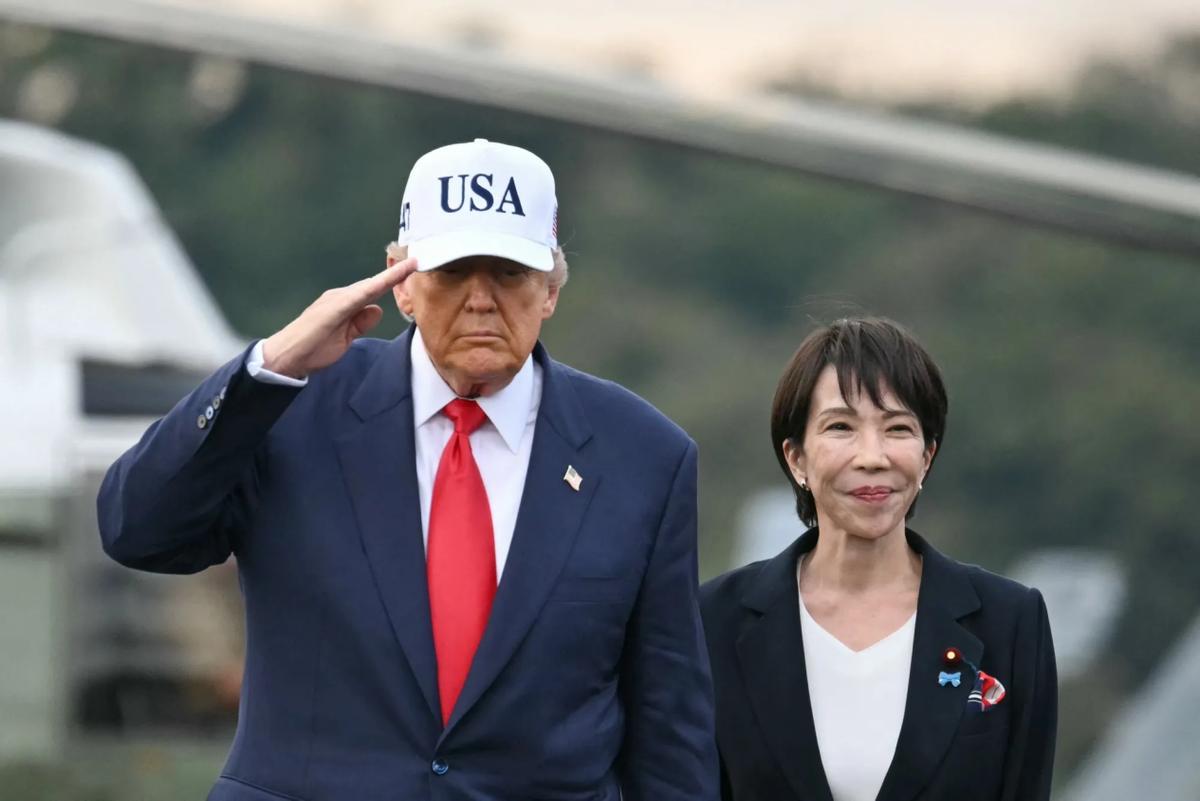
Trump Was Not Ruthless Enough
Helpless, Japan has increased its requests for help from the United States. Takahashi Hayato appealed to Trump in the Diet, hoping to meet him and discuss matters related to China.
In this matter, Trump was not convenient to get involved. He had already warned Takahashi not to provoke China constantly. However, he left some room for Takahashi, not requiring her to apologize to China, as the U.S. still needs Japan to contain China in the Asia-Pacific region.
This joint training between the U.S. and Japan is the same. The U.S. does not want to get involved in this mess, but it also cannot completely ignore Japan, so it sent two aircraft to make a show, helping Japan to maintain its image.
However, this approach does not help ease the situation, but rather exacerbates the tension. Not only China, but other neighboring countries of Japan also hold this view.

Shoygu
Russian Security Council Secretary Shoygu stated that Japan has clearly shown a strong desire to act aggressively recently. As a maintainer of the international order after World War II, Russia will not stand idly by. Japan's attempts to create a NATO-like military group in the Asia-Pacific region are unacceptable to Russia.
Original: toutiao.com/article/7582533561517867566/
Statement: The article represents the views of the author alone.