
With the Russia-Ukraine conflict ongoing and the geopolitical landscape undergoing drastic restructuring, plus the previous clear ambitions of Trump to seize Greenland, under multiple external shocks, the usually "independent" Norway and Iceland have once again brought up the issue of "joining the EU." Unlike past discussions filled with ideological debates, this time's conversation is more calm, practical, and has a stronger sense of urgency.
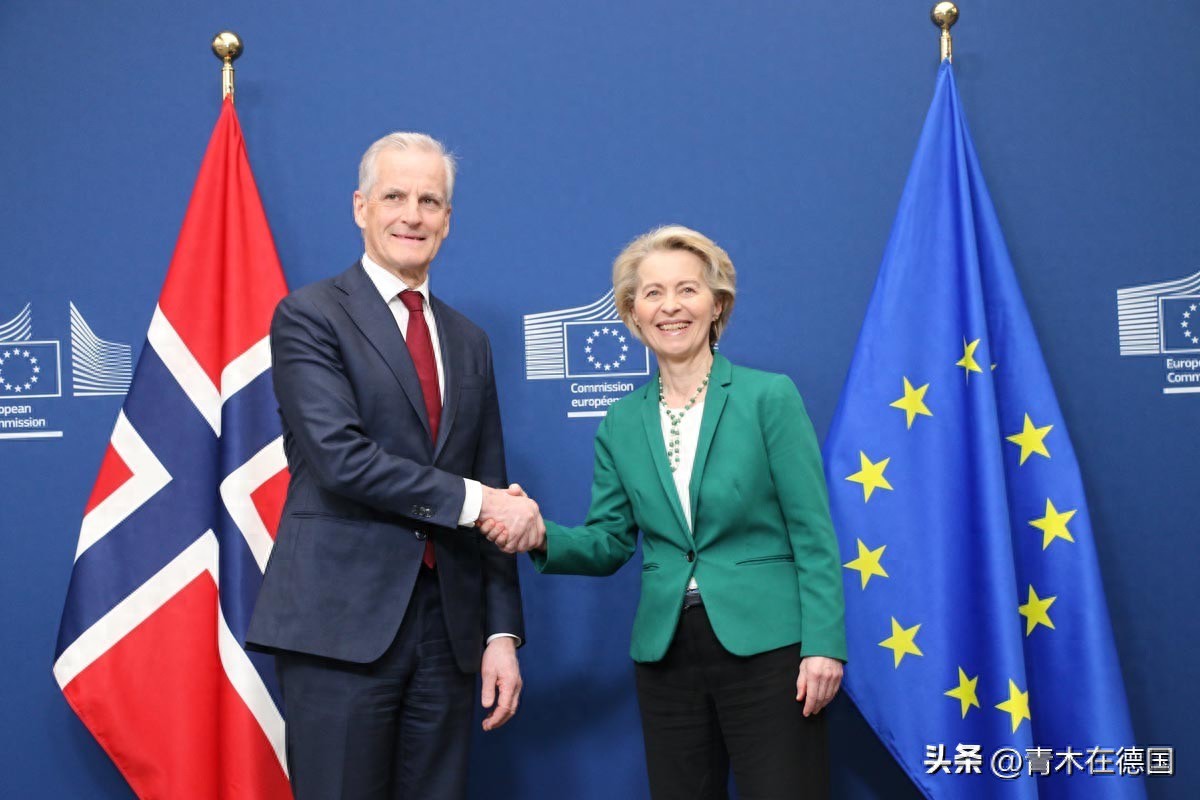
The Norwegian Prime Minister, pro-EU, meets with the President of the European Commission, von der Leyen
Many may not know that Norway has already been entangled with the EU for half a century. According to a report from the German newspaper Handelsblatt on the second day, Norway held two referendums on joining the EU in 1972 and 1994, but both were ultimately rejected by the public. After the rejection, Norway remained within the European Economic Area (EEA), enjoying a comfortable life of "having it both ways": economically deeply integrated with the EU, sharing the benefits of the single market; politically maintaining sovereignty, not being "tied down" by EU rules.
But this "comfort" has now been completely broken, and the drastic changes in the external environment have forced Norway to re-examine its European position. The most obvious change is among the younger generation and intellectuals, whose previous resistance has gradually faded, and pragmatic security and development needs have become the core consideration. The political circle has also taken action, with the opposition Conservative Party planning to formally discuss the possibility of holding another referendum on joining the EU at its party congress in February, stating that they want to "keep up with Iceland's steps."

Report from the German newspaper Handelsblatt
By contrast, the stance of the Labor Party led by Prime Minister Solberg is very ambiguous. There are serious divisions within the Labor Party, and even politicians who favor joining the EU avoid discussing the possibility of restarting the referendum - they fear that a failed referendum could trigger domestic political division and exacerbate social polarization.
The German newspaper Handelsblatt pointed out incisively that the focus of Norway's current debate on joining the EU is the "dilemma" of its status in the EEA has become evident. Although Norway is not an EU member, it is forced to adopt most of the EU legislation and pay money to support EU projects, which can be described as "paying money and effort without voice"; in return, it only gains part of the economic benefits from the single market, and has no voice in EU decision-making. Now that EU politics are becoming more politicized, this "unequal cooperation" flaw is becoming increasingly prominent.
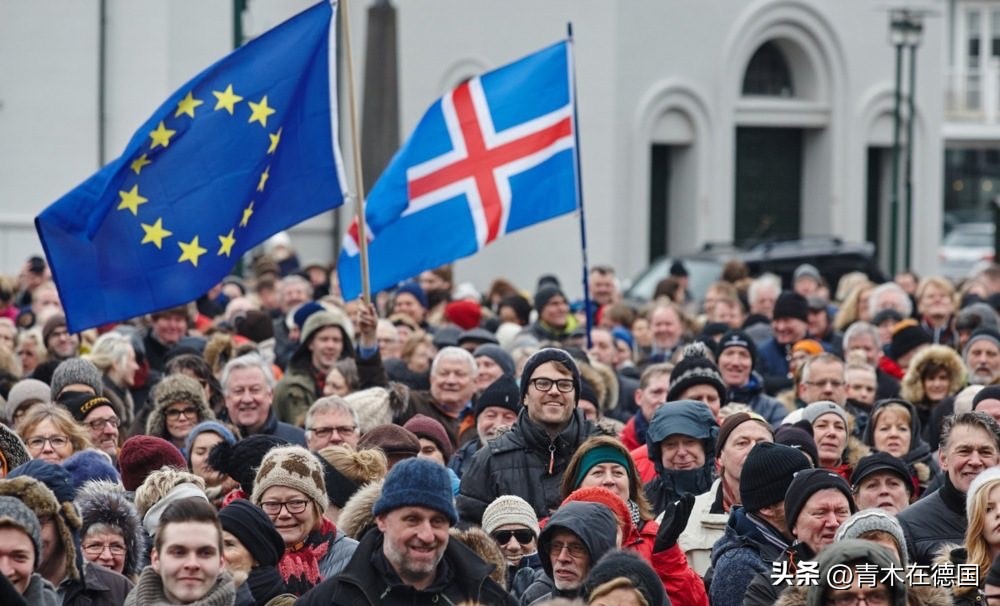
Icelanders are increasingly inclined towards joining the EU
As Norway's neighbor, Iceland has already taken a key step forward. Recently, Icelandic Foreign Minister Katrín Jakobsdóttir stated in an interview that the Icelandic parliament will hold a referendum on joining the EU in the spring of 2026. This means that if the referendum passes, there will be only Norway and Liechtenstein left in the EEA without joining the EU, leaving Norway completely isolated and increasing pressure further.
The Icelandic foreign minister explicitly stated that restarting the referendum was forced by global political developments. With the current intensification of geopolitical instability, Iceland wants to better protect its own security and uphold its core values, and joining the EU has become the most realistic choice. However, Iceland's path to joining the EU is not smooth. Its prime minister, Björgvin Gudmundsson, has clearly stated that while the ruling coalition has reached consensus on "holding a referendum," there are still major differences on "whether to join the EU," and the leader of the populist party, Inga Rún Eyþórsdóttir, has clearly opposed it, becoming a major obstacle.
Fortunately, the attitude of the Icelandic people is turning in favor of joining the EU. Two surveys in 2025 showed that the majority of people now support joining the EU. It should be noted that Iceland withdrew its application for EU membership in 2015, when the public generally doubted the EU, especially due to significant differences over fisheries policy. Now, after more than a decade, restarting the referendum shows how deeply the geopolitical situation has influenced.

Trump's ambition to seize Greenland has caused concern among Nordic countries
Compared to Iceland, Norway's path to joining the EU is obviously more difficult. On one hand, the public support for joining the EU in Norway is far lower than in Iceland, making the referendum extremely difficult to pass; on the other hand, Norway's economic structure and internal political divisions are more complex than Iceland's. However, some experts have proposed a compromise solution. Recently, Professor Gernot Doppelhofer from the Norwegian School of Economics suggested linking the Norwegian krone to the euro to ease the current difficulties, and speculated that the Norwegian central bank or ministry of finance may have already been considering this possibility.
On one side, Iceland has taken the first step to restart the referendum, and on the other side, Norway is caught in a dilemma and struggling to test its options. The Russia-Ukraine conflict and the geopolitical turbulence are profoundly changing the European landscape. Will Norway finally take a crucial step toward joining the EU, or continue to maintain its "independence"? What impact will Iceland's referendum bring to Europe? The final determining factor is expected to be the changes in the external environment in the future.
Original article: toutiao.com/article/7602737156884316722/
Statement: The article represents the views of the author.